Aejaie Franciscus’s story starts with a letter to Santa Claus at five years old, “I asked Santa, to make me a little girl for Christmas, as I was born a boy. To say the least, that present wasn’t under the tree, but it did set me on my life’s journey,” she recalled.
She endured bullying throughout high school and, with the support of her family, finished her transition before heading off to college in 1982. She moved to San Jose in 2004 and met her husband, Tony. The couple married during the “Summer of Love” in 2008.
“Other than the drag queens, people did not see much of this community. It was an underground community. It wasn’t until the last ten years that folks were seeing transgender folks in the LGBTQ community even,” Aejaie remembered, “I think it was about three years ago that the community saw representation at Pride events.”
Aejaie worked in the nonprofit arena for 20 years before being hired as the first transgender executive director of the Billy DeFrank Center. In an article from the Bay Area reporter, Aejaie mentioned that she was excited to start working, “This job offered me an opportunity to bring my personal life and professional life together. It’s like a coming out party.” This was the first job where she was able to speak about being transgender safely. She served as director from 2005 to 2008, during which time she spearheaded a HIV rapid testing program and worked with local schools to support kids dealing with homophobia.
Aejaie now owns the Carla’s Social Club, a space for transgender people to find resources for transitioning and get support among other transgender people.
“It will be interesting to see what happens once we come out of the pandemic, because the work we do is so social and interactive. We had events and discussion groups activities at Carla’s Salon that are online, but are more effective in person,” she explained about the local impact of the global COVID-19 crisis. “Other than discussion groups online, and anything else we can move online, there’s only so much social activity you can do. It’s hard to help girls pick out clothes online, you need to see someone in person to help them put together outfits. You need to see someone in person to give them a hug for support.”
In 1985, it was unsafe to be trans in public. As a response, private salons were opened for people in the community to dress as their true selves. Carla’s Salon opened in 1985 by Carla Blair, a heterosexual woman. Those who attended would have a private place to explore their gender identity. It was a combination tearoom, beauty salon, boutique, and social center that became popular worldwide within the transgender community.
“In 1985, the word ‘transgender’ had not gotten into the lexicon yet. Honestly, we use that word loosely now, but it was the transsexual community at the time,” Aejaie Franciscus remembered about the time Carla’s Salon was founded. “This was happening in the middle of the AIDS epidemic, yet people didn’t understand the gay community or the AIDS epidemic. When you introduce the idea of someone wanting to change their sex, they really didn’t understand that.”
In 2010, Aejaie Franciscus and her husband took over the Carla’s Salon from founder Carla Blair. Carla approached Aejaie one day and suggested the idea, and after some convincing Aejaie accepted. The name changed from Carla’s Salon to Carla’s Social Club.
Aejaie has noticed a change in clientele over the years. As people have become more comfortable with presenting in public, there’s less need for haircuts and make up, and more need for socialization and support. Carla’s is a great resource for finding doctors as well. People participating in the salon need help at every level of transition.
“I have been on the fringes of cross-dressing for a number of years now,” said one reviewer about Carla’s on their website. “Recently I decided to go deeper. I decided to have a makeover to see what I would look like as a woman. Aejaie could not have been more patient, supportive as well as doing an excellent job making me up and describing what she was doing and why. It is so comforting to know that I am not on this journey alone. Thank you so much Aejaie.”
Membership at Carla’s is around 200 people, including 70 active locker members and people who come from all over the world to attend events. “There are a lot of people you could talk to from over the years that would say Carla’s was a life saver; it was a great resource. Whether it be through me, or someone else, that that’s where they found their family and place,” Aejaie said.
As of 2020, Carla’s is still in operation, continuing to offer members locker rentals and a safe space for those to spend the day en femme. The services and memberships are listed on their website, Carlas.com.
Jules Chyten-Brennan is the medical director of the Gender Health Center, where they are building a medical center for trans, non-binary, gender expansive people. Before moving to the Bay Area, they worked in New York City reforming health care for people incarcerated in jails.
Sera Fernando was born and raised in San Jose, and now works as a senior management analyst in Santa Clara County’s Office of LGBTQ affairs. As a transgender Filipino woman, she focuses on economic empowerment for people who are transgender, non-binary, gender non-conforming and gender diverse.
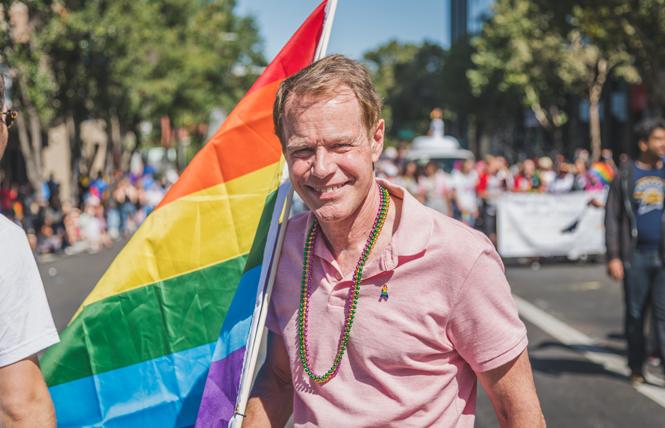
Ken had come to San Jose when he was 18 to start a new life away from conservative Riverside, where he knew he could not be openly gay. He graduated from San Jose State University with a degree in political science and held numerous jobs working on public policies to improve his adopted city.
It was in early 1984 when he picked up the Sunday San Jose Mercury News and read an opinion piece by a local state Assembly member Alister McAlister stating that homosexuals should have no legal, social, or political standing in society.
It was a remarkable statement. The Assemblyman, Alister McAlister, was urging then-Governor George Deukmejian (R) to veto Assembly Bill 1, the law passed by the Legislature that would make it illegal to discriminate based on sexual orientation. If such laws were passed, he argued, LGBTQ people would become a legitimate class deserving of legal protection. (Deukmejian did, in fact, veto the bill.)
Ken was well aware of the hatred and persecution that gay people faced but this was the first time someone had phrased it so bluntly: You are undeserving of the benefits provided by society. Putting the paper down, he said to himself: “Ken, if you don’t fight for your rights to be a part of this community then no one else will.” He came out publicly a week later in a Mercury News opinion piece denouncing McAlister and arguing for acceptance of gays and lesbians (the term that was used then) as full participants in society.
Thereafter, Ken co-founded BAYMEC—the Bay Area Municipal Elections Committee—with Wiggsy Sivertsen. This political experience and work allowed Ken to run for San Jose/Evergreen Community College Board in 1992 and become the first openly gay elected official in Santa Clara County. In 2000, Ken ran for San Jose City Council and was elected. After winning reelection in 2004, he ran for Santa Clara County Board of Supervisors in 2006 and won. He was reelected in 2010 and 2014.
During his time on the Board of Supervisors, Ken would create the Office of LGBTQ Affairs, the first such county office in the nation. With a staff of 7, the office has taken on a wide spectrum of issues to improve services to the LGBTQ community. After reaching term-limits, Ken has turned his attention back to BAYMEC through its Community Foundation.
In 1979, Kathy Wolfe saw the powerful documentary Word is Out at the Frameline Film Festival. After presenting the stories of a group of diverse lesbians and gays, the filmmakers challenged the viewers to make a difference of their own.
“I was completely inspired by seeing that film,” remembers Kathy. “I immediately grasped the importance of bringing our stories to the public.”
Her first approach was to get involved in new emerging video technology. In 1981, Kathy Wolfe produced and directed a twelve-part video series, Fix it Now, featuring women contractors (mostly lesbians) demonstrating the basics of home repair. The series was shown on local public access television in Cupertino, CA, but later was shared throughout the country.
For the next several years, Kathy honed her skills in producing, directing and editing lesbian documentaries, including The Changer and the Changed, an early history of Olivia Records.
But even as Kathy worked on these projects, she realized that there were limited outlets to actually showcase her work – or that of other like minded filmmakers. She decided to shift her focus from making movies to the distribution of them.
Gays and lesbians around the country, in those days often completely closeted, were just realizing that they could watch – and rewatch – gay-themed movies in the privacy of their own home. Thus, in 1985, Kathy launched Wolfe Video, her mail order business to distribute movies to the gay community. Her very first mailer was a modest 8.5 x 14 flyer with ten titles. But over the years the catalogs grew to feature several hundred titles per catalog.
From the outset, however, Kathy’s ultimate goal was wider than mail order. She wanted to spur acceptance of our community by getting these titles seen by both gay and straight audiences.
She began acquiring rights to films, handling everything from the manufacture of the VHS tapes to promoting the titles into the educational market, and developing wholesale distribution to LGBTQ Bookstores.
The obstacles Kathy faced were daunting. Besides the usual hurdles starting a business (financing, etc), there were challenges that arose from homophobia in the business world. Manufacturers refused to replicate the tapes; printing companies didn’t want to print the catalog. Mainstream wholesale distributors were initially reluctant to consider Wolfe titles which they automatically assumed were pornography.
Matchbook Example
Even as late as 2003, a merchandising company refused to manufacture matchbooks featuring two lesbian vintage “pulp” films, because management objected to the just barely evocative cover art featuring two women.
Initially, Kathy actually faced threats, as the business, located at first in the basement of her home, drew virulent opposition and hate mail. “I worried for the safety of myself and our employees,” she remembers, “but the neighborhood and our local post office stuck by us.”
In spite of the obstacles, Kathy persisted; over time, she found great vendors, most of whom still work with her today. She also started hiring staff; in 1992, she hired Maria Lynn, who for the next 22 years would work beside Kathy to form the core of the executive team. In 2015, Maria would be succeeded by Jim Stephens.
Wolfe Video quickly developed a large group of loyal mail order customers. This was the golden era of lesbian and gay bookstores, who were happy to carry Wolfe titles. Music festivals, pride festivals, gay community centers – all were growing rapidly during the eighties and nineties, and provided a way to spread the word about gay movies and docs.
A key early filmmaker who contributed to Wolfe Video’s success was Nicole Conn, whose lesbian romances Claire of the Moon, Cynara, Elena Undone, and A Perfect Ending, were immediate hits and remain popular to this day.
As distribution grew in LGBTQ spaces, Kathy became more determined to break into the mainstream film rental market.
Key to her success in doing this was her friendship and working relationship with Lily Tomlin. In 1992 Wolfe became the distributor for the VHS of Lily’s play The Search for Signs of Intelligent Life in the Universe. This created a huge breakthrough into mainstream distribution and gave Wolfe Video access to the giant players of the time: Blockbuster, Hollywood Video, Tower Records as well as the 27,000 neighborhood video stores. Now, Wolfe had the ability to distribute LGBTQ movies nationally via mainstream channels.
In 2002 Wolfe Video authored their first title on DVD, Big Eden, the biggest commercial hit to date (and the first gay double DVD). Kathy applied to have the film rated PG by the MPAA – a first for a gay film – which brought Big Eden into many more mainstream outlets and prompted fan mail from community members excited to see gay content in their local video store.
Soon, Wolfe Video was releasing 12-16 titles a year on the Wolfe label, plus selling the best of the rest via their mail order arm. The company continued to grow exponentially throughout the 1990s. Another big break came in the early 2000s, when Wolfe inked a deal with Showtime to distribute Queer as Folk, and a few years later, The L Word. “When Queer as Folk came out on VHS and DVD, we were shipping them out as fast as they arrived on our dock. There were days when I took multiple truckloads to the local post office. We were spending thousands of dollars in postage and ultimately saved our historic neighborhood post office.” Kathy remembers.
Kathy developed relationships with U.S. and foreign distribution companies and began offering selected films to other countries. She also brought great foreign films to the U.S. including Oscar submissions Undertow (Peru 2010), Reaching for the Moon (Brazil 2014), and The Circle (Switzerland 2015).
NEW CHALLENGES FOR WOLFE VIDEO
Wolfe Video started six years before the unheralded launching of the World Wide Web (1991), eight years before email seeped into the mainstream (1993), and 12 years before Netflix was founded (1998). Those three developments would completely change the world of film, offering both new avenues to advertise to the gay audience and a whole new way to experience film – streaming.
The web gave Wolfe Video another way to find customers; early on, Kathy started WolfeVideo.com and began an email newsletter. She also started WolfeReleasing.com, a resource for filmmakers, as well as a way to showcase Wolfe films available for festival and theatrical screenings.
Soon after Netflix launched, they became a Wolfe Video customer; first of DVDs and later, when they launched their streaming service, Netflix licensed a large number of Wolfe titles for the channel. To this day, Netflix remains one of Wolfe’s largest customers.
In 2012, Wolfe Video pioneered global access to LGBTQ cinema by launching the first digital LGBTQ platform, WolfeOnDemand.com. Kathy also developed partnerships with a large number of other streaming platforms, including Apple TV, YouTube, Amazon Prime Video, Hulu, Showtime, Peacock, Tubi, Kanopy, Vudu, Fandango NOW, Mubi and more.
Kathy is philosophical about the state of the business. “These days our films can be streamed all over the world or purchased on DVD for guaranteed rewatching. I take pride in knowing we helped make a difference for our community. We now see ourselves – and are seen – in a much truer light.”
WOLFE’S HISTORIC SIGNIFICANCE
To really get a feel for how revolutionary Wolfe Video is, and the impact Kathy had on bringing out the gay community, consider this: Megahit Philadelphia wasn’t released in theaters until 1993. When Wolfe started shipping LGBTQ titles, television (even the supposedly more open cable channels) had barely dipped their toes into gay programming, Queer as Folk did not air on cable until 2000; The L Word wouldn’t air until 2004.
It is undeniable that Kathy’s determination and vision contributed to making those mainstream titles possible by developing the audience for them. Over the years, the Wolfe Video executive team spent countless hours watching screeners and visiting film festivals around the world to find quality, diverse, representational films – and then many more hours promoting them to as many outlets as possible.
It’s an especially impressive feat given Wolfe Video is located, not in Hollywood or New York City, but in relatively rural, historic New Almaden, CA. In 2018, Kathy added an L.A. office, but basically she still works from home.
Both the LGBTQ and mainstream community recognize her impact and Kathy has received multiple awards over the years including: Cinequest’s “Maverick Spirit Award;” NCLR’s “Community Partner Award;” the San Francisco Board of Supervisors “Certificate of Honor,” and the National Organization of Women’s “Excellence in Media Award.”
Kathy Wolfe – a Game Changer
As early as 1999 Forbes Magazine recognized Kathy as an “Up and Comer,” and in 2019, her biography was chosen for the Indie Book Award WinnerGame Changers, by Robin Lowey.
But perhaps Kathy’s greatest reward was a touching interaction with a young lesbian on the occasion of Wolfe Video’s 25th anniversary in Miami. “You’re the creator of Fix it Now?” the woman asked. “That show saved me when I was a gay teenager. I watched it over and over. THANK YOU.”
Arturo Magaña attended a ProLatino meeting in 1992 where he first experienced, at 18 years old, a folclórico performance. He witnessed men dancing together to express stories, and he joined immediately. For two years, the group was invited to Washington to dance for the Peace March as well as San Jose Pride and San Francisco Pride. Around 1995, ProLatino dissolved, and Arturo looked elsewhere to continue to dance.
Arturo joined the Los Lupenos de San Jose dance company around this time as a lead dancer. It was important to him to have the LGBTQ aspect of dancing represented, so he requested approval from the Dean of Dance at Stanford, the co-founder of Los Lupenos, to bring men together to represent the LGBTQ community. He was denied time and time again to create this type of group in the company.
Around 2013, Colectivo ALA invited Arturo and Los Lupenos to put on a folclórico performance at their anniversary event. Arturo remembers fighting to get permission for this performance, “I said, ‘you can’t repress me. This is who I am. I need to represent myself,’ and Dr. Susan Cashion, a co-founder of the Los Lupenos Dance Company, said, ‘absolutely we have your back. Anything that you need, costumes, music, choreography, you do it. This is you.’ She gave me the opportunity to represent myself and bring that to Colectivo ALA anniversaries and that sort of seeded the idea for Rodrigo and myself to bring a program to the LGBTQ community.”
Arturo started the LGBTQ dance group at Colectivo ALA and left Los Lupenos. The group was named Ensamble Folclórico Colibri, and they were part of the Colectivo ALA group. At a certain point, Folclórico grew beyond the Colectivo ALA group and became independent. In 2016, the group marched in the San Francisco Pride Parade and received honorable mention from the City and County of San Francisco as well as receiving an award for the most vibrant and colorful group. Every year since 2016, they have participated in Silicon Valley Pride.
In 2017, the Ensamble was adopted by the School of Arts and Culture as a cultural partner at the Mexican Heritage Plaza. In 2018, the Ensamble was able to put together a full stage production where they invited an ensamble from Mexico, Grupo Folclórico Teocalli. That was the first time that they had over forty dancers, some men in Mexican Folclórico skirts, on the main stage of the Mexican Heritage Plaza stage.
In Seattle, a group called Somos Seattle, a queer organization focused on representation of the Latino community, brought Ensamble Folclórico Colibri to headline their Latino Pride. This was a great honor for Arturo and the ensamble.
In 2018, the organization experienced push back by an organization in Mexico who threatened to sanction them and contact the Mexican government to stop them from continuing. The worst part of this experience was that it was coming from the Folclórico community, a director. Arturo stood his ground, “We put our foot down and we said, ‘we’re not going anywhere. You can do whatever you want. We have a freedom of expression.’ That brought us to be more recognized, to the point where our Facebook page had like less than a thousand likes and within a month we ended up with about 9,000 likes. So the world and the community started seeing Folclórico Colibri more seriously.”
Ensamble Folclórico Colibri is an LGBTQ+ group, including folks that are in the LGBTQ community as well as others who are not. Arturo and the group believes that it is important to not repress those that are repressing you, so by accepting the straight members into their group they are showing solidarity with their allies who will stand with them.
The group still faces backlash today by those in California and other communities. The Folclórico community is still close minded, but there is progress being made. Arturo said, “I want to say that maybe 60% of the men who dance folclórico are part of our LGBTQ community. I feel that it’s more of this fear and repression that they have and they translate this into us not being traditional or being offensive to our culture. When we put on our show, I added a tagline that said, ‘we’re not here to change tradition. We’re here to add our stories because they matter.’ I know for a fact that in the fifties, when Folclórico became a bigger thing, there were queer people dancing. It’s just they’re not permitted to put it on stage.”
It’s important to Arturo that the group features their stories on the stage and add to the folklore of folclórico. “For example, in 2018, in one of the very traditional pieces, we call it Quadro, we put together a lesbian wedding, and it was on stage and was received well. Another piece I choreographed was a coming out story, two men falling in love. People saw us in a different light. They saw that it wasn’t just about movement. It wasn’t just about dancing men to men or women to women. It was for us to convey our day to day story because that’s what folclórico does. When you see a performance of folclórico, you see a representation of either a town, a festivity, or a main event in a family. I wanted to do the same thing, but with our queer identity, that’s one of our main components now.”
“I’ve seen the faces of young people and their parents when we are performing and they see themselves and they see the representation and the pride of our heritage as queer men or as a lesbian or as a nonbinary person. We have had a whole family unit, after our performance, come to us and thank us for giving them the platform to endorse their identity through culture, because they didn’t have that. Not only have they been removed from their place of origin, but also affcted by the cultural shock that they receive from living here. So to see a representation, through folclórico and costumes on stage, it’s been a major impact for them,” said Arturo on the group’s impact on the community.
“We had an event with the California School for the Deaf, which was a challenge because we’re going to dance and do videos and they couldn’t hear our footwork, but that’s when we met our first trans dancer. There was a student who was seven years old and she was already transitioning. When we performed, even though she couldn’t express with her voice, she came up on stage and she started crying. I’m gonna start crying myself. She started crying and just hugging us and feeling so comfortable. She asked us to take one of our skirts so she could wear it. That to me was probably the best acknowledgement that we have received. Her mom also came up and said, ‘Oh my God, you guys have completely changed my daughter’s life because she feels like she’s important. She matters.’ That was beautiful. That was really beautiful,” Arturo Magaña.
After moving to San Jose from rural Oroville in 1974, Johnie Staggs was emboldened with a vision for liberation. Together with Rosalie ‘Nikki’ Nichols, Lesbian Voices was founded that year as a quarterly journal for feminist-lesbians. Complementing Lesbian Voices was Ms. Atlas Press, which was established by them. It would later become the largest gay print shop and contribute to the publication of many of Silicon Valley’s gay newspapers. In 1976, Johnie became an avid volunteer at the newly formed Lambda News, which was the first gay newspaper in Silicon Valley.
The press wasn’t Johnie’s sole passion, however. Due to rising threat of the Briggs Initiative in 1977, she became heavily involved with local gay politics, with her work with the Santa Clara Valley Coalition for Human Right. The coalition was an organization primarily dedicated to the plight of the LGBTQ community and combating efforts to criminalize or discriminate against it. Johnie’s work helped to organize its first press conference in September 1977. However, after the temporary stop to the Briggs Initiative, the coalition lost momentum of its support for gay issues. Meanwhile, Johnie had continued to network with and establish groups like the Sisters of Sappha and the Susan B. Anthony Democratic Club.
By February 1978, the controversy over the recognition of Gay Pride Week in San Jose was all the rage. Johnie was instrumental in advocating for the resolution by organizing an overnight protest that gathered over a hundred people. After both mayoral candidate switched their votes against recognition, the gay community was caught in a dilemma whom to support. Since Johnie’s organizing and work was well known, community groups expressed their support for her and Sal Accardi (co-owner and founder of the Watergarden) to run for mayor and city councilmember respectively. Their write-in campaign was unsuccessful, but it was a significant step towards LGBTQ participation in electoral politics in Silicon Valley.
Despite the defeat of the Briggs Initiative in November 1978, there was an overwhelming presence of opposition towards the LGBTQ community with the rise of the Moral Majority and religious fundamentalists. Due to her previous work within the community, Johnie was thrust into the position of campaign manager for both the county-level Measure A and San Jose’s Measure B. While the campaign was wrought with a lack of funds and support, Johnie was credited with holding it together and upholding what was left of the opposition to the religious right.
The defeat of Measures A and B were incredibly devastating, with Johnie declaring her retirement from politics right after the election. For the community at large and those personally involved in the campaign, the loss was innumerable. Seeking a reprieve from those traumatizing events, Johnie went back to publishing Lesbian Voices with Nikki in 1980. In spite of her so-called retirement, Johnie would be elected to the State Democratic Party Executive Committee in December 1980.
After leaving Lambda News in 1982, Johnie remained involved in the gay press through the creation of Our Paper/Your Paper. She would continue her work in the newspaper until 1985, when she began a brief six-month publication of her own paper X-tra X-tra. Johnie would then retire from the press after 20 years, and moved away from San Jose with her partner Teri Espy that year.
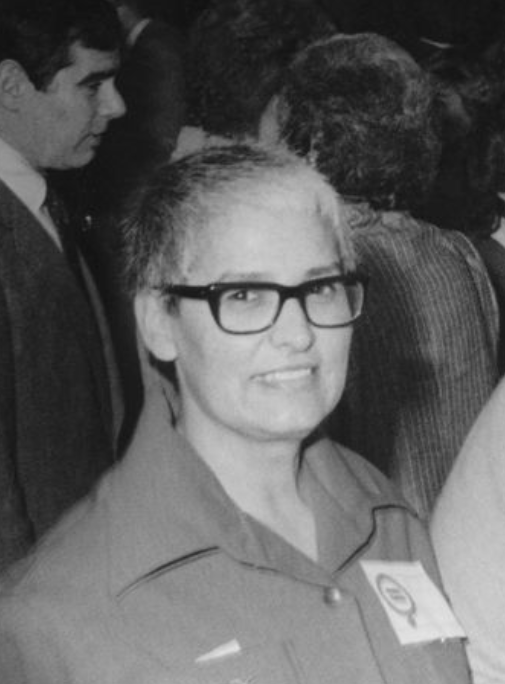
Rosalie Nichols, who went by Nikki, was born in Sacramento and came to San Jose after attending Sacramento and San Francisco State Universities.
In 1975, she and her partner Johnie Staggs opened Ms. Atlas Press, a bookstore and publisher, on West San Fernando Street near downtown San Jose. It carried books and magazines by LGBTQ authors, and focused on the LGBTQ community. It also served as a social hub for the community at a time when there were not a lot of public gathering places for LGBTQ people in the South Bay besides bars.
Ms. Atlas Press also published the literary quarterly Lesbian Voices, which contained short stories, poetry, and essays. It had readers both across the United States as well as overseas.
Nikki became more active in LGBTQ politics in 1977 when she served as treasurer for the effort to defeat Proposition 6, otherwise known as the Briggs Initiative. In 1979, she was one of the founding members of San Jose’s Susan B. Anthony Democratic Club. As co-chair of that club she addressed the meeting of the California Democratic Party’s Executive Committee that was held in San Jose in July 1979.
Nikki and Johnie were also contributors to the pioneering South Bay LGBTQ newspaper Lambda News. Following disagreements with the paper’s publisher, she, Johnie and several others founded Our Paper in 1982. Lambda News would fold in 1983 but Our Paper continued regular publication until 1995.
She received a commendation from Santa Clara County’s Human Relations Commission in 1984. That same year she would become one of the first board members of BAYMEC.
Rich spent his childhood on the Peninsula before moving to Orange County for high school. He stayed in Southern California for college, at USC, before moving to the Midwest to attend divinity school at Northwestern. He was ordained as a Methodist minister and began working with homeless youth in inner city Chicago. He left the ministry rather than accept a transfer to a church near San Diego County’s massive Marine base at Camp Pendleton where he would mostly minister to suburban military families.
By this time, Rich knew his passion lay in helping those most in need, especially young people. He found a job doing social work through the YMCA, first in Orange County and then back on the Peninsula in Redwood City. He eventually formed a nonprofit group in San Mateo County—Youth and Family Assistance—that grew to have 60 employees and a $5 million annual budget.
Rich dated girls in high school and women in college. He would get married in 1974 to a woman he had met at a Methodist church in Southern California and who he had lived with for two years before marriage. However, by the time he was in his mid-30s he was ready to accept who he was. He undertook the difficult process of ending his marriage and coming out in 1982.
Rich had an early interest in politics. He was elected student body president in high school. His work with the YMCA and in the nonprofit sphere had already exposed him to public policy at the local level. Then, he began to get involved with the nascent LGBTQ political movement on the Peninsula. He became very active with the Peninsula Business Guild, a gay business group, and in late August 1984 Doug De Young introduced him at one of the founding meetings of the BAYMEC board. In September, he was elected to the board, and in 1985 he became BAYMEC’s president.
In 1992, Rich would run for San Mateo County Board of Education and win. Later in 1997, Rich was elected to the San Mateo County Board of Supervisors and in 2010 to the State Assembly, representing the heart of Silicon Valley – including parts of both San Mateo and Santa Clara counties. In the Assembly, he would spend more than four years as chair of the influential Rules Committee. In 2012, he was chosen to chair the full Legislature’s LGBTQ caucus, which would include two successive Assembly speakers during his tenure: John Perez and Toni Atkins. He would remain caucus chair until term limits forced him out of the Assembly.
In July 2017, Rich was named President and CEO of the California Forestry Association.