Johnie Staggs

johnie staggs profile

After moving to San Jose from rural Oroville in 1974, Johnie Staggs was emboldened with a vision for liberation. Together with Rosalie ‘Nikki’ Nichols, Lesbian Voices was founded that year as a quarterly journal for feminist-lesbians. Complementing Lesbian Voices was Ms. Atlas Press, which was established by them. It would later become the largest gay print shop and contribute to the publication of many of Silicon Valley’s gay newspapers. In 1976, Johnie became an avid volunteer at the newly formed Lambda News, which was the first gay newspaper in Silicon Valley.

The press wasn’t Johnie’s sole passion, however. Due to rising threat of the Briggs Initiative in 1977, she became heavily involved with local gay politics, with her work with the Santa Clara Valley Coalition for Human Right. The coalition was an organization primarily dedicated to the plight of the LGBTQ community and combating efforts to criminalize or discriminate against it. Johnie’s work helped to organize its first press conference in September 1977. However, after the temporary stop to the Briggs Initiative, the coalition lost momentum of its support for gay issues. Meanwhile, Johnie had continued to network with and establish groups like the Sisters of Sappha and the Susan B. Anthony Democratic Club.

By February 1978, the controversy over the recognition of Gay Pride Week in San Jose was all the rage. Johnie was instrumental in advocating for the resolution by organizing an overnight protest that gathered over a hundred people. After both mayoral candidate switched their votes against recognition, the gay community was caught in a dilemma whom to support. Since Johnie’s organizing and work was well known, community groups expressed their support for her and Sal Accardi (co-owner and founder of the Watergarden) to run for mayor and city councilmember respectively. Their write-in campaign was unsuccessful, but it was a significant step towards LGBTQ participation in electoral politics in Silicon Valley.

Despite the defeat of the Briggs Initiative in November 1978, there was an overwhelming presence of opposition towards the LGBTQ community with the rise of the Moral Majority and religious fundamentalists. Due to her previous work within the community, Johnie was thrust into the position of campaign manager for both the county-level Measure A and San Jose’s Measure B. While the campaign was wrought with a lack of funds and support, Johnie was credited with holding it together and upholding what was left of the opposition to the religious right.

The defeat of Measures A and B were incredibly devastating, with Johnie declaring her retirement from politics right after the election. For the community at large and those personally involved in the campaign, the loss was innumerable. Seeking a reprieve from those traumatizing events, Johnie went back to publishing Lesbian Voices with Nikki in 1980. In spite of her so-called retirement, Johnie would be elected to the State Democratic Party Executive Committee in December 1980.

After leaving Lambda News in 1982, Johnie remained involved in the gay press through the creation of Our Paper/Your Paper. She would continue her work in the newspaper until 1985, when she began a brief six-month publication of her own paper X-tra X-tra. Johnie would then retire from the press after 20 years, and moved away from San Jose with her partner Teri Espy that year.
Nikki Nichols

rosalie nichols profile

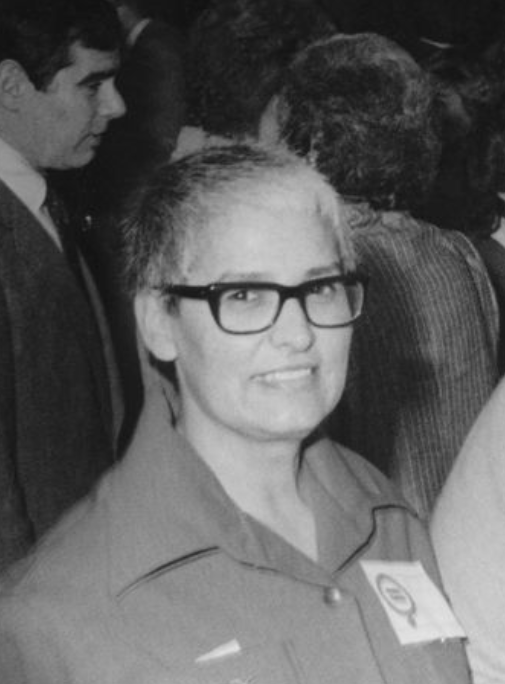
Rosalie Nichols, who went by Nikki, was born in Sacramento and came to San Jose after attending Sacramento and San Francisco State Universities.

In 1975, she and her partner Johnie Staggs opened Ms. Atlas Press, a bookstore and publisher, on West San Fernando Street near downtown San Jose. It carried books and magazines by LGBTQ authors, and focused on the LGBTQ community. It also served as a social hub for the community at a time when there were not a lot of public gathering places for LGBTQ people in the South Bay besides bars.

Ms. Atlas Press also published the literary quarterly Lesbian Voices, which contained short stories, poetry, and essays. It had readers both across the United States as well as overseas.

Nikki became more active in LGBTQ politics in 1977 when she served as treasurer for the effort to defeat Proposition 6, otherwise known as the Briggs Initiative. In 1979, she was one of the founding members of San Jose’s Susan B. Anthony Democratic Club. As co-chair of that club she addressed the meeting of the California Democratic Party’s Executive Committee that was held in San Jose in July 1979.

Nikki and Johnie were also contributors to the pioneering South Bay LGBTQ newspaper Lambda News. Following disagreements with the paper’s publisher, she, Johnie and several others founded Our Paper in 1982. Lambda News would fold in 1983 but Our Paper continued regular publication until 1995.

She received a commendation from Santa Clara County’s Human Relations Commission in 1984. That same year she would become one of the first board members of BAYMEC.

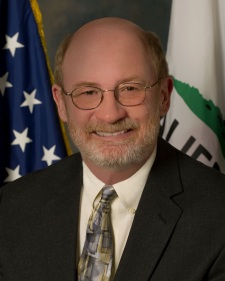
Rich Gordon

rich gordon profile

Rich spent his childhood on the Peninsula before moving to Orange County for high school. He stayed in Southern California for college, at USC, before moving to the Midwest to attend divinity school at Northwestern. He was ordained as a Methodist minister and began working with homeless youth in inner city Chicago. He left the ministry rather than accept a transfer to a church near San Diego County’s massive Marine base at Camp Pendleton where he would mostly minister to suburban military families.

By this time, Rich knew his passion lay in helping those most in need, especially young people. He found a job doing social work through the YMCA, first in Orange County and then back on the Peninsula in Redwood City. He eventually formed a nonprofit group in San Mateo County—Youth and Family Assistance—that grew to have 60 employees and a $5 million annual budget.

Rich dated girls in high school and women in college. He would get married in 1974 to a woman he had met at a Methodist church in Southern California and who he had lived with for two years before marriage. However, by the time he was in his mid-30s he was ready to accept who he was. He undertook the difficult process of ending his marriage and coming out in 1982.

Rich had an early interest in politics. He was elected student body president in high school. His work with the YMCA and in the nonprofit sphere had already exposed him to public policy at the local level. Then, he began to get involved with the nascent LGBTQ political movement on the Peninsula. He became very active with the Peninsula Business Guild, a gay business group, and in late August 1984 Doug De Young introduced him at one of the founding meetings of the BAYMEC board. In September, he was elected to the board, and in 1985 he became BAYMEC’s president.

In 1992, Rich would run for San Mateo County Board of Education and win. Later in 1997, Rich was elected to the San Mateo County Board of Supervisors and in 2010 to the State Assembly, representing the heart of Silicon Valley – including parts of both San Mateo and Santa Clara counties. In the Assembly, he would spend more than four years as chair of the influential Rules Committee. In 2012, he was chosen to chair the full Legislature’s LGBTQ caucus, which would include two successive Assembly speakers during his tenure: John Perez and Toni Atkins. He would remain caucus chair until term limits forced him out of the Assembly.

In July 2017, Rich was named President and CEO of the California Forestry Association.

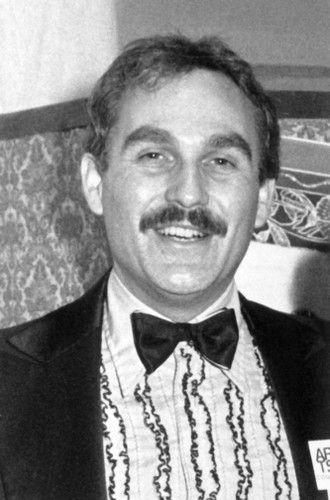
Rick Rudy

rick-rudy

Today, the tech industry is hailed as a model of inclusiveness. It is considered to be one of the most LGBTQ-friendly industries in the U.S. The CEO of the world’s most valuable tech company, Apple, is gay.

This reputation did not happen naturally or overnight. It took years of struggle by LGBTQ engineers, programmers, and other tech workers. The late Rick Rudy played a key role in that struggle.

Rick was born and raised in New York City. He received his bachelor’s and master’s degrees in engineering from MIT and afterwards began a career in the tech industry that brought him to San Jose in the early 1970s.

In June 1982, more than two years before BAYMEC was founded, Rick was one of a handful of tech industry workers who met in San Jose to form a South Bay chapter of the San Francisco-based Lesbian and Gay Associated Engineers and Scientists. By the following February, the organization had separated from San Francisco and was renamed High Tech Gays. Rick would be its first president and help write its by-laws.

Rick was a board member of BAYMEC from the very beginning. He hosted some of the earliest meetings at his house, helped write their by-laws, and provided them with early publicity in the High Tech Gays newsletter. Rick made the time for BAYMEC when he was busier than ever. He had gotten involved in gay rights at a national level, joining the board of the National Gay and Lesbian Task Force in 1985. This led to interviews both locally in the Mercury News and nationally in the Advocate and the Wall Street Journal.

Sadly, Rick was one of the more than 2,000 Santa Clara County victims of the AIDS epidemic. His life was tragically cut short in 1990 at age 44.

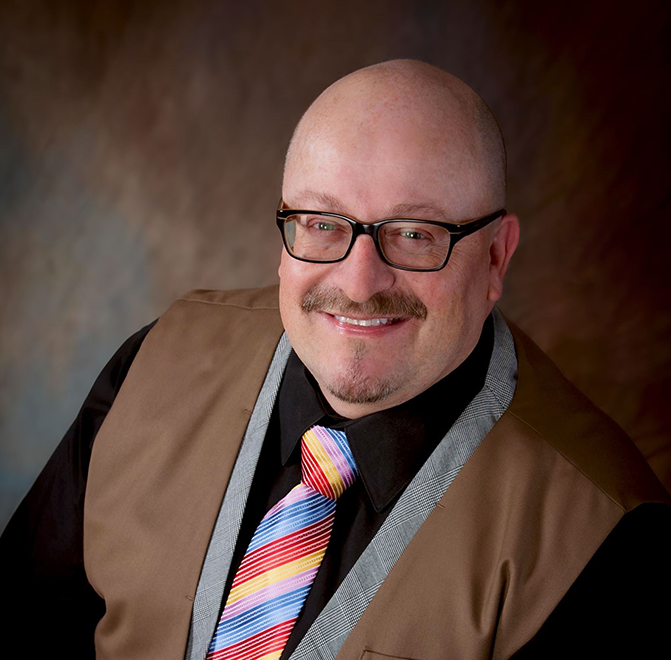
Peter Johnson

peter johnson profile

Days after the 1993 Walk for AIDS in downtown San Jose, the Mercury News ran an article that illustrated just how devastating the epidemic was in those years.

“As the fourth annual Walk for AIDS drew near, every visitor to the bedside of Peter Johnson had to make a pledge. “He was dying and he was asking people to sponsor him,” said his mother, Helen Johnson. “On Monday, Peter Johnson—down to 100 pounds from his normal 150, 6-foot-1—confided to his friend Bob Clayton: “It’ll be a chair-athon for me (Sunday).” I said, ‘Fine. We’ll all push.’”

Regrettably, Peter Johnson didn’t make it to the annual fund-raising walk for the disease. He died of AIDS on October 13, 1993, just under two months after his 30th birthday.

Throughout his illness, Johnson drew strength from the support of his family. His mother, Helen, volunteered at Aris alongside him and walked in the AIDS Walk with him every year. She continued to walk for many years after Johnson’s death.

Johnson had graduated from Overfelt High School in 1981. He was diagnosed with HIV at the end of the 80s and shortly afterwards began volunteering with Aris. By early 1991, he was a member of the Aris board with the group’s executive
director Bob Sorenson telling the Mercury News that Peter was “one of our best interpersonal ambassadors.”

In 1992, he was appointed to the County AIDS Commission. He attended every commission meeting, even those where there was not a quorum present. Sadly, his time on the commission was too short.