Digital Queers

If the South Bay was home to changing internal policies, San Francisco became the hub for disseminating those ideas beyond Silicon Valley. Larger conventions and gatherings emerged in the early 1990s, including the first Out and Equal workplace conference in October 1991. From there, collectives like the National Lesbian and Gay Task Force (NLGTF) emerged from this community in 1992.

The need to communicate en-mass grew as the inter-corporate networks grew.

That year, software marketer Tom Reilly and writer and editor Karen Wickre co-founded Digital Queers—a Castro-based activist group that worked to bring gay-oriented nonprofits up-to-speed online through modems, PowerMacs, AOL software discs and email tutorials.

Named as a funny, more modern evolution from High Tech Gays, they worked tech show floors such art the Macworld Expo in San Francisco, talking to friends, colleagues and strangers who would agree to donate equipment, time and money to organizations across the United States.

The idea easily struck a chord with developers, with Tom and Karen at one point collecting $75,000 in software, $75,000 in consulting services and $50,000 in cash, which was later presented at the Yerba Buena Center for the Arts.

As the technology grew, the need to stay up-to-date continued. Three years into business, DQ had 1,000 members and served 30 nonprofits, including the NLGTF and Parents and Friends of Lesbians and Gays (PFLAG), which boasted speakers bureau members like Bennet and Kim in the South Bay.

This fortunately happened at the same time personal computers became cheaper and more ubiquitous, so the gay and lesbian employee events grew more active. Recruiters for Microsoft and Apple had started posting jobs throughout the organization.

In the years after the first party in January 1993, word of mouth eventually led to these Digital Queers benefits became a socially hot ticket, bringing thousands of gay, lesbian and allies together in one social network.

“(Looking) at how many people were there could be very empowering,” Karen said, adding that people were often generous with trading email addresses and in-person introductions.

One of these connections was Tom talking to Apple CEO John Sculley about domestic partner benefits, which lagged seven years behind its nondiscrimination policy implementation, in part due to an incrementalist approach from its employees.

Tom told the Los Angeles Times he briefed the issue with the top Apple executive, who later breezily welcomed the idea at a meeting with Apple Lambda in 1993, eliciting tears and a standing ovation from staff.

The need for gay employee groups started to dwindle as newer organizations came on the scene with nondiscrimination policies and domestic partner benefits already in place. And as nonprofits became more digitally self-sufficient, Digital Queers and its email address book effectively dissolved into GLAAD by 1998.
Read more here.

John Laird

john laird profile

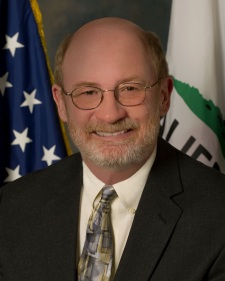
John Laird grew up in Vallejo and had come to Santa Cruz in 1968 to attend UCSC. In 1974, he began working for Santa Cruz County as a budget analyst. He ran for Santa Cruz City Council in 1981 and was the leading vote getter that year. In 1983, he was selected by his council colleagues to serve as mayor for a one-year term. That year he would receive national media attention as one of the first openly gay mayors in the U.S. He would serve a second term as mayor in 1987-88.

During his time on the city council, John led Santa Cruz to become the third city in the nation—after West Hollywood and Berkeley—to offer domestic partner benefits to its employees. He also advocated for the designation of Monterey Bay as a national marine sanctuary. John joined the BAYMEC board in early 1985, significantly increasing our visibility and presence in Santa Cruz County.

After being termed out of the city council, John served as executive director of the Santa Cruz AIDS Project from 1991-94. He was then elected to the Cabrillo Community College board for two terms from 1994-2002 .In 2002, John won a seat in the State Assembly representing a district that included parts of Monterey, Santa Clara, and Santa Cruz counties. That year, he and San Francisco’s Mark Leno became the first two openly gay men to be elected to the state legislature in California.

John continued to be a strong advocate for the environment in the Assembly. He was one of the co-authors of AB 32, the landmark 2006 state law that regulated greenhouse gases and established California’s cap and trade program. He also authored the bill that established the Sierra Nevada Conservancy, a state agency focused on protecting and preserving the environment in the Sierra Nevada mountains. He also had a major influence on the state’s finances during his four years as chair of the Assembly Budget Committee from 2004 to 2008. He was termed out of the Assembly at the end of 2008, but that was not the end to John’s career in public service.

John served as California’s Secretary for Natural Resources under Governor Jerry Brown from 2011-2019. In 2013, he was one of 10 LGBTQ public officials who were honored by the Obama Administration as a “Harvey Milk Champion of Change” at a White House ceremony. In November 2022, he won election to the State Senate in the greater Santa Cruz/Monterey Bay/Santa Clara area.

LGBTQ Youth Space

LGBT youth space featured

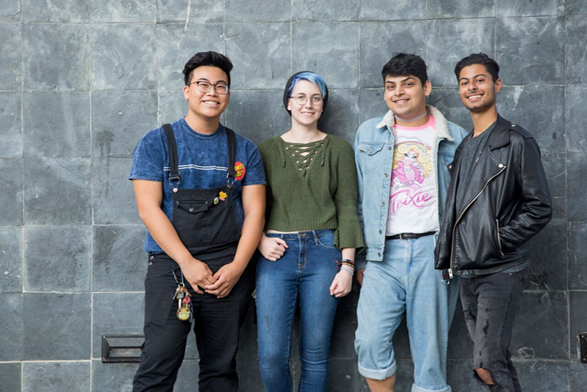
The San Jose LGBTQ Youth Space is a community drop-in center and mental health program for lesbian, gay, bisexual, transgender, queer, questioning and ally youth and young adults ages 13-25 who live in Santa Clara County. The center is committed to running a participant-driven program focused on youth empowerment strategies.

“The Youth Space has provided me a sense of community and a safe space to be myself. It’s a space to have fun and find friends and also to be politically educated and find resources for help.” —Frank Peña

The LGBTQ Youth Space is directed by Adrienne Keel and staffed by a team of LGBTQ+ and ally community members. Staff members have diverse professional backgrounds including the fields of social justice, youth development, mental health, social work, sexuality and gender studies, community organizing, public health, and arts and culture. The center also employs peer mentors in support of their community.

The Youth Space offers a safe and confidential space equipped with a wide range of resources for LGBTQ+ youth in Santa Clara County including support groups, art workshops, activism and leadership opportunities, movie nights, field trips, volunteer opportunities, free snacks, internet access, and video games. 

The mental health services provided by the center are available in English, Spanish, and American Sign Language. Services include individual counseling, case management and psychiatry.

The Youth Space outreach team also offers gender/sexuality awareness workshops for colleagues or students and consult with those who wish to establish campus-based LGBTQ+ groups.. In addition to this, they also provide LGBTQ+ speakers to share their lived experiences. Off-site services are provided free of charge. 

The LGBTQ Youth Space is a Program of Family & Children Services and Caminar.

Visit their website here.

Song That Radio

Song That

A haven for Vietnamese members of the LGBTQ+ community could be found every Sunday night on Song That Radio, the nation’s first Vietnamese gay and lesbian radio show broadcast out of KSJX in San Jose. Translated as “live truthfully,” the hour-long program was founded in March 1999 by Vuong Nguyen. She was known as the “Eldest Sister” of the ST family, who also founded one of the country’s first Vietnamese gay and lesbian groups in San Jose in the late 1980s.

This wasn’t Nguyen’s first radio gig, previously working as a news writer and reader for American military radio while living in Saigon. Born in 1943, she advocated against Communist Hanoi while a college student early in the Vietnam War. She brought a Vietnamese-style broadcasting mix of news, contemporary music, poetry and letters from readers to Song That Radio, focusing on messages of anti-homophobia and equality in the community and society.

A slogan of the program has been documented online as, “Live true to your biological nature, and live well together, with everyone around and proud of your own. Your natural nature, that of a homosexual, is useful in society.”

The mission of Song That Radio included advocating for acceptance in the Vietnamese community, bridging gaps between heterosexual family members and educating about HIV and AIDS. These goals proved especially vital for closeted LGBTQ folks who weren’t fluent English speakers.

The most recent programs still accessible online date back to August 2013, when discussion topics ranged from a French woman providing breastfeeding services to homosexual parents and Amsterdam’s Gay Pride festival, to Pope Francis’ “Who am I to judge?” stance on gay people and ABC Family airing a lesbian wedding on TV – the first after the Supreme Court struck down the unconstitutional Defense of Marriage Act. In addition to radio programming, they hosted in-person shows, where packed audiences would watch nights filled with song, dance, comedy and fashion, sometimes with standing room only. Song That Radio’s location in San Jose wasn’t happenstance.

According to a 2011 report on the Status of Vietnamese Health, Santa Clara County’s Vietnamese population grew from 11,717 in 1980 to 134,525 in 2010 – the second largest of any county in the country. The City of San Jose had the largest Vietnamese population of any U.S. city. At the time, there were no Vietnamese words to clearly, respectfully talk about the LGBTQ+ community. The idea was that by building understanding, that would lead to love, openness and freedom by building a bridge between Vietnamese roots and queer life. This work blended into politics, including marching against Prop 8, which temporarily halted legal same-sex marriages in California. On May 15, 2012, Song That Radio received a commendation from the San Jose City Council.

Visit their website songthat.com in Vietnamese or read their mission in English.

South Bay Leather and Uniform Group

slug

South Bay Leather and Uniform Group (SLUG) had their founders meeting in September of 1988. Don Queen, David Carranza, John Esqueda and his partner Todd, Rafael Montejo and his partner Stan, and Jill and her partner, were the founders. SLUG was started as a social club for the leather community. 

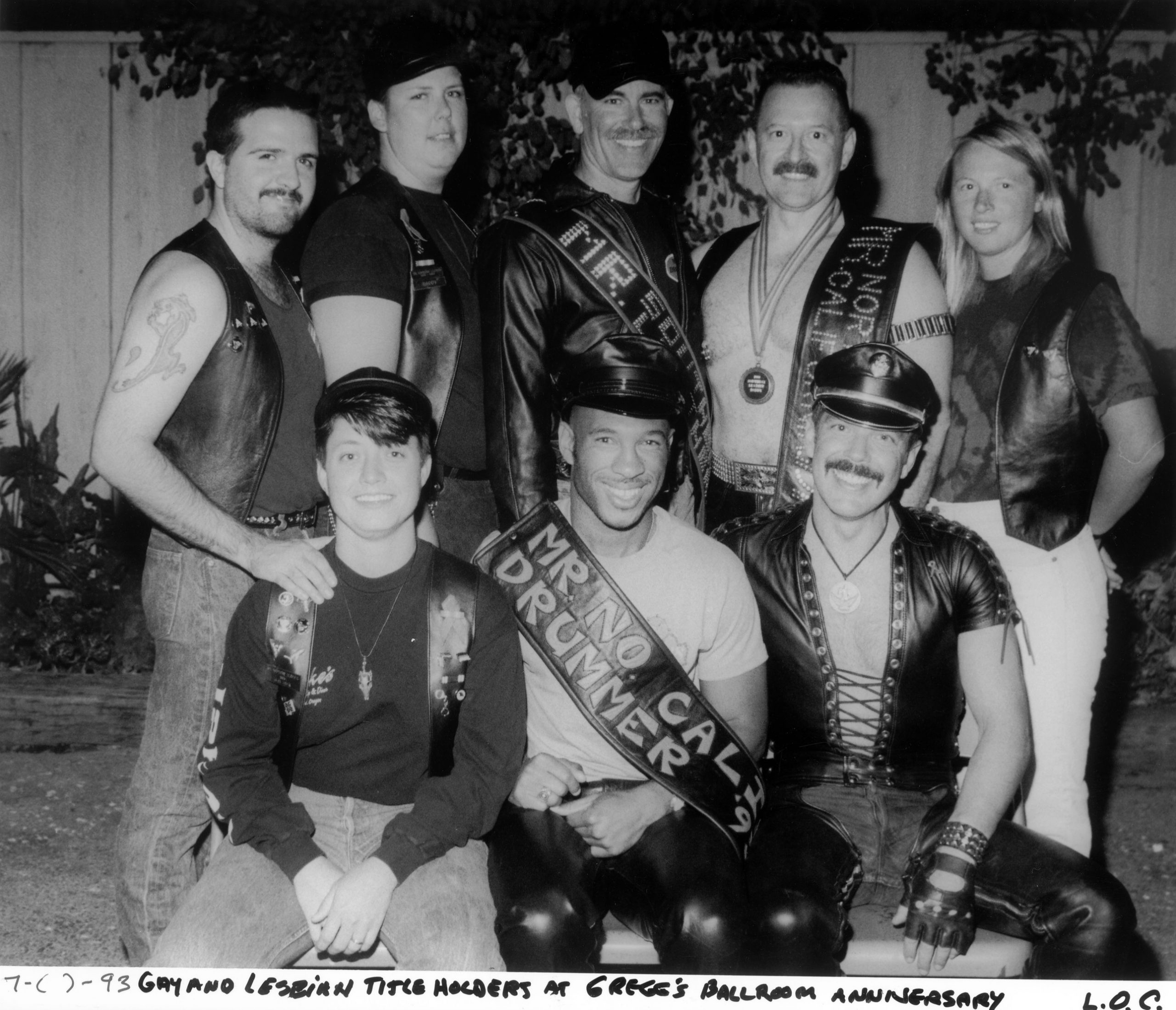
Graylin Thornton was new to the leather community in 1993.  Graylin was about 26 years old when he, along with others, hosted the first Leather Pride Festival in San Jose. Shortly after this, Graylin became the first African American man to win the title of International Mr. Drummer in San Francisco. 

The Drummer contest, now known as International Leather Sir/Boy, spanned a diverse range of fetish communities and included rubber, leather, and cowboys.

Since that early win, Thornton went on to receive the Leather Leadership Award from the National Gay and Lesbian Task Force, as well as a Pantheon Award from the Leather Journal.

“We don’t do these things for ourselves as leaders, we do them for the community itself,” he said. “And I think that the younger people who are coming up … need to understand that you don’t just go to a beer bust and do one event. You keep going because you’ll always be a part of that community.”

But due to the toll of HIV/AIDS on the leather community over the years, Thornton said, “many younger members aren’t able to look up to as many role models as previous generations have. When I was 25 and 30, I had people there steering me the whole way,” he said. “Unfortunately, they don’t really have that. So those of us who are 50, 55, have to mentor our younger people.”

Mentorship was a key component of Thornton’s entrance to the community, and it still plays an important role.

SLUG disbanded in the mid-1990s, but the group Santa Clara County Leather Association(SCCLA) took its place. SCCLA still hosts leather nights at Renegades.

Read more about Graylin and the Leather Community here: https://www.ebar.com/news/pride//248569

Kim Harris and Bennet Marks

bennet marks kim harris google

Kim Harris is a computer scientist and gay rights activist based out of Sunnyvale, California. 

Born in 1946, he studied physics at Louisiana State University, later earning his masters in computer science at Purdue. The Texas native moved to the Bay Area in 1974 to work on a super computer for NASA. He was not yet openly gay. 

As Kim incrementally came out to friends and colleagues, he joined a gay men’s discussion group at Stanford where he met Bennet Marks, with whom he started a relationship in 1982 and married in September 2008. He also began attending High-Tech Gays meetings by 1983.

Kim joined Hewlett-Packard in 1984, where he joined unofficial gay employee groups like Friends of Dorothy and the Gay and Lesbian Employee Network (GLEN). From there, he helped get the ball rolling at HP to implement nondiscrimination policies and expand diversity training and AIDS-related health care coverage. He retired in 2001 at the age of 55.

During the 1990s, he joined groups like the Parents and Friends of Lesbians and Gays speakers bureau, Peninsula Business and Professional Association, Billy DeFrank LGBT Community Center Board of Directors and the HRC Business Council in 1998.

Bennet Marks

He also was involved with support and advocacy groups like Silicon Valley Gay Men’s Chorus, Outlet and Outlook TV.

Bennet Marks is a software engineer and gay rights activist based in Sunnyvale, California. 

Born in 1954 in Long Island, he studied at Brown University before starting a graduate math program at Stanford. He ultimately left before presenting his final thesis, earning a masters degree.

Bennet got a job at Ford Aerospace in 1981, where he obtained a security clearance, in part, due to not yet being openly gay to himself or others. Beginning to come out, he met Kim Harris at a Stanford gay men’s discussion group. The two have been in a relationship since November 1982, and married in September 2008, before California’s Prop 8 initially passed later that year. 

Bennet later moved onto a job at Apple, where he started a gay employee group named Apple Lambda in 1986. That group sparked nondiscrimination policies and domestic partner benefits at Apple. Not long after he joined the BAYMEC board in 1986 and Outlet TV.

He transitioned to working at Google in 2004, where he created the Gayglers in 2006. Bennet retired in 2011, and continues to live with Kim in the South Bay.

San Jose State University PRIDE Center

sjsu pride

The San José State University (SJSU) PRIDE Center was founded on September 22, 2008, initially as the LGBT Center, to cultivate an inclusive campus climate for LGBTQ+ students.  The center supports student’s identity growth, leadership development, and cultivates a community to support the safety and well-being of all LGBTQ+ community members at SJSU.  The PRIDE Center was initially located in Building BB on the South East side of campus across from the Campus Village residence halls. From there it had a brief stint in Hoover Hall, and a temporary location in a Modular Building B for a few years while the Student Union renovation project was being completed. The PRIDE Center is located in the Student Union and is led by the founding director Bonnie Sugiyama with the support from the Counseling and Psychological Services (CAPS) counselors Dr. Stephanie Preston (current); Tova Feldmanstern, LCSW; Dr. Angela Krumm; and many intern counselors and post-doctoral residents.

 One of the larger efforts hosted by the center is the Peers in PRIDE or PIP mentoring program, developed by Dr. Angela Krumm, which connects incoming or continuing students with peer mentors who help them find a sense of community and belonging on campus and ease the transition to a large urban university. The program allows students an opportunity to connect with their peers and create new communities that they can rely upon.

Another initiative the center has successfully implemented is SJSU to Zero, through a grant from the county, which is an advocacy project mirroring the efforts of the county’s Getting to Zero campaign.  SJSU to Zero focuses on reducing the rates of HIV transmission through promoting preventative actions like PrEP, and working to reduce the stigma surrounding HIV testing and diagnosis. The project (the first of its kind on SJSU’s campus) is spearheaded by Matthew Capprioni in partnership with Sugiyama. This advocacy-based effort works by providing spaces for students to discuss HIV openly, thus reducing stigma and removing barriers to testing and treatment. 

Along with these two programs, the SJSU Pride Center also supports six student organizations which function on campus in different spaces, and help students feel a sense of community and visibility among their peers: 

Estudiantes Latin@’s y el Provecto Arco Iris –  A supportive, social and activist group open to all lesbian, gay, bisexual, transgender queer, questioning, intersex, and ally (LGBTQQIA) Latin@s in the San Jose area.

Out in Science, Technology, Engineering, and Mathematics – a chapter of the national OSTEM society dedicated to educating and fostering leadership for LGBTQQIA communities in the STE(A)M fields.

Queer and Asian (Q&A) –  Q&A originated in fall 2009 and is designed to encourage students to raise positive awareness of queer and pan-Asian communities at the SJSU campus.

Queers Thoughtfully Interrupting Prejudice (QTIP) – QTIP provides a safe space for gay, lesbian, bisexual, transgender, and allies an opportunity to come together in a supportive environment and discuss issues and concerns.

Urban PRIDE – Urban PRIDE is dedicated to dealing with and catering to the social and daily issues of urban GLBTQ individuals in the San Jose area through events, functions, and making our voices heard. 

Trans Talk – Trans Talk is a group for transgender/genderqueer identified people and their active allies.

The center is also home to the LGBTQ+ Faculty and Staff Association, who meet regularly to discuss issues facing LGBTQ+ members of the SJSU campus, as well as the larger San Jose community. LGBTQ+ FSA was formed in 1992 and is open to all SJSU faculty and staff interested in lesbian, gay, bisexual and transgender topics. 

The center hosts regular events and meetups for LGBTQ+ students, and provides ample resources for services and education on their website. The annual Rainbow Graduation celebration is the pinnacle experience for students who have engaged with the community through the PRIDE Center.  All participants are given rainbow tassels and former PIP mentors are given rainbow honor cords.

During the COVID-19 statewide shutdown, the center has made huge efforts to continue providing reliable support to students through hosting online meetups, and even hosting a virtual Rainbow Graduation ceremony in Spring of 2020.

Teatro Alebrijes

teatro alebrijes

A one-of-a-kind LGBTQ Latinx Theater ensemble located in San Jose. The plays produced are inspired by the queer Latinx experience. Rodrigo García and Ugho Badú direct the ensemble in addition to writing the plays that the ensemble performs. Every year the ensemble performs an originally written Christmas play that performs at the Mexican Heritage Plaza, Billy Defrank Center, and in Watsonville. In 2016, they produced a four-episode web series titled “SiemPrE Por Ti” funded by the Health Trust as part of the Getting to Zero strategy. Another project funded by Getting to Zero is “Canción de Cuna para Un Niño Herido/Lullaby for a Wounded Boy” which was met with great success. For three consecutive years, Teatro Alebrijes produced “Carlota” an original play by members of the ensemble, which performed to sold-out audiences that included English-speaking folks who attended despite the fact that the play was spoken in Spanish, but had subtitles projected on a screen in English. In 2019, Teatro Alebrijes was invited to perform at the historic El Teatro Campesino in San Juan Bautista for its Day of the Dead celebration. The ensemble used to rehearse 2-4 days a week at the School of Arts & Culture, and it’s now holding virtual rehearsals through the Zoom platform.

Colectivo ALA

colectivo ala header 1

In pursuit of creating strong leadership and community within local gay Latinos, Rodrigo Garcia and Omar Nuñez founded Colectivo Acción Latina de Ambiente, ALA, as a volunteer-run grassroots organization in 2011. Before this, Rodrigo had founded De Ambiente, a youth support group for young gay Latinos at Outlet. Having been involved in this and at Aguilas (an intervention program for bisexual and gay Latinos in San Francisco), Rodrigo had already seen the benefits of creating a Latino-based LGBTQ support group. Seeing the lack of organizations — especially in absence of ProLatino — Rodrigo linked up with Omar, who was working at the PACE Clinic and former ProLatino organizer. Together, along with the assistance of AACI (Asian Americans for Community Involvement) and the Billy DeFrank Center, Colectivo ALA was formed. The first meeting was on August 1, 2011. Ugho Badú (a.k.a. Hugo Badillo) was the first program coordinator. The mission of Colectivo ALA has and continues to be about providing a space for the freedom of expression, individual growth, and community building for LGBTQ Latinos and Latinas. 

Colectivo ALA offers group sessions covering a wide array of topics. From HIV/PrEP, Sexual Health to Cultural Traditions and Identity to Social Media and Political Asylum, the organization has done their best to provide assistance for any issue the community brings to the table. They host a number of different programs and activities such as ALA, which is a bi-weekly meeting at the Billy DeFrank Center (on Zoom now due to COVID-19). Furthermore, there are many single-event activities to promote community participation, social interaction, and advocacy for the group, through participating in Pride and an annual summer weekend retreat for 40 gay or bisexual men members. As for art production, Teatro Alebrijes is a theater ensemble put together that creates LGBTQ Latinx-themed productions. Another part of Colectivo ALA is to welcome others into the group, including those from outside of the area to make everyone feel welcome while celebrating their cultural uniqueness.

You can learn more about Colectivo ALA at their website.


“And now we have in these meetings not only folks from the Bay Area, we have folks from Puerto Rico and Mexico. We have a guy from Boston, another guy from Michigan. So it has expanded… because there were places like De Ambiente like Colectivo ALA, where LGBTQ Latinx people have the opportunity to, to practice and become confident and feels empowered. You know, with people like that, these guys are able to take on leadership roles. And I hope that one of them, one day, feel inspired to do something more — but it starts from there, from nurturing those two spaces. When we came up with the idea of Colectivo ALA, we didn’t have anything, but there were allies who were supporting us with the resources that they had.” — Rodrigo Garcia

De Ambiente

de ambiente pride

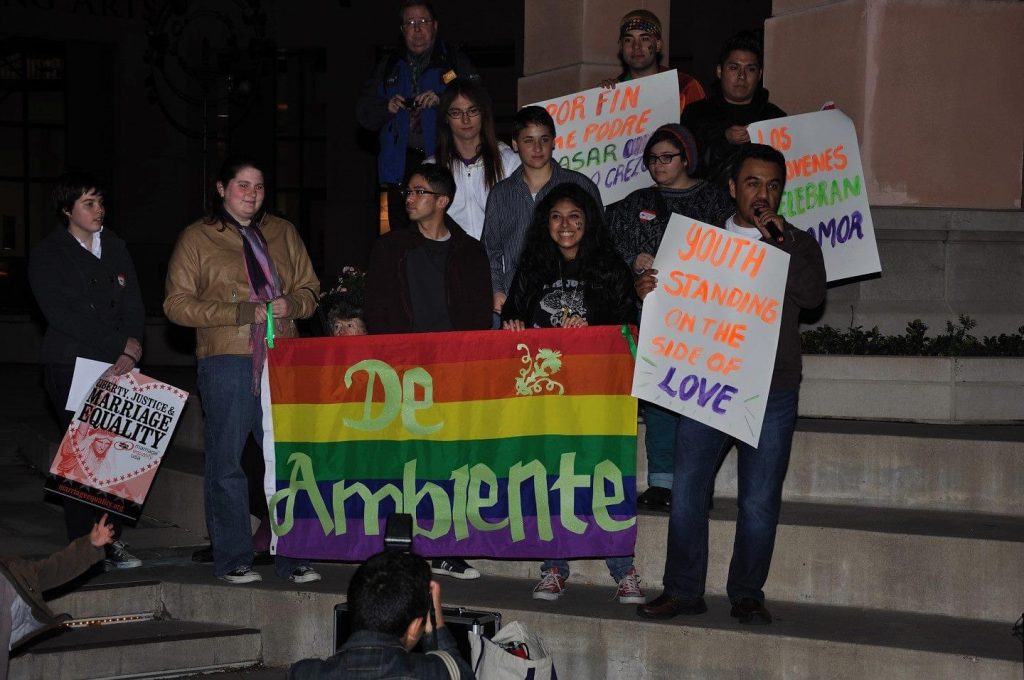
Jóvenes De Ambiente was a safe space for Spanish speaking and multilingual youth under the age of 25. Not exclusively for Latinx youth, this group was a safe haven for over 50 youth from all over the peninsula and South Bay. This safe haven provided sexual health awareness and leadership development for those interested in activism. Youth participated in rallies, pride parades, retreats, dances, and panels in different schools and medical facilities to bring visibility and awareness about LGBTQ+ youth. Many of the participants today say that De Ambiente was and continues to be a family where they can find comfort and support. This group of individuals was an outlet that kept many away from isolation, depression, drugs and alcohol, and for some, it was a space for individual growth.


Learn more about the organization on their Facebook page.