San Jose State University PRIDE Center

sjsu pride

The San José State University (SJSU) PRIDE Center was founded on September 22, 2008, initially as the LGBT Center, to cultivate an inclusive campus climate for LGBTQ+ students.  The center supports student’s identity growth, leadership development, and cultivates a community to support the safety and well-being of all LGBTQ+ community members at SJSU.  The PRIDE Center was initially located in Building BB on the South East side of campus across from the Campus Village residence halls. From there it had a brief stint in Hoover Hall, and a temporary location in a Modular Building B for a few years while the Student Union renovation project was being completed. The PRIDE Center is located in the Student Union and is led by the founding director Bonnie Sugiyama with the support from the Counseling and Psychological Services (CAPS) counselors Dr. Stephanie Preston (current); Tova Feldmanstern, LCSW; Dr. Angela Krumm; and many intern counselors and post-doctoral residents.

 One of the larger efforts hosted by the center is the Peers in PRIDE or PIP mentoring program, developed by Dr. Angela Krumm, which connects incoming or continuing students with peer mentors who help them find a sense of community and belonging on campus and ease the transition to a large urban university. The program allows students an opportunity to connect with their peers and create new communities that they can rely upon.

Another initiative the center has successfully implemented is SJSU to Zero, through a grant from the county, which is an advocacy project mirroring the efforts of the county’s Getting to Zero campaign.  SJSU to Zero focuses on reducing the rates of HIV transmission through promoting preventative actions like PrEP, and working to reduce the stigma surrounding HIV testing and diagnosis. The project (the first of its kind on SJSU’s campus) is spearheaded by Matthew Capprioni in partnership with Sugiyama. This advocacy-based effort works by providing spaces for students to discuss HIV openly, thus reducing stigma and removing barriers to testing and treatment. 

Along with these two programs, the SJSU Pride Center also supports six student organizations which function on campus in different spaces, and help students feel a sense of community and visibility among their peers: 

Estudiantes Latin@’s y el Provecto Arco Iris –  A supportive, social and activist group open to all lesbian, gay, bisexual, transgender queer, questioning, intersex, and ally (LGBTQQIA) Latin@s in the San Jose area.

Out in Science, Technology, Engineering, and Mathematics – a chapter of the national OSTEM society dedicated to educating and fostering leadership for LGBTQQIA communities in the STE(A)M fields.

Queer and Asian (Q&A) –  Q&A originated in fall 2009 and is designed to encourage students to raise positive awareness of queer and pan-Asian communities at the SJSU campus.

Queers Thoughtfully Interrupting Prejudice (QTIP) – QTIP provides a safe space for gay, lesbian, bisexual, transgender, and allies an opportunity to come together in a supportive environment and discuss issues and concerns.

Urban PRIDE – Urban PRIDE is dedicated to dealing with and catering to the social and daily issues of urban GLBTQ individuals in the San Jose area through events, functions, and making our voices heard. 

Trans Talk – Trans Talk is a group for transgender/genderqueer identified people and their active allies.

The center is also home to the LGBTQ+ Faculty and Staff Association, who meet regularly to discuss issues facing LGBTQ+ members of the SJSU campus, as well as the larger San Jose community. LGBTQ+ FSA was formed in 1992 and is open to all SJSU faculty and staff interested in lesbian, gay, bisexual and transgender topics. 

The center hosts regular events and meetups for LGBTQ+ students, and provides ample resources for services and education on their website. The annual Rainbow Graduation celebration is the pinnacle experience for students who have engaged with the community through the PRIDE Center.  All participants are given rainbow tassels and former PIP mentors are given rainbow honor cords.

During the COVID-19 statewide shutdown, the center has made huge efforts to continue providing reliable support to students through hosting online meetups, and even hosting a virtual Rainbow Graduation ceremony in Spring of 2020.

Teatro Alebrijes

teatro alebrijes

A one-of-a-kind LGBTQ Latinx Theater ensemble located in San Jose. The plays produced are inspired by the queer Latinx experience. Rodrigo García and Ugho Badú direct the ensemble in addition to writing the plays that the ensemble performs. Every year the ensemble performs an originally written Christmas play that performs at the Mexican Heritage Plaza, Billy Defrank Center, and in Watsonville. In 2016, they produced a four-episode web series titled “SiemPrE Por Ti” funded by the Health Trust as part of the Getting to Zero strategy. Another project funded by Getting to Zero is “Canción de Cuna para Un Niño Herido/Lullaby for a Wounded Boy” which was met with great success. For three consecutive years, Teatro Alebrijes produced “Carlota” an original play by members of the ensemble, which performed to sold-out audiences that included English-speaking folks who attended despite the fact that the play was spoken in Spanish, but had subtitles projected on a screen in English. In 2019, Teatro Alebrijes was invited to perform at the historic El Teatro Campesino in San Juan Bautista for its Day of the Dead celebration. The ensemble used to rehearse 2-4 days a week at the School of Arts & Culture, and it’s now holding virtual rehearsals through the Zoom platform.

Colectivo ALA

colectivo ala header 1

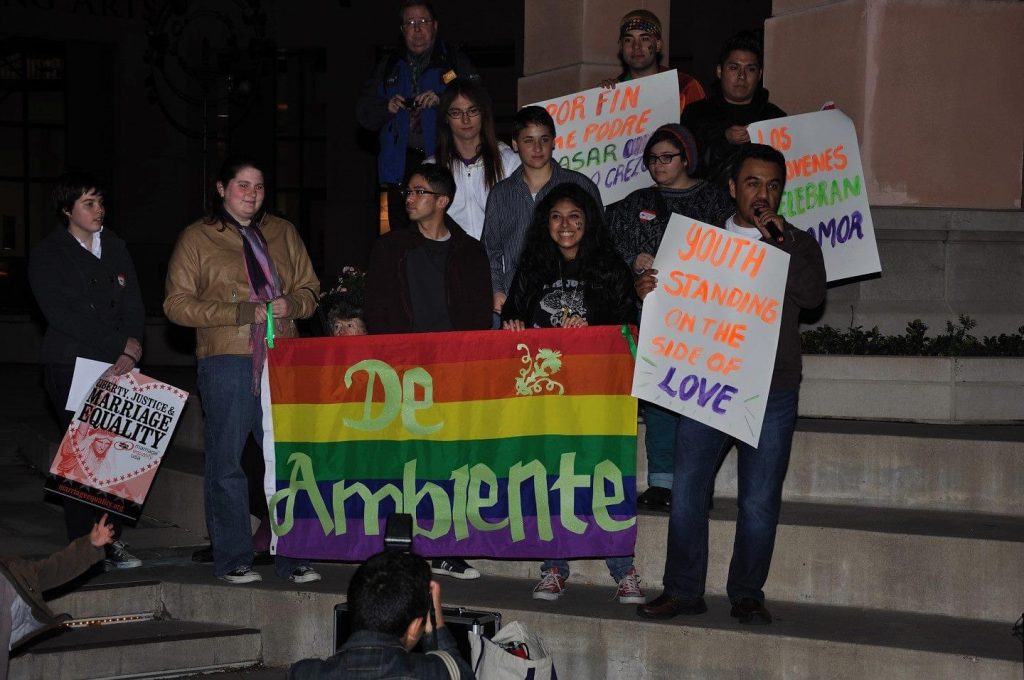
In pursuit of creating strong leadership and community within local gay Latinos, Rodrigo Garcia and Omar Nuñez founded Colectivo Acción Latina de Ambiente, ALA, as a volunteer-run grassroots organization in 2011. Before this, Rodrigo had founded De Ambiente, a youth support group for young gay Latinos at Outlet. Having been involved in this and at Aguilas (an intervention program for bisexual and gay Latinos in San Francisco), Rodrigo had already seen the benefits of creating a Latino-based LGBTQ support group. Seeing the lack of organizations — especially in absence of ProLatino — Rodrigo linked up with Omar, who was working at the PACE Clinic and former ProLatino organizer. Together, along with the assistance of AACI (Asian Americans for Community Involvement) and the Billy DeFrank Center, Colectivo ALA was formed. The first meeting was on August 1, 2011. Ugho Badú (a.k.a. Hugo Badillo) was the first program coordinator. The mission of Colectivo ALA has and continues to be about providing a space for the freedom of expression, individual growth, and community building for LGBTQ Latinos and Latinas. 

Colectivo ALA offers group sessions covering a wide array of topics. From HIV/PrEP, Sexual Health to Cultural Traditions and Identity to Social Media and Political Asylum, the organization has done their best to provide assistance for any issue the community brings to the table. They host a number of different programs and activities such as ALA, which is a bi-weekly meeting at the Billy DeFrank Center (on Zoom now due to COVID-19). Furthermore, there are many single-event activities to promote community participation, social interaction, and advocacy for the group, through participating in Pride and an annual summer weekend retreat for 40 gay or bisexual men members. As for art production, Teatro Alebrijes is a theater ensemble put together that creates LGBTQ Latinx-themed productions. Another part of Colectivo ALA is to welcome others into the group, including those from outside of the area to make everyone feel welcome while celebrating their cultural uniqueness.

You can learn more about Colectivo ALA at their website.


“And now we have in these meetings not only folks from the Bay Area, we have folks from Puerto Rico and Mexico. We have a guy from Boston, another guy from Michigan. So it has expanded… because there were places like De Ambiente like Colectivo ALA, where LGBTQ Latinx people have the opportunity to, to practice and become confident and feels empowered. You know, with people like that, these guys are able to take on leadership roles. And I hope that one of them, one day, feel inspired to do something more — but it starts from there, from nurturing those two spaces. When we came up with the idea of Colectivo ALA, we didn’t have anything, but there were allies who were supporting us with the resources that they had.” — Rodrigo Garcia

De Ambiente

de ambiente pride

Jóvenes De Ambiente was a safe space for Spanish speaking and multilingual youth under the age of 25. Not exclusively for Latinx youth, this group was a safe haven for over 50 youth from all over the peninsula and South Bay. This safe haven provided sexual health awareness and leadership development for those interested in activism. Youth participated in rallies, pride parades, retreats, dances, and panels in different schools and medical facilities to bring visibility and awareness about LGBTQ+ youth. Many of the participants today say that De Ambiente was and continues to be a family where they can find comfort and support. This group of individuals was an outlet that kept many away from isolation, depression, drugs and alcohol, and for some, it was a space for individual growth.


Learn more about the organization on their Facebook page.

Carla’s

carlas logo

In 1985, it was unsafe to be trans in public. As a response, private salons were opened for people in the community to dress as their true selves. Carla’s Salon opened in 1985 by Carla Blair, a heterosexual woman. Those who attended would have a private place to explore their gender identity. It was a combination tearoom, beauty salon, boutique, and social center that became popular worldwide within the transgender community.

“In 1985, the word ‘transgender’ had not gotten into the lexicon yet. Honestly, we use that word loosely now, but it was the transsexual community at the time,” Aejaie Franciscus remembered about the time Carla’s Salon was founded. “This was happening in the middle of the AIDS epidemic, yet people didn’t understand the gay community or the AIDS epidemic. When you introduce the idea of someone wanting to change their sex, they really didn’t understand that.” 

In 2010, Aejaie Franciscus and her husband took over the Carla’s Salon from founder Carla Blair. Carla approached Aejaie one day and suggested the idea, and after some convincing Aejaie accepted. The name changed from Carla’s Salon to Carla’s Social Club.

Aejaie has noticed a change in clientele over the years. As people have become more comfortable with presenting in public, there’s less need for haircuts and make up, and more need for socialization and support. Carla’s is a great resource for finding doctors as well. People participating in the salon need help at every level of transition. 

“I have been on the fringes of cross-dressing for a number of years now,” said one reviewer about Carla’s on their website. “Recently I decided to go deeper. I decided to have a makeover to see what I would look like as a woman. Aejaie could not have been more patient, supportive as well as doing an excellent job making me up and describing what she was doing and why.  It is so comforting to know that I am not on this journey alone. Thank you so much Aejaie.”

Membership at Carla’s is around 200 people, including 70 active locker members and people who come from all over the world to attend events. “There are a lot of people you could talk to from over the years that would say Carla’s was a life saver; it was a great resource. Whether it be through me, or someone else, that that’s where they found their family and place,” Aejaie said.

As of 2020, Carla’s is still in operation, continuing to offer members locker rentals and a safe space for those to spend the day en femme. The services and memberships are listed on their website, Carlas.com.

Ensamble Folclórico Colibrí

folclorico 1

Arturo Magaña attended a ProLatino meeting in 1992 where he first experienced, at 18 years old, a folclórico performance. He witnessed men dancing together to express stories, and he joined immediately. For two years, the group was invited to Washington to dance for the Peace March as well as San Jose Pride and San Francisco Pride. Around 1995, ProLatino dissolved, and Arturo looked elsewhere to continue to dance.

Arturo joined the Los Lupenos de San Jose dance company around this time as a lead dancer. It was important to him to have the LGBTQ aspect of dancing represented, so he requested approval from the Dean of Dance at Stanford, the co-founder of Los Lupenos, to bring men together to represent the LGBTQ community. He was denied time and time again to create this type of group in the company.

Around  2013, Colectivo ALA invited Arturo and Los Lupenos to put on a folclórico performance at their anniversary event. Arturo remembers fighting to get permission for this performance, “I said, ‘you can’t repress me. This is who I am. I need to represent myself,’ and Dr. Susan Cashion, a co-founder of the Los Lupenos Dance Company, said, ‘absolutely we have your back. Anything that you need, costumes, music, choreography, you do it. This is you.’ She gave me the opportunity to represent myself and bring that to Colectivo ALA anniversaries and that sort of seeded the idea for Rodrigo and myself to bring a program to the LGBTQ community.”

Arturo started the LGBTQ dance group at Colectivo ALA and left Los Lupenos. The group was named Ensamble Folclórico Colibri, and they were part of the Colectivo ALA group. At a certain point, Folclórico grew beyond the Colectivo ALA group and became independent. In 2016, the group marched in the San Francisco Pride Parade and received honorable mention from the City and County of San Francisco as well as receiving an award for the most vibrant and colorful group. Every year since 2016, they have participated in Silicon Valley Pride.

In 2017, the Ensamble was adopted by the School of Arts and Culture as a cultural partner at the Mexican Heritage Plaza. In 2018, the Ensamble was able to put together a full stage production where they invited an ensamble from Mexico, Grupo Folclórico Teocalli. That was the first time that they had over forty dancers, some men in Mexican Folclórico skirts, on the main stage of the Mexican Heritage Plaza stage.

In Seattle, a group called Somos Seattle, a queer organization focused on representation of the Latino community, brought Ensamble Folclórico Colibri to headline their Latino Pride. This was a great honor for Arturo and the ensamble.

In 2018, the organization experienced push back by an organization in Mexico who threatened to sanction them and contact the Mexican government to stop them from continuing. The worst part of this experience was that it was coming from the Folclórico community, a director. Arturo stood his ground, “We put our foot down and we said, ‘we’re not going anywhere. You can do whatever you want. We have a freedom of expression.’ That brought us to be more recognized, to the point where our Facebook page had like less than a thousand likes and within a month we ended up with about 9,000 likes. So the world and the community started seeing Folclórico Colibri more seriously.”

Ensamble Folclórico Colibri is an LGBTQ+ group, including folks that are in the LGBTQ community as well as others who are not. Arturo and the group believes that it is important to not repress those that are repressing you, so by accepting the straight members into their group they are showing solidarity with their allies who will stand with them.

The group still faces backlash today by those in California and other communities. The Folclórico community is still close minded, but there is progress being made. Arturo said, “I want to say that maybe 60% of the men who dance folclórico are part of our LGBTQ community. I feel that it’s more of this fear and repression that they have and they translate this into us not being traditional or being offensive to our culture. When we put on our show, I added a tagline that said, ‘we’re not here to change tradition. We’re here to add our stories because they matter.’ I know for a fact that in the fifties, when Folclórico became a bigger thing, there were queer people dancing. It’s just they’re not permitted to put it on stage.”

It’s important to Arturo that the group features their stories on the stage and add to the folklore of folclórico. “For example, in 2018, in one of the very traditional pieces, we call it Quadro, we put together a lesbian wedding, and it was on stage and was received well. Another piece I choreographed was a coming out story, two men falling in love. People saw us in a different light. They saw that it wasn’t just about movement. It wasn’t just about dancing men to men or women to women. It was for us to convey our day to day story because that’s what folclórico does. When you see a performance of folclórico, you see a representation of either a town, a festivity, or a main event in a family. I wanted to do the same thing, but with our queer identity, that’s one of our main components now.”

“I’ve seen the faces of young people and their parents when we are performing and they see themselves and they see the representation and the pride of our heritage as queer men or as a lesbian or as a nonbinary person. We have had a whole family unit, after our performance, come to us and thank us for giving them the platform to endorse their identity through culture, because they didn’t have that. Not only have they been removed from their place of origin, but also affcted by the cultural shock that they receive from living here. So to see a representation, through folclórico and costumes on stage, it’s been a major impact for them,” said Arturo on the group’s impact on the community.

Read more about Arturo Magaña here.

To learn more about Ensamble Folclórico Colibri, visit their website: Ensamble Folclórico Colibri

“We had an event with the California School for the Deaf, which was a challenge because we’re going to dance and do videos and they couldn’t hear our footwork, but that’s when we met our first trans dancer. There was a student who was seven years old and she was already transitioning. When we performed, even though she couldn’t express with her voice, she came up on stage and she started crying. I’m gonna start crying myself. She started crying and just hugging us and feeling so comfortable. She asked us to take one of our skirts so she could wear it. That to me was probably the best acknowledgement that we have received. Her mom also came up and said, ‘Oh my God, you guys have completely changed my daughter’s life because she feels like she’s important. She matters.’ That was beautiful. That was really beautiful,” Arturo Magaña.

Imperial Courts

royal members the annual imperial court event scaled

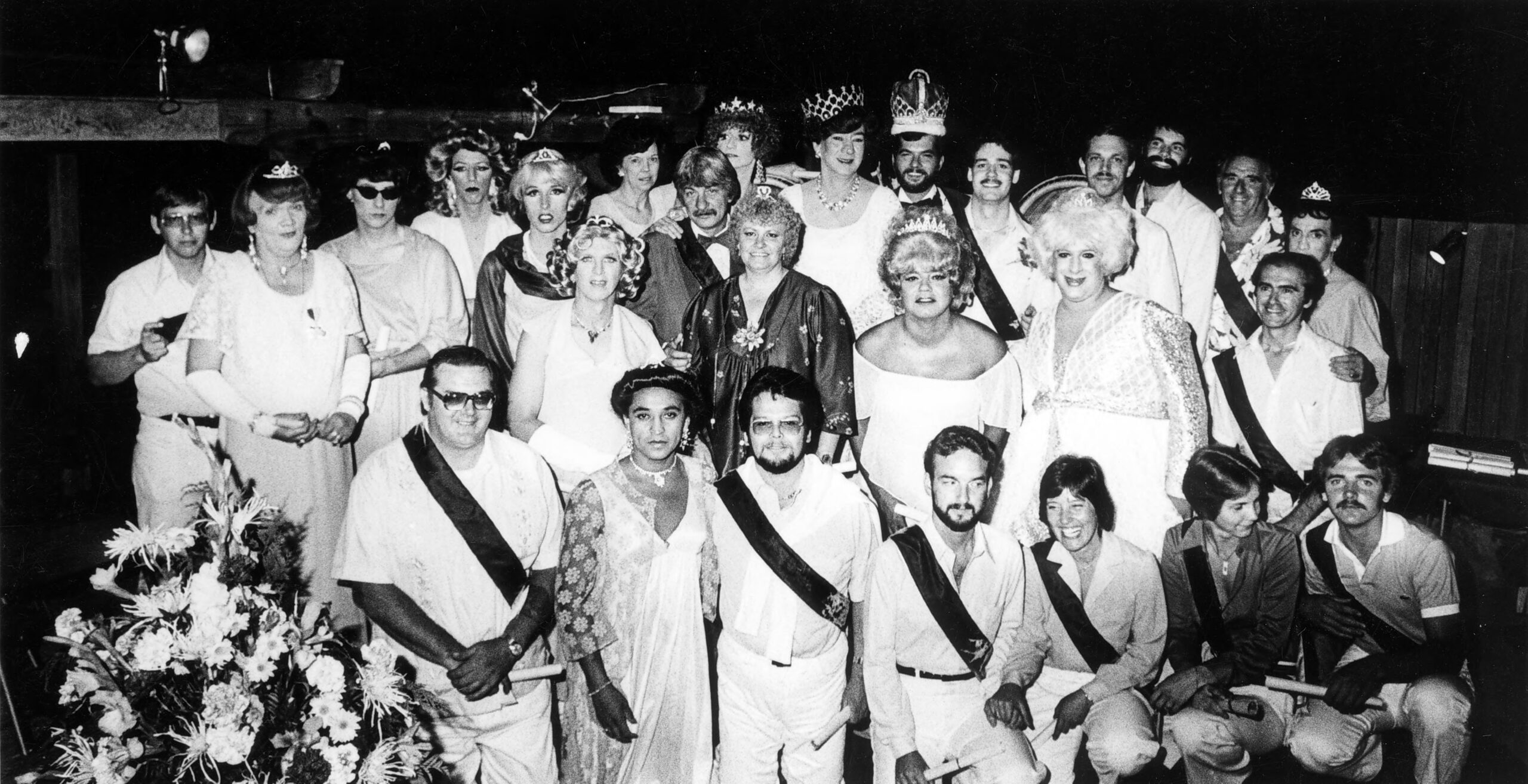
Kevin Roche, a member of the Imperial Courts, remembers that it was over fifty years ago when groups in Portland and San Francisco first started drag balls. “This is when being in drag was a more transgressive activity than it is considered nowadays,” he said in an interview. This was the beginning of the Imperial Courts on the West Coast. After drag balls were established behind the scenes in 1967, the International Imperial Court System (IICS) was founded in San Francisco and hosted many drag shows and coronation balls. Later IICS was incorporated as a 501(c)(3) organization to raise money for charity while still having a lot of fun.

Mama José, also known as José Julio Sarria, was the first Empress in San Francisco, the mother of all queens participating in the Imperial Courts. Kevin recalled: “She was the mother empress of us all. She rather notoriously declared herself empress when she won a pageant at one of these balls and they were going to crown her queen, and she took the Tiara out of their hands and says, ‘I’ve been a queen all my life. I hear hereby declare myself Empress.’ This was something that was transgressive. This was revolutionary.” Mama José was an outspoken activist for the drag community in San Francisco, whose goals for the Imperial Courts included education and cultivating a greater community sense of gay pride, identity, and unity.

The San Francisco chapter of the Imperial Court is still active today. Mama José died a few years ago, in 2013; a piece about her on the Imperial Court’s website notes that Mama José was “a proud openly gay Latino, drag queen, and one of the great iconic American pioneering political activists and leaders of the modern-day LGBT Civil Rights and Social Justice Movements, [who] gracefully and peacefully passed on from this life after a long battle with cancer at his home in Albuquerque, New Mexico, at 7:02 AM on Monday, August 19, 2013 in his 90th year blessing this earth.”

Learn more about participating in the Imperial Courts at their website: imperialcouncilsf.org

South Bay Queer & Asian

SBQA pride 2009

In a history written in 2017 about the founding of the South Bay Queer and Asian, Roger Chow remembers meeting Dino Ago in the fall of 1991 to discuss the need for a gay Asian support group in the South Bay. After some planning, on February 19, 1992, the first meeting of the group met at the offices of the Asian Americans for Community Involvement (AACI), a large and influential Asian-American non-profit social service organization in San Jose. Three people were in attendance: Roger, Dino, and a reporter from the San Jose Mercury News. Despite a slow start, they continued to meet weekly as their membership grew. According to Roger, they were the first gay Asian group in the South Bay.

Their name changed over time, first being the “AACI group,” then the Asian, Lesbian, Bisexual and Gay Alliance, or ALBGA, then finally taking the name of South Bay Queer and Asian, or sbQA, right before the Gay Pride Parade in June, 1994. Initially AACI provided the facilitators for the group sessions, but the counselors were constantly changing, so the group decided to separate from AACI and transfer to the Billy DeFrank Center in order to develop its own leadership. They have remained at the DeFrank Center and helped raise money for its operations since.

Roger remembers what an adrenaline rush it was in creating the group. It was founded on the idea of creating a safe space for the pan-Asian community to receive support and counseling, along with help in dealing with family, financial, immigration, and mental health issues. There is also an sbQA scholarship fund to help LGBTQ+ Asian-American students from local high schools go to college.

In 1994, Roger Chow attended his first Pride parade and met a young Japanese man. Seeing he was distraught, Chow approached him and asked what was wrong. The man had just been disowned by his family for coming out. This young man was one of a few that Chow met over his years at sbQA who were disowned by his family, and it was crushing.

As Roger writes, there was much variation in the session topics, from coming out, relationships, AIDS 101, dating, etc., mixed in with “Learning to Dance the Samba.” They did theme nights, potlucks where everyone was encouraged to prepare specific ethnic food (Chinese, Vietnamese, Filipino, and Indonesian were popular). They went to see movies: “The Crying Game” and “My Beautiful Launderette” as well as attended the Asian American Film Festival and the Lesbian Gay Film Festival in San Francisco. They saw “Priscilla, Queen of the Desert,” marched in the Gay Pride parades in San Francisco and then in San Jose, walked in the Santa Clara County AIDS Walk, learned about safe sex and HIV, and had members who served on the Santa Clara County Commission on HIV/AIDS. They skied, camped out and had many meals together and established the tradition of their top three annual gatherings: Chinese Lunar New Year (Tet), Thanksgiving and Christmas (Holiday) potluck dinners.

sbqa 1 picnic
South Bay Queer & Asian at the annual picnic event together
sbqa picnic
South Bay Queer & Asian at the annual picnic event together

The annual summer picnic is a huge family-friendly event for members and their friends and family, offering a great opportunity to meet people across the LGBTQ+ community. Other events include Thanksgiving dinner, a Holiday Party in the winter, and Chinese Lunar New Year. Thanksgiving dinner is a potluck event for members of sbQA and other LGBTQ+ Asian groups throughout the Bay Area. Some years, the GAPA Men’s Chorus from San Francisco performs. Chinese Lunar New Year is a huge event where the community shares celebrating the New Year together.

sbqa pride 2009
South Bay Queer & Asian at Pride in 2009
 
sbqa pride
South Bay Queer & Asian participating in Pride, including Kyle Matsumoto Byrch and Gabrielle Antolovich

As in any organization, membership crises can occur. As Roger recalls, one controversy that erupted centered around if participation should be limited to Asians only. The first time around the debate was settled by having a majority of the planning group be Asian or of Asian descent. The second time the issue arose it was decided that since there were many groups for the “majority community” and only a few distinctively for gay Asians, they wanted their “rap” meetings closed. All of their social or other social functions would always remain “open to all.” Thus ended their second membership crisis.

In an August 2020 conversation with Ed Tang, who joined the group in 2005, and interim president Kyle Matsumoto-Burch, they talked about the more pressing issues for gay Asians, many which revolve around immigration and the threat of being deported. As Kyle said, “There is always that idea in the back of your mind that you’re going to have to go back to your country of origin, which means you have to go back to your family. There is this piece of you that might be okay with yourself being gay and maybe you’re living the life now, but eventually you’ll have to go back and conform to how it is back home. That is what is in the back of some people’s minds.”

One young man, the only son of a Chinese family, had a difficult time coming out to his parents. After a rap session, he asked their chairperson, Jerry Wang, to give him guidance, desperate to find a solution. A few years later, his parents came to the U.S., and he invited them to meet members of sbQA. Once they met others in the LGBTQ+ community, they realized that they were human beings too, and not too “out there.” They were concerned about grandchildren, so sbQA leaders explained how their son could have a family, including options like surrogacy. In 2019, this young man’s first child was born, and his parents stayed in the U.S. to help their son and his young family.

Tied into that, the issue with H1B visas looms and of not getting theirs renewed. “It’s not just a matter of leaving the culture, or leaving their friends, but it’s losing a job,” said Kyle. “If they haven’t established themselves in their home country, it’s going to be difficult for them to get a job because ‘it’s not what you know, it’s who you know.'”

Just as creating a safe space for queer Asian Americans was a hallmark from the beginning for sbQA, so it continues to be today. Ed talked about how in the gay community there can be a problem of Asian fetishization. The older generation in sbQA is protective of the younger generation, making sure they have someone to turn to if they have any issues. He was always very tense when he was the organizer of an event. “I keep looking, watching to make sure nothing goes wrong because there are certain individuals who are very aggressive. I really look out for them to make sure that they do not go overboard. As people begin to feel comfortable coming to our events, they will bring their friends. That’s what happened with our annual picnic. The year I first attended in 2005 there were like 30 plus, and now it’s about 160 people. It’s a big change. Once people feel safe, they will come and they will bring their friends.”

“I used to work with foster care children and I would have to fight with the DA to get foster kids placed with gay families.” Ed Tang

sbqa tee
sbQA tee shirt

sbQA has two main issues when it comes to the future. First is recruiting more women into leadership roles. Kyle is pleased that a woman is now vice president of the group. The second is passing the baton from generation to generation and mentoring one another on how to run a civic service group. Roger, Ed and Kyle all understand how important it is for sbQA to actively recruit younger members.

Kyle believes the legacy of sbQA is this creation of a network of individuals who are very helpful to one another. “With sheltering in place, a lot of the work that sbQA has been doing is offering support to people who are isolated. That’s why we have these zoom meetings. But we’re also more active on Facebook now where people can log in at any time and be able to talk to anybody pretty much at any time. So there’s more availability now. Our network offers a lot of support to different people for different reasons.”

Read more about sbQA. You can also visit their website. 

“Some folks take years to come into the meeting. They will show up to the Billy DeFrank Center and stay outside and not go in until they have the confidence to.” — Kyle Matsumoto-Burch

ProLatino

grupo prolatino pride

The first meeting of ProLatino was held in February 1992 at the Billy DeFrank Center. Thirteen people attended. The group formed out of the need for a safe environment for gay Latinos to meet and discuss their community, health, and HIV/AIDS. J Alejandro (Alex) Campos Vidrio was the first president of the group, and Omar Nunez was vice-president.

Alex organized meetings every other Tuesday, asking participants to bring a new person with them at each meeting. The group grew from 13 to 27, then 38, and kept going from there. Eventually, they couldn’t fit in the original meeting rooms. They moved to the main ballroom in the Billy DeFrank Center’s Stockton Avenue location. Sixty people came to each meeting and participated in a variety of events.

Although forming ProLatino was a huge step in the direction of healing the LGBTQ+ Latino community, Alex’s goal of creating a safe environment was still not met. Working with Esperanza Garcia Walters, they wrote a grant proposal to host a retreat for the LGBTQ+ Latino community, which they received. The first retreat was held at a Catholic center in Mission San Juan Bautista with 30 gay men participating. Discussions included breaking down institutionalized and cultural homophobia, and the layers of growing up gay in a community that rejected them. They heard stories like being dragged by a horse through their hometowns in Mexico for being gay, or wanting to commit suicide because of their sexuality. These were shared in a safe space with a focus on healing. The retreat was so successful that over time they offered as many retreats as they could afford, which is what Alex had set out to accomplish.

The initial years were very busy. In 1993 they were invited to be part of the San Jose gay parade, the first Latino group to march in it. Members who did drag were embraced as a way to show that no one from any part of the LGBTQ community was excluded. ProLatino worked with other LGBTQ organizations to be more welcoming of the Latino community. At ARIS, for example, they worked to create the group “Entre Hombres” for gay Latino men who were HIV positive. They produced information about AIDS in Spanish, the only such literature available.

Alex remembers the Latino community had the idea that if you were gay, it makes you part woman, which makes you less than a man. “This idea makes you feel and think that you don’t deserve much, but ProLatino broke through those barriers,” he said. Alex made sure to reach out to other groups, including Puerto Ricans, Dominicans, and others. “Our group felt safe because it wasn’t led by a white man–it was led by peers in the community,” he said.

In 1996, the group became a 501(c)(3) with a board of directors and co-chairs to run the organization. Omar Nunez was one of only two people who remained active with the group from the time it formed in 1992 until it went out of existence around 2011/2012. He remembers the retreats fondly. “They were open to everyone who wanted to attend, and people came from all over the Bay Area. Many of the men who attended were immigrants who only spoke Spanish. The retreats created a safe space for them that they had never experienced. It was very empowering.”

The workshops put on by ProLatino were very popular. They provided a place separate from the bars where people could get to know each other. “There was a tremendous void for the Latino community,” said Omar. “Here we were, almost a majority of the population, and there was nothing for us. ProLatino filled that void. It provided social and cultural programs, along with AIDS prevention services. Along with retreats, we did exhibits, education, art, theater, and parties. I’d say we had a couple hundred people a year attend our programs, resulting in well over a thousand gay Latinos connecting to our group.”

“It was an interesting and wonderful time,” said Omar. “People were ready and willing to do something for their community. It was a very unique period. I haven’t seen that type of community spirit since. It may never happen again.”

In 2005, Omar ran the program “Vida y Salud” (Life and Health) for gay Latino men with HIV.

In 2010, he was hired at the Santa Clara County’s PACE Clinic, a county-run clinic for HIV/AIDS patients. As a Community Health Outreach Specialist, he does outreach for the clinic, education for new patients, and interpretation services for doctors.


In 2000, with the support of Miquel Perez, David Castro was elected president of ProLatino. He remembers it as a tough time to get program funding because of the stiff competition for dollars. Since ProLatino had become a non-profit, they were able to receive grants from the state to provide HIV/AIDS services to the Spanish-speaking community. “Neil Christie was very supportive of us and he wrote a request for funding for a new support group,” David said. The center, which would become the Neil Christie Living Center after Neil passed away from AIDS, is where ProLatino  began to have educational programs for the Spanish-speaking community. Eventually, due to lack of funding, The Health Trust began to manage the center.

 The blending of ProLatino as a social group and the non-profit “Grupo ProLatino de San Jose” proved to be problematic, especially since David was advocating for both. Eventually, the non-profit lost its financing and no longer had money to pay staff. David then left the board and moved to Arizona in 2005 where he attended college and got a BA in Spanish and English translation and interpretation and continued to work on his master’s degree.

David has fond memories of the services that ProLatino provided to the Spanish-speaking community. “I used to get calls from married men with children who learned they were HIV positive, and it was difficult for them to handle their personal life. They only spoke Spanish so they didn’t know which way to go or what to do, and many wanted to commit suicide. I would meet with them after work and we would talk for hours about everything that was going on. I would eventually get them services, and I felt very good about that.”

Sisterspirit

sisterspirit storefront

In 1984, students at San Jose State University, Mary Jeffrey, Marilyn Cook, and Karen Hester, met with Amy Caffrey to discuss the need for a women’s bookstore and coffeehouse where women could socialize and enjoy live music by women. After several meetings, the group named this project Sisterspirit.

The group’s mission statement was: “To promote women’s culture and community in the South Bay Area, to help unify and strengthen the South Bay women’s community and provide a multicultural information center to enable networking with other women’s groups and communities. To develop and promote educational projects responsive to human, civil, and women’s rights. To teach and promote women’s culture by providing a meeting place for all women, by providing space and support for local women’s artistic works, by providing information on women’s history, women’s music, women’s literature, etc. by providing a women’s bookstore and coffeehouse. To work in solidarity with other women’s organizations on projects and events which support women’s issues and culture.”

Sisterspirit had success on campus by selling textbooks to students to raise money for rent for a storefront. They were effective, said Margie Struble who volunteered with Sisterspirit, “I remember going to one class, there were one hundred students. I had a hundred copies for the classroom and when the teacher finished class, I sold them all and just like that they were gone.” Support like this from the campus helped the group to save money to find their own space.

The group first were allowed to use the space Jonah’s Wail at the Christian Center on Friday nights. Sisterspirit hosted their first concerts and coffeehouses here. These events also raised money for the group to achieve their goal of having a storefront.

In 1997, there was a fire, so the women’s music festival was canceled.
Sisterspirit was contacted by an artist, Sonia Johnson, to do a coffeehouse before the women’s music festival, Margie Struble was going to be the only one to run the event. At first, Margie thought the event would be almost empty, except for the folks that could not attend the festival. The day of the festival there was a fire, canceling the festival. Sonia reached out to do a bigger event instead of just a coffeehouse at Sisterspirit, and Margie made sure to set it up. The Park Ave venue with 200 chairs and big coffee pots on, was so crowded they had to accommodate standing room only. Margie had been the only one left behind at Sisterspirit that day to run the venue and she vowed to never host a solo coffeehouse again.  – Margie Struble

In 1986, Sisterspirit had raised enough money and the Billy DeFrank Center had space for them to rent. Sisterspirit finally had the space to offer a wide selection of books, including periodicals like Business Woman Magazine, Gay Community News, and many others. There was also a selection of books about gay and lesbian history.

On Friday nights Sisterspirit would host various events. They held concerts for women musicians like Melissa!, Robin Flower, Rhiannon, and Alix Dobkin, as well as many more. Many people came to Sisterspirit to participate in women- focused events in a safe environment.

In the early 2000s, support started to die down. Sisterspirit had a hard time keeping their space at the Billy DeFrank Center, and the book store sold off the last of their materials and closed. Sisterspirit was the only bookstore in the United States to be run for two decades by an all volunteer staff. They donated the remaining money to the Astraea Lesbian Foundation for Justice.

Lucie Blue Tremblay was scheduled to come down to Sisterspirit on Park Ave, but she couldn’t get a work visa. She was told she could not perform. Instead of canceling the event, they arranged the chairs differently so that she could walk around the room and sing. Since she was not performing, she was simply “practicing” guitar in a room of people, she was able to perform the event despite the visa rejection. – Amy Caffrey