

- San Mateo County Board of Supervisors (1985-1992)
Notables
Sisterspirit

In 1984, students at San Jose State University, Mary Jeffrey, Marilyn Cook, and Karen Hester, met with Amy Caffrey to discuss the need for a women’s bookstore and coffeehouse where women could socialize and enjoy live music by women. After several meetings, the group named this project Sisterspirit.
The group’s mission statement was: “To promote women’s culture and community in the South Bay Area, to help unify and strengthen the South Bay women’s community and provide a multicultural information center to enable networking with other women’s groups and communities. To develop and promote educational projects responsive to human, civil, and women’s rights. To teach and promote women’s culture by providing a meeting place for all women, by providing space and support for local women’s artistic works, by providing information on women’s history, women’s music, women’s literature, etc. by providing a women’s bookstore and coffeehouse. To work in solidarity with other women’s organizations on projects and events which support women’s issues and culture.”
Sisterspirit had success on campus by selling textbooks to students to raise money for rent for a storefront. They were effective, said Margie Struble who volunteered with Sisterspirit, “I remember going to one class, there were one hundred students. I had a hundred copies for the classroom and when the teacher finished class, I sold them all and just like that they were gone.” Support like this from the campus helped the group to save money to find their own space.

Interior of the Sisterspirit bookstore

The front of the Sisterspirit bookstore

A flyer chronicling the history of the Sisterspirit organization

A flyer from the Sisterspirit book store promoting a women’s coffeehouse night

A paper from the non profit corporation papers showing the founders of Sisterspirit and their mission statement

A paper from the non profit corporation papers showing the founders of Sisterspirit and their mission statement

A flyer from the Sisterspirit book store featuring Melissa! and her band Reckless Avenue

Sisterspirit t-shirt

Sisterspirit t-shirt

Sisterspirit t-shirt

Sisterspirit mug

“Sisterspirit: Unifying S Bay Women’s Community” newspaper article

“Sisterspirit envisions women’s bookstore, coffeehouse in SJ” newspaper article

“Sisterspirit’s dream comes true” newspaper article

“SJSU women establish feminist coffee shop and cultural center” newspaper article about Sisterspirit

“Sisterspirit’s success: Women’s bookstore, coffee house opening in San Jose” newspaper article

The Sisterspirit statement of purpose
The group first were allowed to use the space Jonah’s Wail at the Christian Center on Friday nights. Sisterspirit hosted their first concerts and coffeehouses here. These events also raised money for the group to achieve their goal of having a storefront.
In 1997, there was a fire, so the women’s music festival was canceled.
Sisterspirit was contacted by an artist, Sonia Johnson, to do a coffeehouse before the women’s music festival, Margie Struble was going to be the only one to run the event. At first, Margie thought the event would be almost empty, except for the folks that could not attend the festival. The day of the festival there was a fire, canceling the festival. Sonia reached out to do a bigger event instead of just a coffeehouse at Sisterspirit, and Margie made sure to set it up. The Park Ave venue with 200 chairs and big coffee pots on, was so crowded they had to accommodate standing room only. Margie had been the only one left behind at Sisterspirit that day to run the venue and she vowed to never host a solo coffeehouse again. – Margie Struble
In 1986, Sisterspirit had raised enough money and the Billy DeFrank Center had space for them to rent. Sisterspirit finally had the space to offer a wide selection of books, including periodicals like Business Woman Magazine, Gay Community News, and many others. There was also a selection of books about gay and lesbian history.
On Friday nights Sisterspirit would host various events. They held concerts for women musicians like Melissa!, Robin Flower, Rhiannon, and Alix Dobkin, as well as many more. Many people came to Sisterspirit to participate in women- focused events in a safe environment.
In the early 2000s, support started to die down. Sisterspirit had a hard time keeping their space at the Billy DeFrank Center, and the book store sold off the last of their materials and closed. Sisterspirit was the only bookstore in the United States to be run for two decades by an all volunteer staff. They donated the remaining money to the Astraea Lesbian Foundation for Justice.
Lucie Blue Tremblay was scheduled to come down to Sisterspirit on Park Ave, but she couldn’t get a work visa. She was told she could not perform. Instead of canceling the event, they arranged the chairs differently so that she could walk around the room and sing. Since she was not performing, she was simply “practicing” guitar in a room of people, she was able to perform the event despite the visa rejection. – Amy Caffrey
Our Paper/Your Paper (1982-1995)

In the wake of Lambda News’ worsening prospects, Our Paper/Your Paper was first published in September 1982 by Lambda News alumni Steve Century, David DeLong, Al Bonvouloir, Winn Crannell, Johnie Staggs, and Rosalie ‘Nikki’ Nichols. Seeking to define the gay suburban communities of the South Bay, Our Paper/Your Paper was intended to offer a platform distinct from the gay press of San Francisco, which dominated the entire Bay Area in the years prior.
Liz Burkhouse
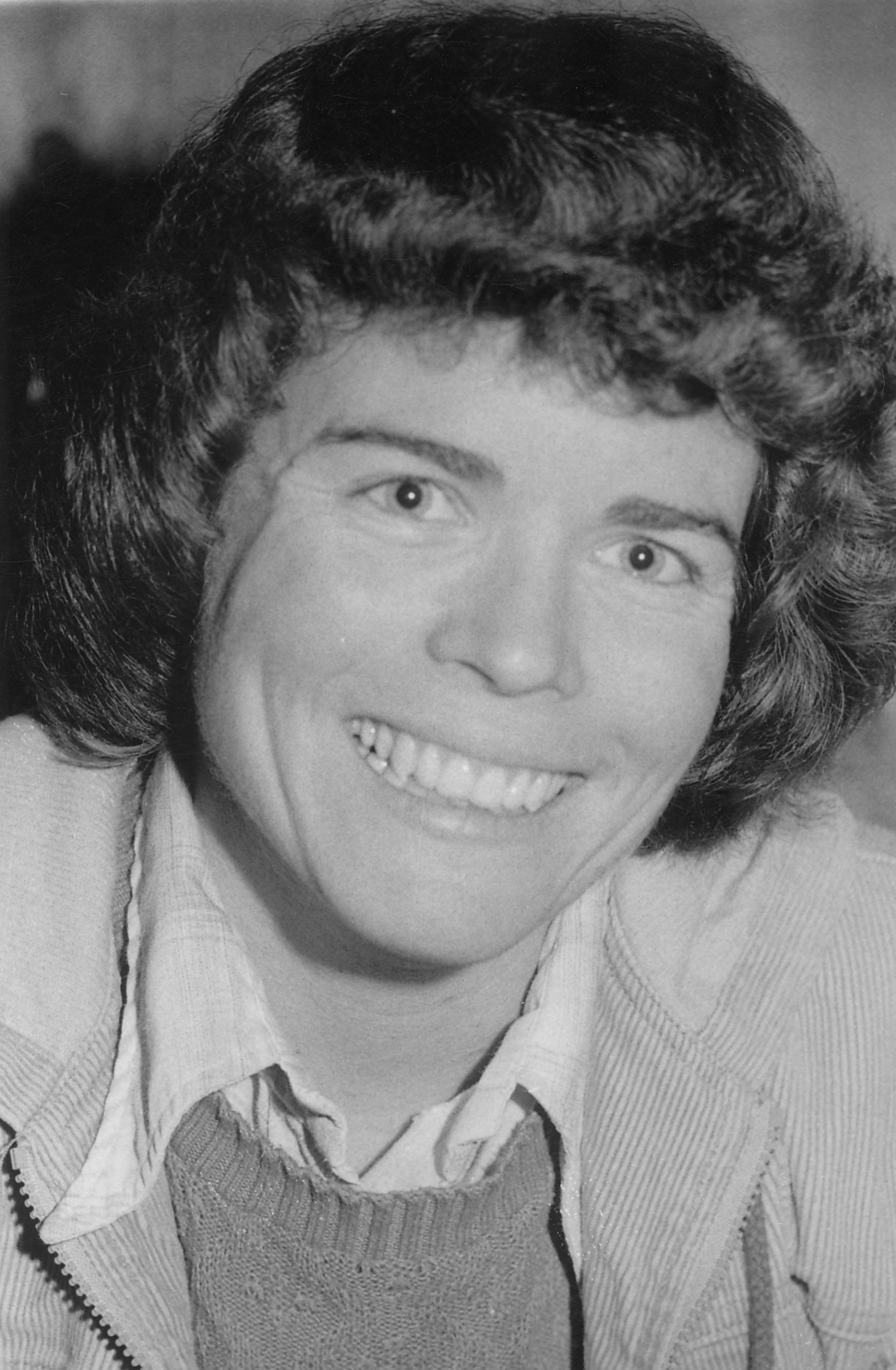
“I have in front of me my journal. The date is 12/21/81 at 11:54pm. I wrote, I am director of the Billy DeFrank Lesbian and Gay Community Center. I just got home. I can’t believe it.” Thus read Liz Burkhouse, the first paid executive director of the Billy DeFrank Center, from her journal.
Liz had attended the meeting at the Unitarian Church in downtown San Jose where over 200 people came to discuss what an LGBTQ center would look like and operate as. Liz and her friend had already been discussing starting a club for women when they heard about the possibility of the center and went to see what the meeting was about. The community raised between $4,000 and $5,000, enough to begin a hunt for a place.
Liz remembers scouting out the first center and finding the Keyes Street location, “The first center was modest to say the least. It had only two large rooms, a bathroom, and a clothes closet transformed into a ‘phone room’ for the center’s hotline. Looking back it amazes me that anyone actually went there. It was in a really run-down part of town. I used to drive around the block three or four times before I even entered the building,” she recalled in Ted Sahl’s book, From Closet to Community, “But once I walked through the door, the joy in my heart of knowing we actually had our own community center brushed away any apprehension.”

When Liz became the executive director she worked hard to get more people involved and try to spread the work around instead of burning out folks that were working so hard on various projects and tasks. The community was already despondent from the 1980 loss of Measures A and B a year before. She felt it was vital that the community have a place to feel safe given the blatant homophobic language used by opponents of the two measures.
Liz had a clear vision for the center. “It was not going to be a bar. We wanted a center. We wanted some place where people could come and see that being gay is not a bad thing and that you can be yourself and you can be thoroughly presentable and still be gay. I felt very strongly that the center needed to be a really comfortable, welcoming place for people.”
Liz served as the executive director for six months, which was her plan to begin with, before stepping down to become vice president of the board of directors, night manager, publicity coordinator, and public relations. The center would eventually move to Park Ave, then to Stockton Ave, and then end up on The Alameda. After volunteering for 18 years at the center, Liz was burnt out and had to step away.
In her years at the Billy DeFrank Center, Liz met her various partners and her wife there. She said that now it feels like the gay bars and the center are less important to the community, but there is still a need for them. “I think there’s always going to be a need for people to go where they feel comfortable and accepted. I felt it was important to work for an organization that showed us to be who we are, which is fully functioning, diverse people who have interests all over the place. We’re not just wild, we’re not just prancing around a gay pride parade; we’re also working and contributing to the general community.”
Liz is retired and living in San Jose with her wife.
Lambda News (1976-1983)

Created as Lambda Association’s eponymous newsletter arm in 1976, Lambda News–run by Dan Relic–was one of the first examples of local gay press in Silicon Valley. Evolving from a simple newsletter, Lambda News reported on local gay organizations, businesses, and events around Silicon Valley. Originally a purely volunteer-run paper, Lambda News faced constraints that led to Relic taking it over as a private venture to ensure its future viability. In April 1983, Lambda News dissolved as a result of low ad revenue and disorganization.
Ms. Atlas Press (1975-1995)

Founded in July 1975 by Johnie Staggs and Rosalie Nichols, Ms. Atlas Press opened as a commercial printing operation and bookstore in downtown San Jose at 53 West San Fernando.
In addition, Johnie and Nikki wrote and published Lesbian Voices, a literary quarterly containing short stories, poetry, and essays that was internationally distributed as far as Egypt, Northern Ireland, the United Arab Emirates, and New Zealand. They also worked with Dan Relic to produce Lambda News, a local gay newspaper. When Lambda News started to falter, they created Our Paper, Your Paper, a local gay paper that also included important national news for the community.
Ms. Atlas Press was the official printer for the Santa Clara County Democratic Party, and both Johnie and Nikki were deeply involved in the struggle for gay rights through the existing political process.
History of Silicon Valley Pride

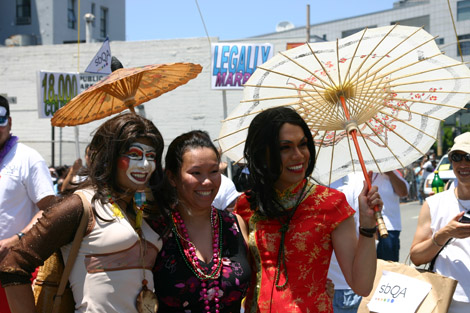
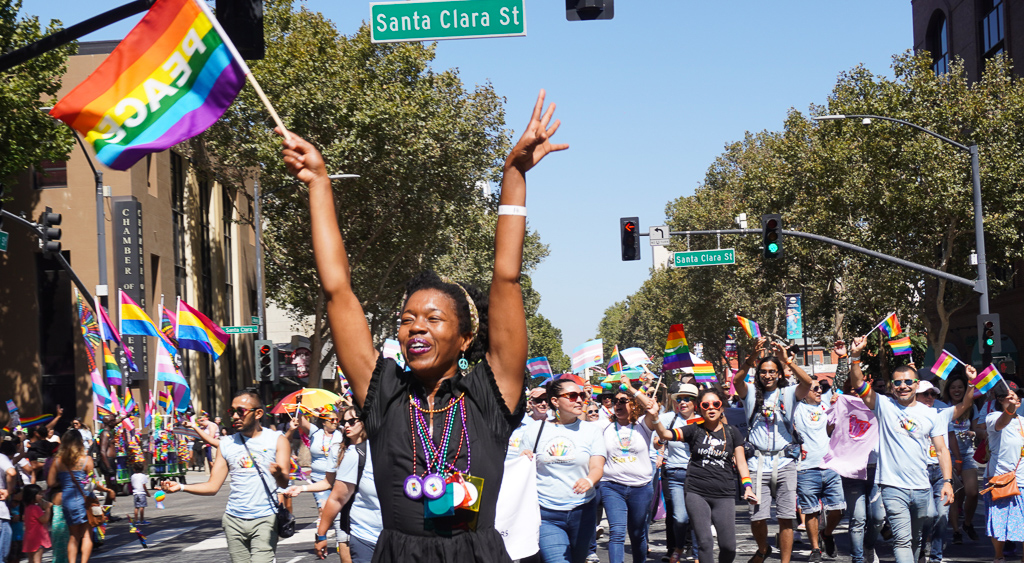
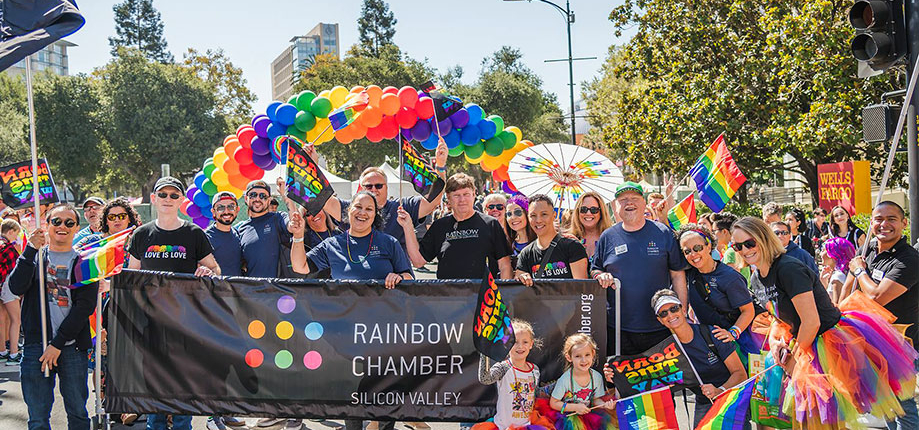
The celebration of pride in Silicon Valley can be characterized as a series of struggles and triumphs. Whether it was presiding over one the largest pride events in between San Francisco and Los Angeles to staving-off bankruptcy and uneven organization, Pride in Silicon Valley has persevered and evolved into a wondrous event that the LGBTQ community eagerly awaits every year.
Pride Locations:
SJSU (1975)
The Gay Student Union was able to organize the first pride event in Silicon Valley. The main event began at 9:30 am, with other events held in various parts of the SJSU campus. Workshops included bisexuality, drag, couples, legal rights, religion, and sadomasochism. The day was closed with a potluck dinner and dance at the Student Union Ballroom.
St. James Park (1976-1980)
Sponsored by the Lambda Association, the first Gay Freedom Rally and Dance was held downtown at St. James Park. More than 300 people attended, and it was considered a small but strong showing for Silicon Valley’s first official pride event. Guests included Harvey Milk, who was a speaker in 1978. This would be come to the location for pride for the next four years.
City Park Plaza (1981-1982)
The Lambda Association moved its Gay Freedom Rally to City Park Plaza (now known as Plaza de Cesar Chavez) on San Carlos and Market Streets.
St. James Park (1983-1985)
Renamed Gay Pride Celebration in 1983, the organizers returned the festival to St. James Park. By then, there were more gay businesses and organizations participating than ever before.
5,000 people participated in 1985, marking a huge milestone for Pride and the LGBTQ community in Silicon Valley.
SJSU Athletic Fields (1986)
Due to redevelopment efforts at St. James Park, San Jose Pride moved to the SJSU Athletic Fields on 10th and Alma. Attendance remained stable, despite the financial constraints and a venue change.
Santa Clara County Fairgrounds (1987-1993)
After 1986, the Santa Clara County Fairgrounds was chosen as a less expensive alternative to St. James Park, one that also allowed for more flexibility with vendors and better accessibility to facilities. Though Pride had been cast out of downtown, festivities and attendance continued to grow each year.
The Alameda Pride and Parade (1993)
While the location of Pride at The Alameda was brief, it drew a great deal more attention and recognition than it had in the past. Mayor Susan Hammer was named one of the grand marshals, the first time a San Jose mayor participated in Pride. With 10,000 people attending, Pride became far more than a niche event for the local LGBTQ community.
Stockton Strip (1994)
Despite the previous year’s success, Pride was endangered. The Gay Pride Celebration had lost thousands of dollars the previous year. In an effort to preserve its momentum, Stockton Avenue was chosen as a cost-effective way of organizing gay businesses and activities in a central area. While there was a significant decrease in attendance (only about 2,000 per day), Stockton Avenue kept Pride alive in Silicon Valley.
Discovery Meadow (1995-2014)
The move to Discovery Meadow in 1995 ushered in a more stable and organized era of Pride in San Jose. Attendance broke a new record with 12,000 attendees. Five years later it reached 20,000. Additionally, the appearance of high-profile individuals, including drag superstar RuPaul in 1998, offered even more reasons for people to participate in Pride. Discovery Meadow remained Pride’s home for several years. In 2014, San Jose Pride was renamed Silicon Valley Pride to be more inclusive of neighboring communities.

2014 Silicon Valley Pride Poster

2015 Silicon Valley Pride Poster

2016 Silicon Valley Pride Poster
Park Avenue and Almaden Boulevard (2015-2016)
Under new chair Thaddeus Campbell, Silicon Valley Pride had its first parade event in years. This new parade also coincided with a new event location on Park Avenue and Almaden Boulevard. In 2016, the organization launched the first Saturday Night Festival.

2017 Silicon Valley Pride Poster

2018 Silicon Valley Pride Poster

2019 Silicon Valley Pride Poster

2020 Poster
Plaza de Cesar Chavez (2017-2019, 2021-present)
After successfully restarting Pride with a new parade and location, along with unloading the troublesome debt accrued in previous years, Thaddeus Campbell oversaw Silicon Valley Pride’s move back to Plaza de Cesar Chavez. Because Pride tends to be majority male driven events, in 2018 the organization launched HEY GIRL, a queer female identified group under Silicon Valley Pride umbrella started by Liz Asborno and Nicole Altamirano, as well as the first Trans and Friends Rally and a Drag Queen Cooking Showdown. Due to the COVID-19 pandemic, Silicon Valley Pride debuted a virtual celebration of Pride in 2020. Community members were invited to submit videos of their art, dance, or a simple greeting to commemorate Pride. In 2021, it resumed in-person celebrations at the plaza.
For more information on current and upcoming Silicon Valley Pride events, visit svpride.com, or check out the Silicon Valley Pride YouTube channel.
Parade Routes:
Stockton Avenue Parade (1991-1992)
Heralded as the first pride parade in the South Bay, the 1991 San Jose Gay Pride Parade marked the first in many efforts in heightening the visibility of the LGBTQ community. The parade was on Stockton Avenue, going from Taylor Street to the Alameda, and concluded at the Billy DeFrank Center. Stockon Avenue was a prime location for the parade, largely owing to the Stockton Strip and its gay clubs and businesses.
Watch a video of the 1992 Pride Parade
Market Street Parade (1995-2009, 2015-2019, 2021-present)
After the move of the Gay Pride Celebration to Discovery Park, the parade was able to resume in 1995. The new downtown route was along Market Street, beginning at St. James Street and ending at Park Avenue. Attendance was consistent, with parade having an uninterrupted 14-year streak. Unfortunately, in 2009, the recession had hit organizers deeply, leading to an end of the parade. In 2015, after rebranding itself as Silicon Valley Pride, the parade made a successful comeback along its regular route on Market Street. After being postponed in 2020 due to the COVID-19 pandemic, the parade resumed on Market Street in 2021, where it continues to channel the spirit and resilience of Silicon Valley’s LGBTQ+ community.
Pride names by year:
- 1976 Gay Freedom Rally and Dance
- 1982 San Jose Gay Pride Rally
- 1983 San Jose Gay Pride Celebration
- 1991 San Jose Gay Pride and Parade
- 2014 Silicon Valley Pride








Lesbian Voices (1974-1978, 1980-1981)

Established by the San Jose group Sisters of Sappha in 1974, Lesbian Voices was the preeminent feminist lesbian quarterly in Silicon Valley. Publication was suspended in 1978, as owners Johnie Staggs and Rosalie ‘Nikki’ Nichols redirected their efforts towards a self-described political fight against fundamentalists. In 1980, Lesbian Voices would resume publication for one year before permanently ending.
Casa de San Jose

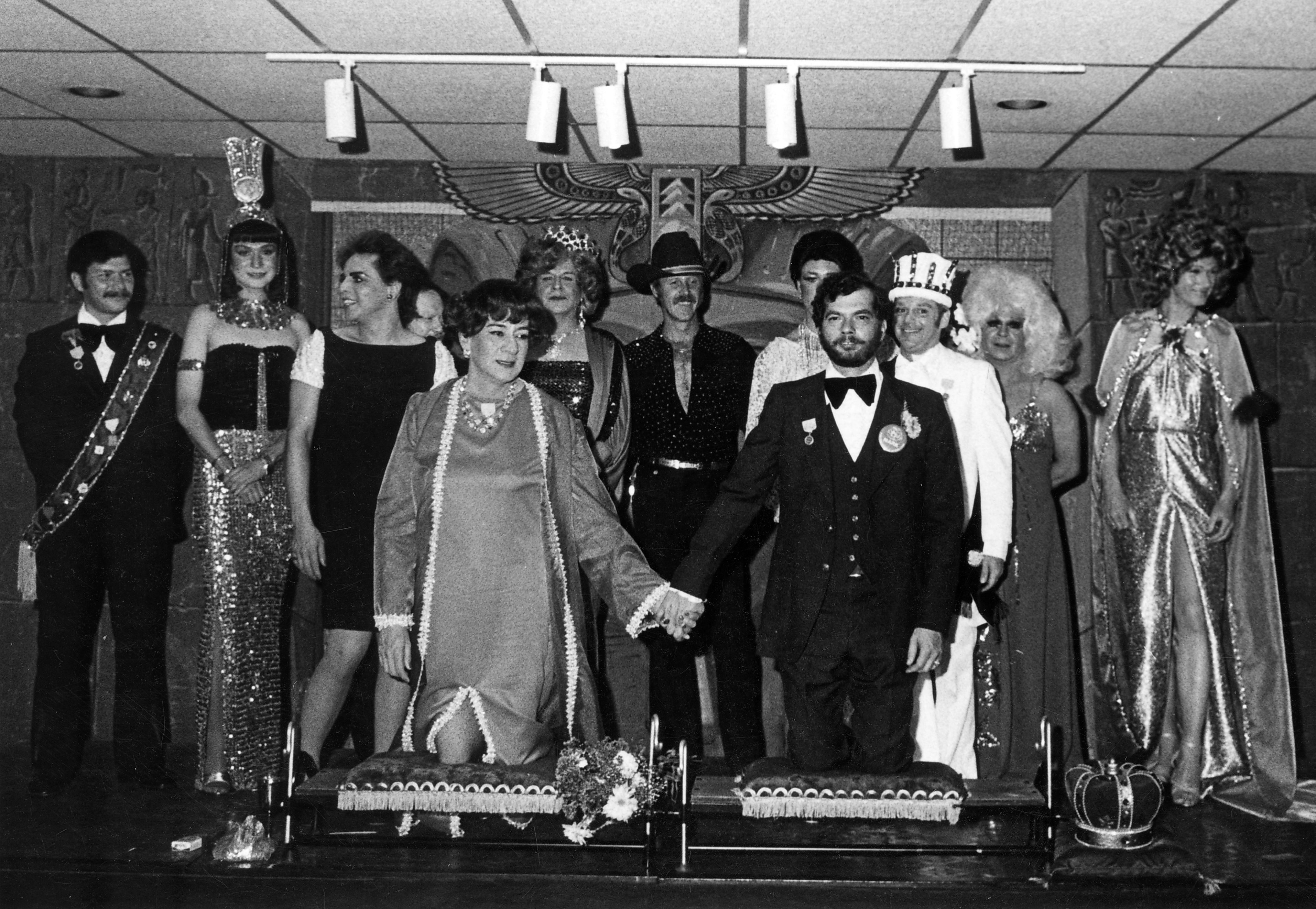
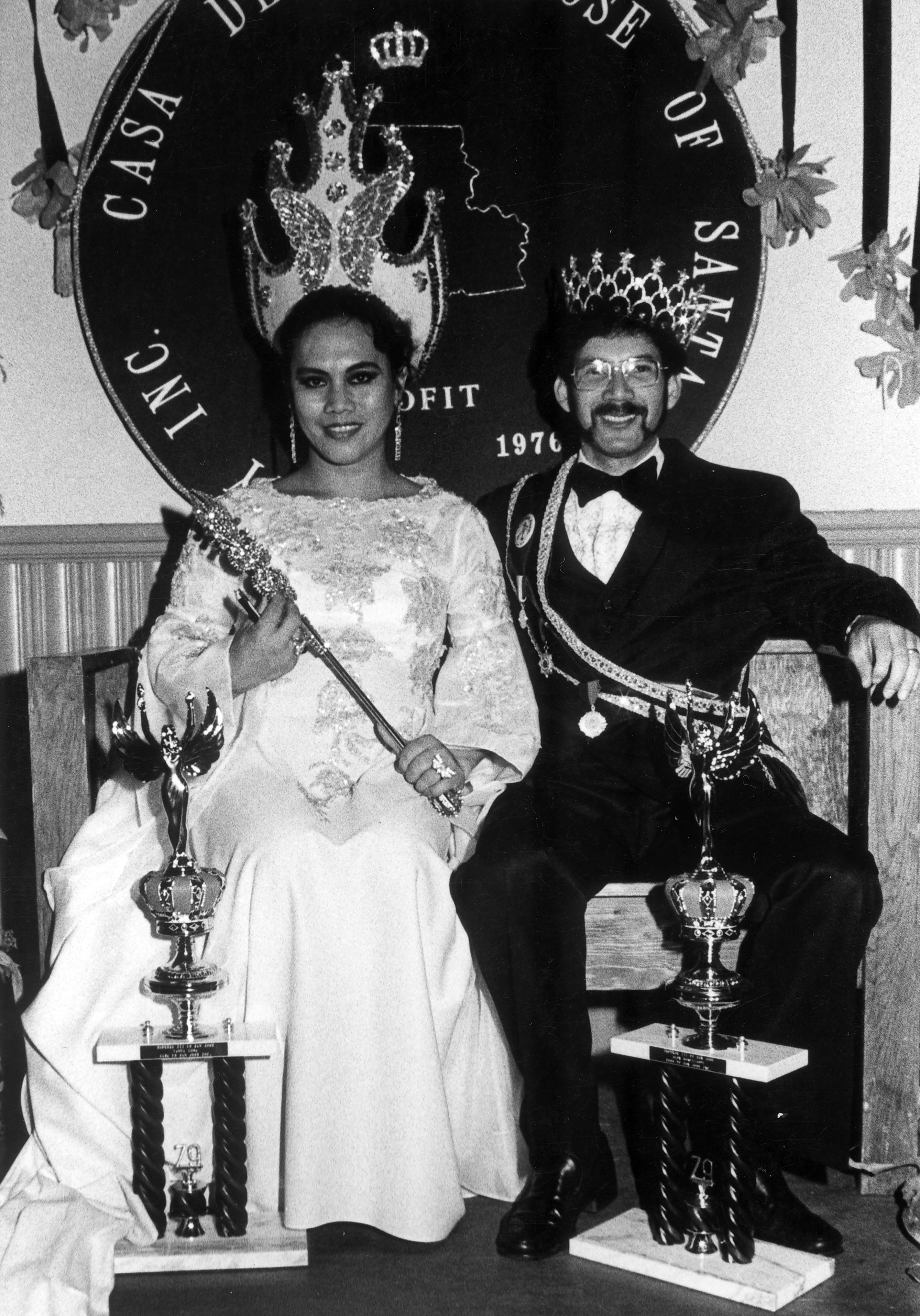
In the early days of Casa de San Jose’s informal association of drag queens, they would travel to San Francisco for the city’s world-famous drag shows. Ray Aguilar, a San Jose drag queen, requested permission to form an IICS chapter in San Jose, which formed as Casa de San Jose of Santa Clara County Inc in the early 1970s. In 1990, the organization was reincorporated as The Imperial Royal Lion Monarchy, Inc. of San Jose.
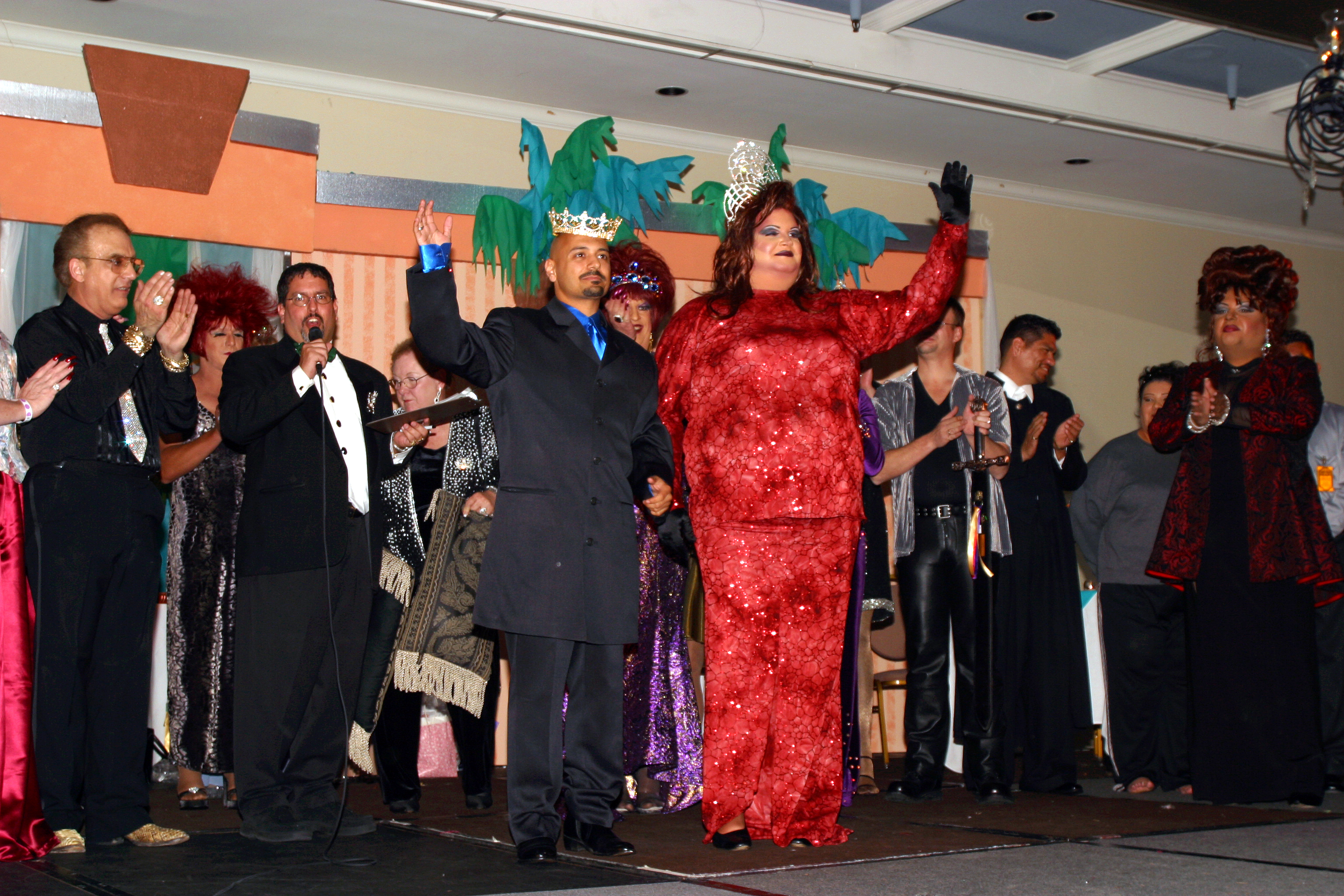
Casa de San Jose elected a full royal court every year: an emperor and empress, crown princes and princesses, czar and czarina, and grand dukes and duchesses. Every March, the Grand Coronation Ball served as large fundraising events and the election of the new emperor, empress, and court. Title rules were as follows: anyone was eligible, regardless of sexual orientation and gender, but they must reside in Santa Clara County and demonstrate successful sponsorship of community fundraising events.
Unlike many other courts, the Imperial Court in San Jose was open to people of all genders and sexual orientations to participate, including running for emperor and empress. Anyone in attendance could vote (with proof of residence) by placing their ballots at a table in the front of the hall to be counted later. Winners were then escorted on stage to be crowned by the host emperor and empress.
Kevin Roche remembers during his time as an Emperor: “My empress is actually transgender and she had strong connections into that community. We actually got a bunch of members of Carla Salon, which is a transgender social club, to come out and join us. Carla’s was a place where they could go and they could dress up and no one would see them, but they could do that at a court event because no one was surprised to see masculine looking people in dresses. A number of them actually joined and were some of our most effective members. That was really fun to see them being in public where that part of themselves could come out.”
Various balls raised money for different causes. The money raised was donated to charitable organizations, including the American Heart Association and American Cancer Research. As the AIDS crisis grew, they began donating to the Visiting Nurses Association and local AIDS charities.
In the early days, almost every drag performer in San Jose was involved in the Imperial Court. To join the Imperial Court, one had to come out during the Closet Ball. The Closet Ball was a way for amateurs new to performing to debut their drag personas and find mentors to help develop their performance. The performers had to be sponsored by an established queen and they were given an hour to transform into their drag persona.
Kevin Roche’s experience at the Closet Ball was showbusiness disappointment. “San Jose has had both drag queens and drag kings. So Lucy [Manhattan] talked me into entering the Closet Ball one year. It was awful. I worked really hard on it and the person who won had actually been performing weekly, but Lucy said, ‘If you’ll forgive me for getting you into this, there’s a charity show I’m doing in a month and I’d like to work with you and help you actually put together an act.’”
In recent years, pageants overtook the Imperial Court in popularity in San Jose. Pageants run outside the Imperial Court system, and many have opted to participate in those instead. The Imperial Court of San Jose dissolved in 2018. Those who wanted to continue participating in court traditions joined the San Francisco Imperial Court, which also permitted them to keep any titles earned in San Jose.






El Camino Reelers

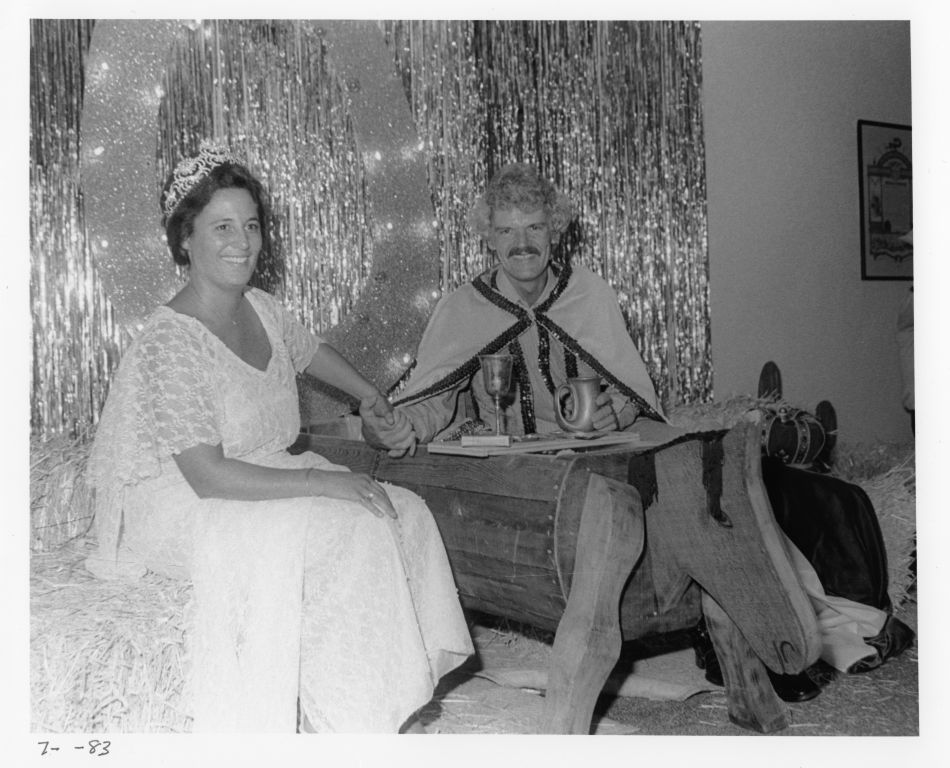
Square Dance calls to “Do-Si-Do,” “Promenade” and “Roll Away To A Half Sashay” became a welcome pastime for the LGBTQ community to socialize, stay active and sometimes even find love.
The El Camino Reelers is a modern Western Square Dance club in the South Bay, formed in Palo Alto in September 1985 by lesbians and gay men looking to have fun and meet open-minded people.
More than three decades later, members continue to square dance to country music and traditional folk, as well as soul, disco and show tunes inside St. Andrews United Methodist Church, 20 minutes west of San Jose.
Tickets to attend the smoke-free and alcohol-free environment never require a partner, fancy outfit, coordination or knowledge about dancing. Members don’t even need to be part of the LGBTQ community.
This is far from an isolated phenomenon in the South Bay.
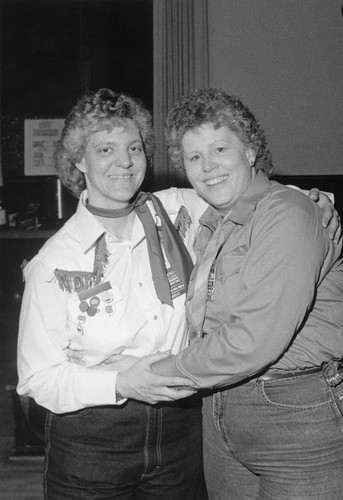
El Camino Reelers were part of a wave of LGBTQ square dancing clubs that popped up nationwide, after intramural social “teams” first organized in Miami in January 1977. That same year, square dancing found its way 3,000 miles west in San Francisco, and three GLBTQ square dance clubs had formed by 1981.
Eventually, two members of San Francisco’s Western Star Dancers — Marilyn Martinyak and Patricia Dixon — started El Camino Reelers as an alternative to the clubs an hour away in the city. Marilyn and Pat were together for 27 years before marrying in Sunnyvale in 2008.
Early membership was comprised of mostly women during initial classes, but attendance grew through word of mouth and advertisements in newsletters of LGBTQ organizations, including High Tech Gays.
Within a year of its inception, El Camino Reelers became a member of the International Association of Gay Square Dance Clubs. As of 2021, the IAGSDC includes more than 80 clubs – primarily in the United States and Canada – and hosts an annual convention that brings together more than 1,000 dancers.
The El Camino Reelers became well-known as a “geek repository” due to its location in Silicon Valley, and members who worked at Adobe, Sun, Google, and Yahoo. The club lived up to that reputation in 2005, when they hosted more than 800 attendees at the 22nd annual convention, dubbed “Star Thru The Silicon Galaxy,” at the Marriott Santa Clara. Several smaller weekend gatherings, called “fly-ins,” were held every fews years in Cupertino, Palo Alto, Redwood City and San Jose from 1995 to 2010.
The El Camino Reelers are one of a dozens of clubs across the Bay Area, but remain the sole LGBTQ-specific organization in Santa Clara County.
The last live club night was Wednesday, March 11, before the Covid-19 pandemic halted in-person gatherings and activities. Virtual club nights resumed on April 14, hosted through Zoom every other week.
More information can be found on the El Camino Reelers website, as well as within the IAGSDC History Project, founded by Allan Hurst, a dancer, caller, and writer from Sunnyvale, California.

El Camino Reelers 1986-1988 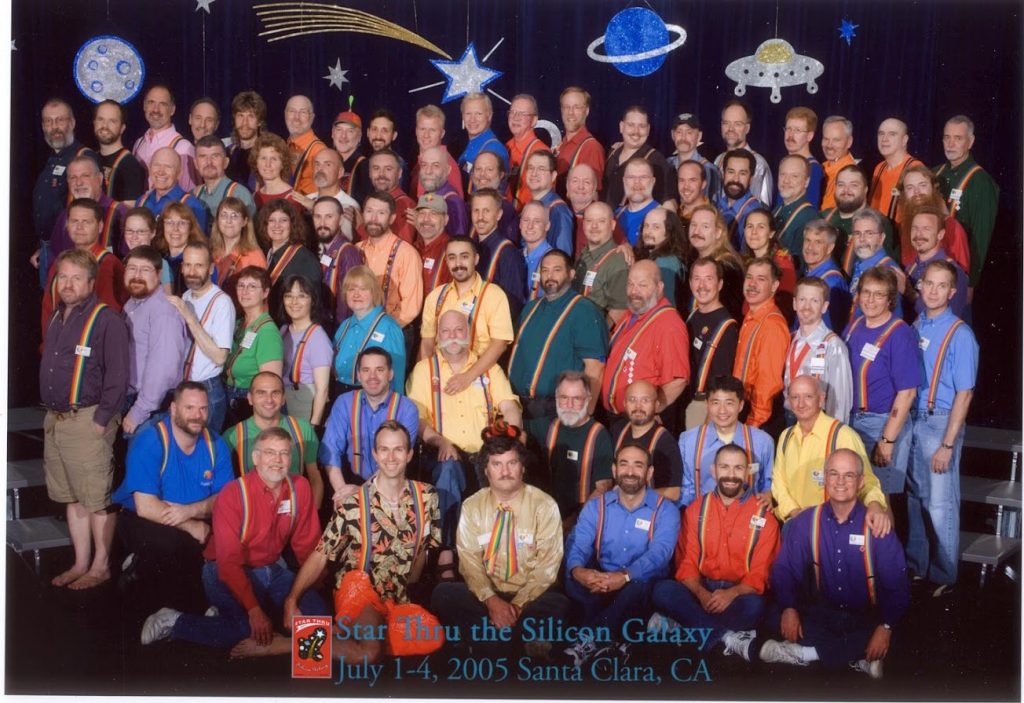
Star Through the Silicon Galaxy 2005 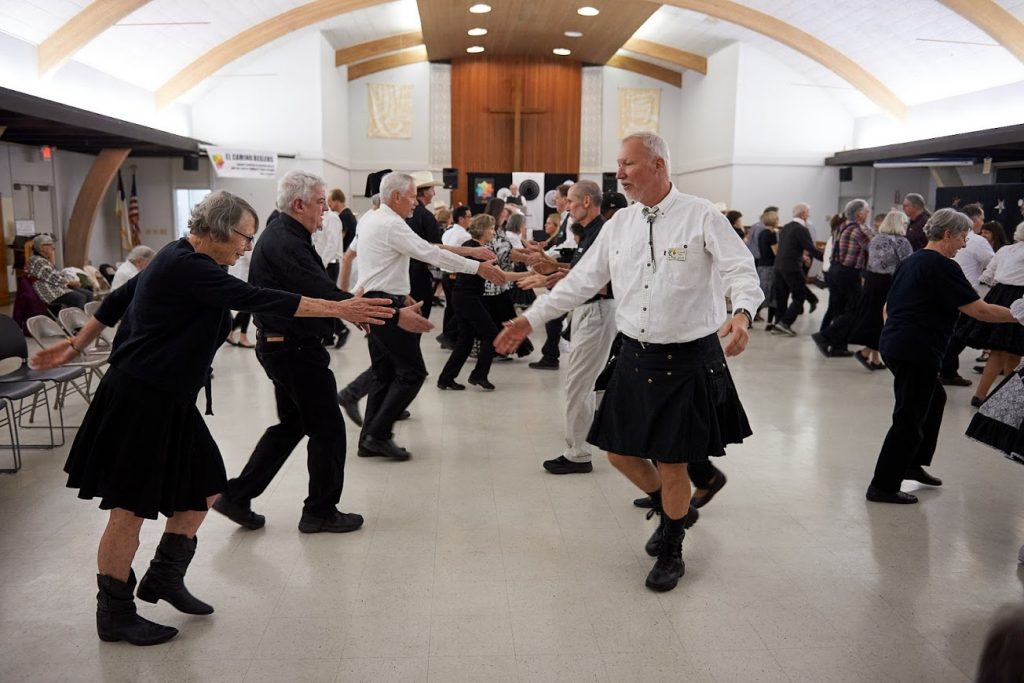
Black White Ball 2020