- San Jose-Evergreen Community College Board (1992-2000)
- San Jose City Council (2000-2006)
- Santa Clara County Board of Supervisors (2006-2018)
- Board President (2010, 2013)
Ken Yeager


 queer silicon valley team

In a history written in 2017 about the founding of the South Bay Queer and Asian, Roger Chow remembers meeting Dino Ago in the fall of 1991 to discuss the need for a gay Asian support group in the South Bay. After some planning, on February 19, 1992, the first meeting of the group met at the offices of the Asian Americans for Community Involvement (AACI), a large and influential Asian-American non-profit social service organization in San Jose. Three people were in attendance: Roger, Dino, and a reporter from the San Jose Mercury News. Despite a slow start, they continued to meet weekly as their membership grew. According to Roger, they were the first gay Asian group in the South Bay.
Their name changed over time, first being the “AACI group,” then the Asian, Lesbian, Bisexual and Gay Alliance, or ALBGA, then finally taking the name of South Bay Queer and Asian, or sbQA, right before the Gay Pride Parade in June, 1994. Initially AACI provided the facilitators for the group sessions, but the counselors were constantly changing, so the group decided to separate from AACI and transfer to the Billy DeFrank Center in order to develop its own leadership. They have remained at the DeFrank Center and helped raise money for its operations since.
Roger remembers what an adrenaline rush it was in creating the group. It was founded on the idea of creating a safe space for the pan-Asian community to receive support and counseling, along with help in dealing with family, financial, immigration, and mental health issues. There is also an sbQA scholarship fund to help LGBTQ+ Asian-American students from local high schools go to college.
In 1994, Roger Chow attended his first Pride parade and met a young Japanese man. Seeing he was distraught, Chow approached him and asked what was wrong. The man had just been disowned by his family for coming out. This young man was one of a few that Chow met over his years at sbQA who were disowned by his family, and it was crushing.
As Roger writes, there was much variation in the session topics, from coming out, relationships, AIDS 101, dating, etc., mixed in with “Learning to Dance the Samba.” They did theme nights, potlucks where everyone was encouraged to prepare specific ethnic food (Chinese, Vietnamese, Filipino, and Indonesian were popular). They went to see movies: “The Crying Game” and “My Beautiful Launderette” as well as attended the Asian American Film Festival and the Lesbian Gay Film Festival in San Francisco. They saw “Priscilla, Queen of the Desert,” marched in the Gay Pride parades in San Francisco and then in San Jose, walked in the Santa Clara County AIDS Walk, learned about safe sex and HIV, and had members who served on the Santa Clara County Commission on HIV/AIDS. They skied, camped out and had many meals together and established the tradition of their top three annual gatherings: Chinese Lunar New Year (Tet), Thanksgiving and Christmas (Holiday) potluck dinners.


The annual summer picnic is a huge family-friendly event for members and their friends and family, offering a great opportunity to meet people across the LGBTQ+ community. Other events include Thanksgiving dinner, a Holiday Party in the winter, and Chinese Lunar New Year. Thanksgiving dinner is a potluck event for members of sbQA and other LGBTQ+ Asian groups throughout the Bay Area. Some years, the GAPA Men’s Chorus from San Francisco performs. Chinese Lunar New Year is a huge event where the community shares celebrating the New Year together.

As in any organization, membership crises can occur. As Roger recalls, one controversy that erupted centered around if participation should be limited to Asians only. The first time around the debate was settled by having a majority of the planning group be Asian or of Asian descent. The second time the issue arose it was decided that since there were many groups for the “majority community” and only a few distinctively for gay Asians, they wanted their “rap” meetings closed. All of their social or other social functions would always remain “open to all.” Thus ended their second membership crisis.
In an August 2020 conversation with Ed Tang, who joined the group in 2005, and interim president Kyle Matsumoto-Burch, they talked about the more pressing issues for gay Asians, many which revolve around immigration and the threat of being deported. As Kyle said, “There is always that idea in the back of your mind that you’re going to have to go back to your country of origin, which means you have to go back to your family. There is this piece of you that might be okay with yourself being gay and maybe you’re living the life now, but eventually you’ll have to go back and conform to how it is back home. That is what is in the back of some people’s minds.”
One young man, the only son of a Chinese family, had a difficult time coming out to his parents. After a rap session, he asked their chairperson, Jerry Wang, to give him guidance, desperate to find a solution. A few years later, his parents came to the U.S., and he invited them to meet members of sbQA. Once they met others in the LGBTQ+ community, they realized that they were human beings too, and not too “out there.” They were concerned about grandchildren, so sbQA leaders explained how their son could have a family, including options like surrogacy. In 2019, this young man’s first child was born, and his parents stayed in the U.S. to help their son and his young family.
Tied into that, the issue with H1B visas looms and of not getting theirs renewed. “It’s not just a matter of leaving the culture, or leaving their friends, but it’s losing a job,” said Kyle. “If they haven’t established themselves in their home country, it’s going to be difficult for them to get a job because ‘it’s not what you know, it’s who you know.'”
Just as creating a safe space for queer Asian Americans was a hallmark from the beginning for sbQA, so it continues to be today. Ed talked about how in the gay community there can be a problem of Asian fetishization. The older generation in sbQA is protective of the younger generation, making sure they have someone to turn to if they have any issues. He was always very tense when he was the organizer of an event. “I keep looking, watching to make sure nothing goes wrong because there are certain individuals who are very aggressive. I really look out for them to make sure that they do not go overboard. As people begin to feel comfortable coming to our events, they will bring their friends. That’s what happened with our annual picnic. The year I first attended in 2005 there were like 30 plus, and now it’s about 160 people. It’s a big change. Once people feel safe, they will come and they will bring their friends.”
“I used to work with foster care children and I would have to fight with the DA to get foster kids placed with gay families.” Ed Tang
sbQA has two main issues when it comes to the future. First is recruiting more women into leadership roles. Kyle is pleased that a woman is now vice president of the group. The second is passing the baton from generation to generation and mentoring one another on how to run a civic service group. Roger, Ed and Kyle all understand how important it is for sbQA to actively recruit younger members.
Kyle believes the legacy of sbQA is this creation of a network of individuals who are very helpful to one another. “With sheltering in place, a lot of the work that sbQA has been doing is offering support to people who are isolated. That’s why we have these zoom meetings. But we’re also more active on Facebook now where people can log in at any time and be able to talk to anybody pretty much at any time. So there’s more availability now. Our network offers a lot of support to different people for different reasons.”
Read more about sbQA. You can also visit their website.
“Some folks take years to come into the meeting. They will show up to the Billy DeFrank Center and stay outside and not go in until they have the confidence to.” — Kyle Matsumoto-Burch

The first meeting of ProLatino was held in February 1992 at the Billy DeFrank Center. Thirteen people attended. The group formed out of the need for a safe environment for gay Latinos to meet and discuss their community, health, and HIV/AIDS. J Alejandro (Alex) Campos Vidrio was the first president of the group, and Omar Nunez was vice-president.
Alex organized meetings every other Tuesday, asking participants to bring a new person with them at each meeting. The group grew from 13 to 27, then 38, and kept going from there. Eventually, they couldn’t fit in the original meeting rooms. They moved to the main ballroom in the Billy DeFrank Center’s Stockton Avenue location. Sixty people came to each meeting and participated in a variety of events.
Although forming ProLatino was a huge step in the direction of healing the LGBTQ+ Latino community, Alex’s goal of creating a safe environment was still not met. Working with Esperanza Garcia Walters, they wrote a grant proposal to host a retreat for the LGBTQ+ Latino community, which they received. The first retreat was held at a Catholic center in Mission San Juan Bautista with 30 gay men participating. Discussions included breaking down institutionalized and cultural homophobia, and the layers of growing up gay in a community that rejected them. They heard stories like being dragged by a horse through their hometowns in Mexico for being gay, or wanting to commit suicide because of their sexuality. These were shared in a safe space with a focus on healing. The retreat was so successful that over time they offered as many retreats as they could afford, which is what Alex had set out to accomplish.
The initial years were very busy. In 1993 they were invited to be part of the San Jose gay parade, the first Latino group to march in it. Members who did drag were embraced as a way to show that no one from any part of the LGBTQ community was excluded. ProLatino worked with other LGBTQ organizations to be more welcoming of the Latino community. At ARIS, for example, they worked to create the group “Entre Hombres” for gay Latino men who were HIV positive. They produced information about AIDS in Spanish, the only such literature available.
Alex remembers the Latino community had the idea that if you were gay, it makes you part woman, which makes you less than a man. “This idea makes you feel and think that you don’t deserve much, but ProLatino broke through those barriers,” he said. Alex made sure to reach out to other groups, including Puerto Ricans, Dominicans, and others. “Our group felt safe because it wasn’t led by a white man–it was led by peers in the community,” he said.
In 1996, the group became a 501(c)(3) with a board of directors and co-chairs to run the organization. Omar Nunez was one of only two people who remained active with the group from the time it formed in 1992 until it went out of existence around 2011/2012. He remembers the retreats fondly. “They were open to everyone who wanted to attend, and people came from all over the Bay Area. Many of the men who attended were immigrants who only spoke Spanish. The retreats created a safe space for them that they had never experienced. It was very empowering.”
The workshops put on by ProLatino were very popular. They provided a place separate from the bars where people could get to know each other. “There was a tremendous void for the Latino community,” said Omar. “Here we were, almost a majority of the population, and there was nothing for us. ProLatino filled that void. It provided social and cultural programs, along with AIDS prevention services. Along with retreats, we did exhibits, education, art, theater, and parties. I’d say we had a couple hundred people a year attend our programs, resulting in well over a thousand gay Latinos connecting to our group.”
“It was an interesting and wonderful time,” said Omar. “People were ready and willing to do something for their community. It was a very unique period. I haven’t seen that type of community spirit since. It may never happen again.”
In 2005, Omar ran the program “Vida y Salud” (Life and Health) for gay Latino men with HIV.
In 2010, he was hired at the Santa Clara County’s PACE Clinic, a county-run clinic for HIV/AIDS patients. As a Community Health Outreach Specialist, he does outreach for the clinic, education for new patients, and interpretation services for doctors.
In 2000, with the support of Miquel Perez, David Castro was elected president of ProLatino. He remembers it as a tough time to get program funding because of the stiff competition for dollars. Since ProLatino had become a non-profit, they were able to receive grants from the state to provide HIV/AIDS services to the Spanish-speaking community. “Neil Christie was very supportive of us and he wrote a request for funding for a new support group,” David said. The center, which would become the Neil Christie Living Center after Neil passed away from AIDS, is where ProLatino began to have educational programs for the Spanish-speaking community. Eventually, due to lack of funding, The Health Trust began to manage the center.
The blending of ProLatino as a social group and the non-profit “Grupo ProLatino de San Jose” proved to be problematic, especially since David was advocating for both. Eventually, the non-profit lost its financing and no longer had money to pay staff. David then left the board and moved to Arizona in 2005 where he attended college and got a BA in Spanish and English translation and interpretation and continued to work on his master’s degree.
David has fond memories of the services that ProLatino provided to the Spanish-speaking community. “I used to get calls from married men with children who learned they were HIV positive, and it was difficult for them to handle their personal life. They only spoke Spanish so they didn’t know which way to go or what to do, and many wanted to commit suicide. I would meet with them after work and we would talk for hours about everything that was going on. I would eventually get them services, and I felt very good about that.”


Content warning: homophobic violence.
On June 11, 1991, 42-year-old gay, civil rights activist William (Bill) Kiley was tending to the lawn of his San Jose rental property, just across the street from his home, when he became the victim of a hate crime. As Kiley finished watering his tenant’s lawn, he was approached by Joshua Huff, the swastika-sporting 17-year-old who lived next door with his parents. Huff complained to Kiley about grass clippings left on his driveway. Kiley told him he had swept up the grass clippings already, and if Huff would like to discuss the issue any further, he should go get his father. Huff responded with homophobic venom, spitting slurs at Kiley, and taunting him to fight. Kiley refused to respond to the provocation, instead asking Huff to get off his property.
That’s when Huff punched Kiley in the face. Kiley sprayed Huff with his hose to get him away, but Huff only removed his jacket, and yelled, “Come on fucking faggot!” over and over as he slammed his fists into Kiley’s face, and his feet into his chest and stomach. Eventually the neighbors began to gather, including Joshua Huff’s mother, Nancy Huff, who shouted, “What the fuck’s wrong with you, asshole? You fucker. You attacked my minor child.” The police were called to the scene, not by any of the onlooking neighbors, but by the Huffs, who reported that Kiley had attacked their son.
This was, of course, false. Luckily, Bill Kiley could prove it. Kiley had already suffered at length at the hands of his neighbors who repeatedly verbally harassed him with homophobic slurs and damaged his property. Knowing that he needed a way to prove this hate, Kiley set up a handheld camera in his living room window, and set it to record as he managed his rental property. He caught the entire crime on tape.
The tape and following legal proceedings received a frenzy of local and national media attention, spurred on by the timing of the case within the context of California hate crime legislation. With the first hate crime conviction in Santa Clara County taking place only weeks before this crime, the county was in the midst of crucial changes to address the growing problem. As a result, gay rights activists hoped that Kiley’s case would shed much needed light on the issue of hate crimes within the LGBTQ+ community.
Joshua Huff was convicted of three felony charges: felony assault, battery, and committing a hate crime. He was sentenced to 10 months at Santa Clara County Boys Ranch in Morgan Hill along with a requirement to complete substance abuse and reentry programs. This sentence (which was considerably lighter than the 7 years with the California Youth Authority he could have received) was criticized by many LGBTQ+ activists for doing nothing to address rehabilitating Huff for his violence and homophobia, which caused the crime to begin with. Huff’s parents sued Kiley’s lawyer, Paul Wotman, for defamation of character, but lost. Kiley also sued the Huff family for $20 million, a move meant to hold them responsible for their actions, as well as continue to draw attention to the issue of hate crimes.
In 1993, the case was heard by a Court of Appeal in San Jose. This was a landmark case because it proved for the first time that California’s “hate crimes” law does not violate the First Amendment. This statute allows for additional persecution of offenders who engage in these violent acts.
In reflection of these events, Kiley has left some of his thoughts on the criminal case and its lasting impact today:
It surprises me how much I had forgotten about the details and how it affected the state’s legal decisions where hate crimes are involved. In my situation, the District Attorney’s Office questioned trying a minor for assault of a gay man, even with the video. The question was, who was the aggressor and why or what brought about the hostility.
The common belief, at the time, was that if an older man was involved with a minor in an altercation then it was probably the result of a sexual advance (by the gay man). Fortunately, the video put a stop to that line of thought in my case. But, the question was brought to me by both the police and the DA’s people.
Also, while Paul Wotman got the credit for winning my case against the Huffs. The real trial was in the Santa Clara [sic] Superior Court getting a conviction for the hate crime charge. That was brought about by some great work by a group of women in the Prosecutor’s Office. I think they were as concerned about the White Supremacist aspect as the anti-gay epithets/attack. I didn’t get the names of those women but they had a lot of behind the scenes arm twisting with their bosses in order to take my case to trial. It didn’t hurt that Mayor Susan Hammer saw the prosecution as a step forward for the City of San Jose.
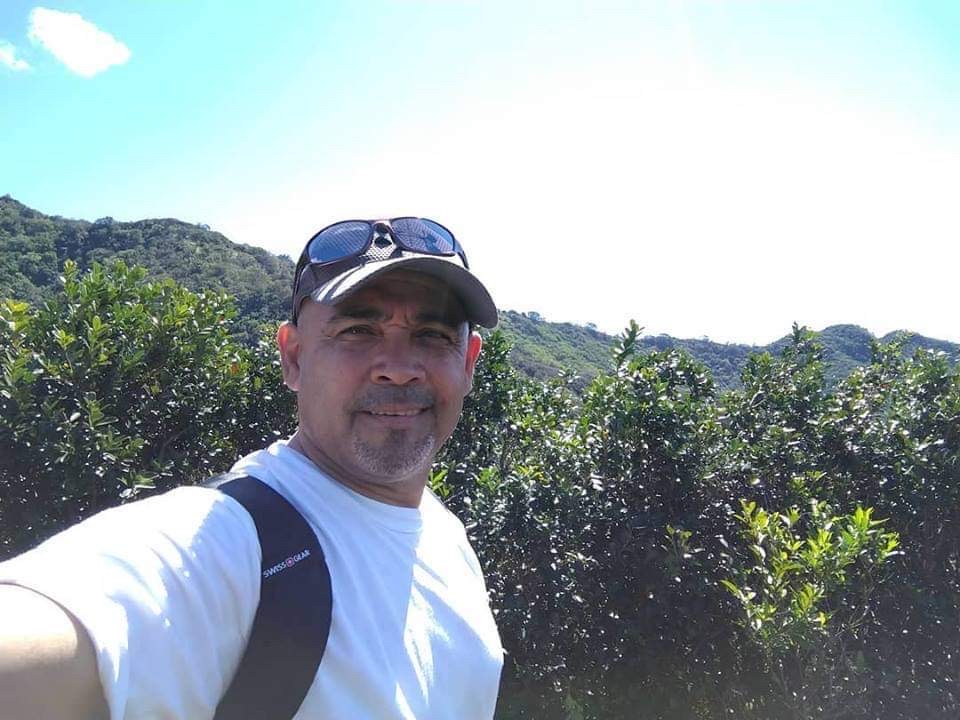
In the late 1980s, J Alejandro (Alex) Campos Vidrio was a 21-year-old gay Mexican college student at San Jose. Like most Latinos, he grew up in a homophobic community, where he found that the stigma of being gay and the stigma of HIV was widespread enough for him not to come out. One of his friends had been in a relationship with someone who tested positive for HIV, so he accompanied him to the free clinic for an HIV test.
At the time, Alex knew nothing of the disease. In a counseling session, a nurse asked him a series of questions to determine if he was at risk. Before that, Alex had not told anyone he was gay, but when the nurse asked the question, he confirmed his sexuality. Because he was gay, this put him in the high risk group for HIV, so he took the test.
Two weeks later, he arrived at the clinic alone to receive his results: he was negative. The visit was so short that he stopped the nurse from leaving the appointment to ask her how he could help his Latino community get informed about HIV and learn how to protect themselves. The nurse explained there was no program for that at the time and suggested he get involved in creating options for his community. So he began volunteering. It was there that he met nurse Esperanza Garcia Walters and nurse Maria who would assist him in spreading awareness to the Latino LGBTQ community.
Alex’s first volunteer event was at Stanford University’s Walk for AIDS. Although he was there to help, he kept a distance between himself and the leaders with HIV, still scared of attracting the stigma of HIV. The walk, and how many people participated in it, made an impact on him.
Alex began attending a meeting of gay men in the Latino community at Club St. John on Mondays. Over time, he brought condoms and pamphlets and offered HIV counseling. Outside the meetings, participants didn’t even acknowledge each other for fear of being identified as gay.
At that time, Alex began seeing a Catholic Latino. One weekend he joined him on a retreat, which emphasized that participants were in a safe environment and would be protected by their peers and a higher power. The retreat changed his worldview: He wanted that kind of space for the gay Latino community to gather.
After he returned, he approached the Billy DeFrank Center, asking to host a gay Latino community night. They quickly turned him down, saying he was too young and not serious enough. He kept trying. Through his volunteering at the clinic, Esperanza Garcia Walters invited him to have dinner at an HIV patient’s home. He became close friends with the couple, and the dinner became a weekly gathering of friends. Alex and others fixed up the house, making it brighter, more comfortable, so it felt like a safe space. They called him “Chispa,” meaning “spark,” because he made them feel more alive.
Alex continued to pass out literature and condoms, attempting to connect with his community. His efforts were met with resistance; he was kicked out of many clubs and restaurants for doing so. He attended a meeting at the Billy DeFrank Center, voicing concerns that literature wasn’t available in Spanish for the Latino community, that they had neither a safe place to congregate nor resources away from the public. The DeFrank Center finally offered him space on Monday nights. Campos made a flyer inviting folks to “come and share with us,” as a way around using stigmatizing words like “gay” or “HIV.”
For the first meeting in 1992, Alex made 25 folders with pamphlets of information, condoms, and other resources. Thirteen people showed up, beating his own expectations. Attendees asked him to hold another meeting, so he spoke to Mark and was approved. The meetings were scheduled every other Tuesday. Every person attending committed to bring one more person with them to each meeting. This was the beginning of ProLatino.
In 1998, Alex decided to step down from ProLatino in order to take care of himself. He moved to San Francisco and joined the HIV Prevention Working Group of the State of California, traveling across the state, gathering data and analyzing trends in the virus’s spread.
In 1999, Alex went on vacation to Hawaii and according to him “never left.” He attended the University of Hawaii and worked at the School of Medicine as a director of the Pre-Health Career Corps. Due to the pandemic, he has not been working since March 2020.

One of Alejandro Campos’s proudest moments working with ProLatino came while attending a conference with the Department of Education in Hawaii in 2011. He learned about LLEGO’s (National Latino/a Lesbian and Gay Organization) opportunities for the LGBTQ+ community and attended a workshop about retreats. The Hawaiian group cited what they learned about retreats from a San Francisco group, which they learned from a Bay Area local, who turned out to be Campos. This moment validated all the work he did through ProLatino. His ideals had spread throughout the country, even making it to Hawaii. — Alejandro Campos
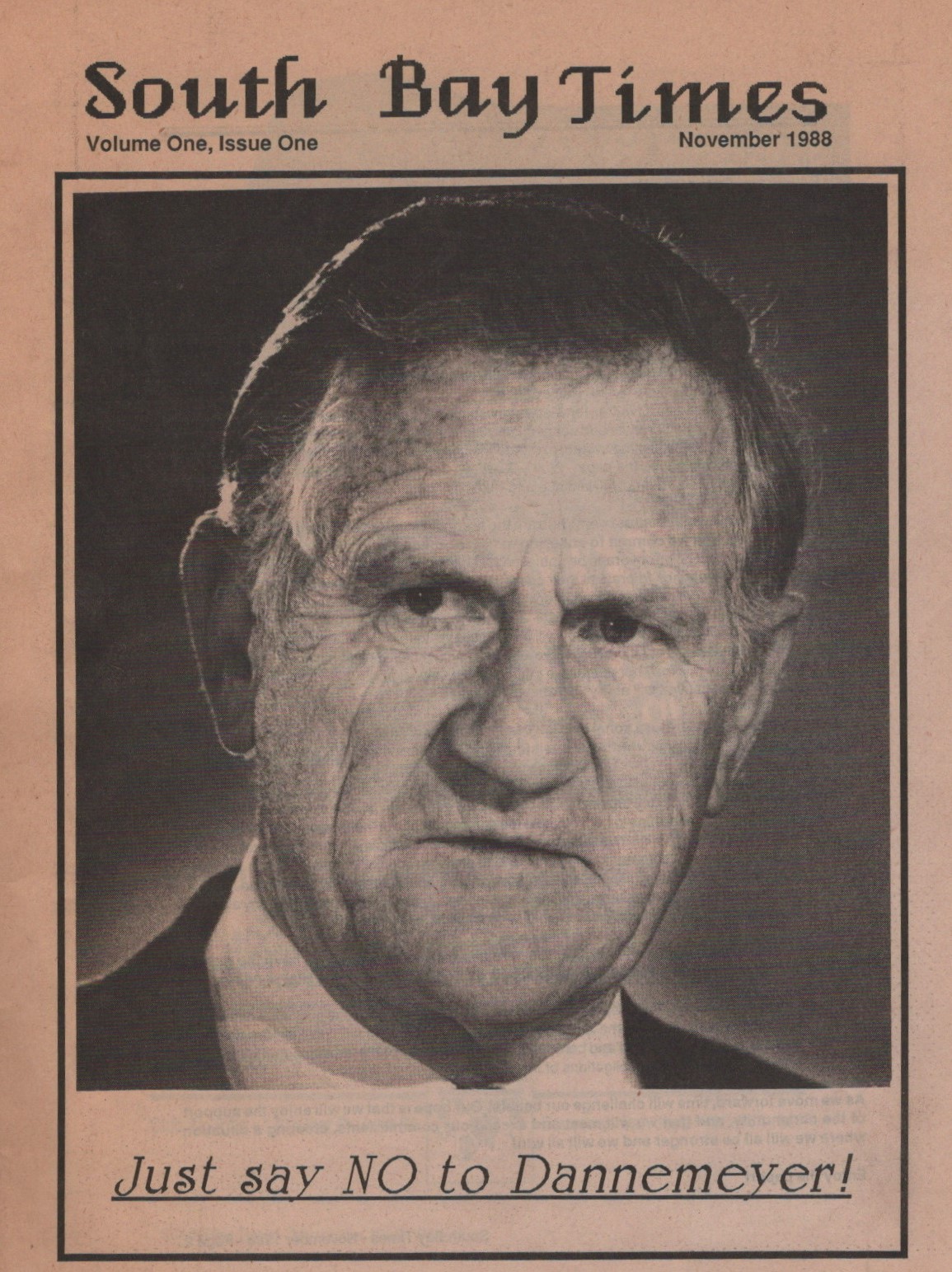
With Our Paper/Your Paper rising to prominence throughout the 1980s, there was little alternative gay press in Silicon Valley. John Follesdal, Whayne Herriford, Richard Kendall, and Ted Sahl (who already had worked extensively on other gay press in the area) started a new paper, South Bay Times, that sought to be not only financially solvent but beneficial to the local lesbian and gay community.

The early to mid-1980s was a time of widespread misinformation and hysteria about AIDS. There were public fears that AIDS could be transmitted through the air like the common cold or by mosquitoes.
Into this atmosphere stepped Lyndon LaRouche, a one-time Marxist who, by 1986, had become a far-right reactionary, calling Henry Kissinger a communist and accusing Queen Elizabeth of conspiring to get the U.S. population hooked on drugs. His followers exploited the misinformation and public fears about the AIDS epidemic to secure the 500,000 voter signatures necessary to get an initiative on the ballot.
LaRouche’s initiative appeared on the November 1986 ballot as Proposition 64. It would have allowed public health officials to make HIV testing mandatory for people thought to be infected and required public disclosure of anyone who tested positive. Further, it would have prohibited anyone with HIV from attending or teaching school, as well as restricting their ability to travel.
When Prop. 64 qualified for the ballot in June 1986, many Californians held a negative or even hostile attitude towards both the AIDS epidemic and the LGBTQ community. A Los Angeles Times poll published that summer found half of the public favored quarantining AIDS victims, and a quarter believed that “AIDS is a punishment God has given homosexuals for the way they lived.”
On July 1, 1986, BAYMEC’s board voted to put the organization’s full resources into defeating Proposition 64. The South Bay’s LGBTQ community, demoralized by the passage of Measures A and B and the subsequent arrival of AIDS, gained a renewed sense of activism. The next few months would see a dramatic transformation in the community’s profile and relevance.
The statewide No on 64 campaign initially planned to open offices only in San Francisco and Los Angeles. BAYMEC board members thought this was short-sighted. They feared that the San Francisco and Los Angeles-based campaign leadership would ignore the South Bay and put little or no effort or outreach into the region. There was a lot of work to do in educating voters all over the state about the realities of the epidemic and just how dangerous and disruptive Prop. 64 would be if it were approved.
BAYMEC was eager to run the local campaign for two reasons. First, even though they were a fledgling organization, they felt they had the capabilities to run a professional campaign. Second and equally important, they believed that the South Bay needed a strong LGBTQ organization to lead all the subsequent fights they knew would surely come over the years. It would be a missed opportunity to leave no lasting legacy of progressive gay politics and coalition-building. Though originally there was no universal agreement on BAYMEC’s role by some gay activists, over time most came on board.
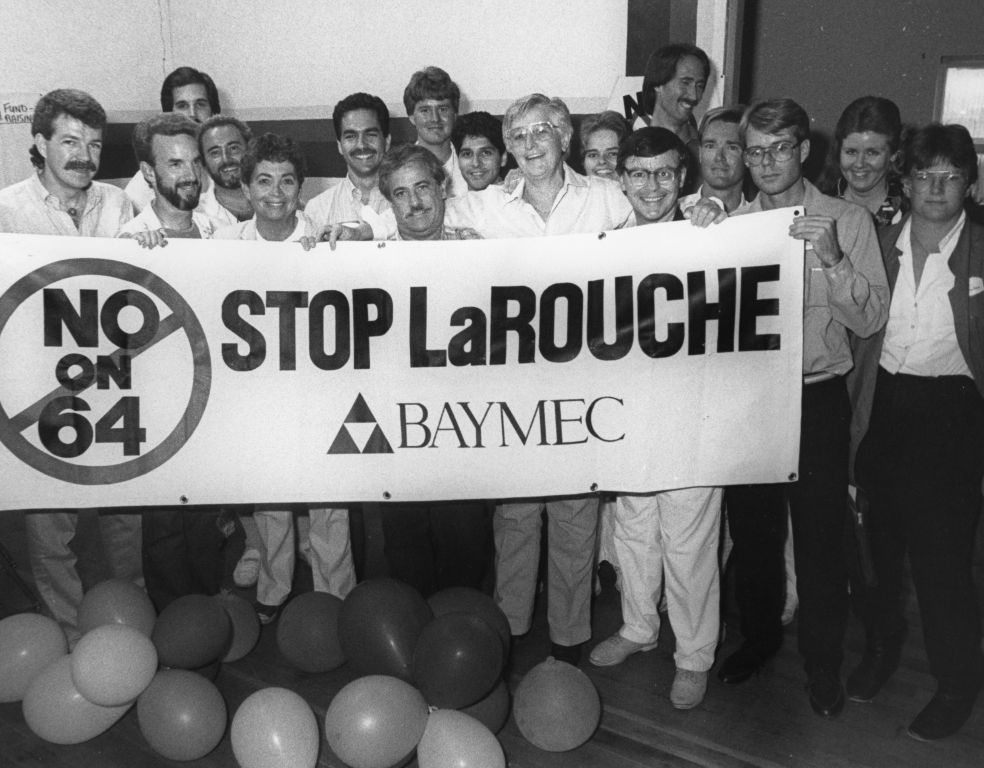
Wiggsy Sivertsen agreed to serve as the local No on 64 campaign chair, Paul Wysocki as finance chair, and Ken Yeager became the campaign manager for Santa Clara and San Mateo counties. Wiggsy, Paul, and Rich Gordon also served on the statewide committee.
There was never any question that local campaign headquarters would be at the Billy DeFrank Center, then located on Park Ave. It was not only the hub of South Bay LGBTQ political activity in 1986, but also a landlord who was willing to rent office space for the incredibly low rate of $200 a month.

Financially, the South Bay community stepped up in a big way. State organizers only expected BAYMEC to raise $20,000. In under 14 weeks, they raised $73,000. Santa Clara County donors actually contributed more than those in the much larger San Diego County. The first fundraising letter was mailed out on July 30. The September 7 kickoff fundraiser had over 200 attendees and raised over $7,000.
The fundraising campaign was the definition of grassroots. More than 1,200 contributors wrote checks of $10, $50, or other small amounts. The average contribution was $60. There were no corporations or wealthy individuals writing big checks. Fundraisers were held at bars and nightclubs stretching from San Jose to the Peninsula to Santa Cruz and 23 house parties in Santa Clara and San Mateo counties.

On election night, November 4, 1986, a large crowd of supporters watched the returns at the Billy DeFrank Center. A sense of happiness and relief mounted as it became clear that Prop 64 was going down to defeat. The people of California had listened to the No on 64 campaign’s prevailing message of reason and understanding.
The next day, BAYMEC immediately began planning a celebration. Someone had a connection to Archbishop Mitty High School in San Jose so they decided to hold the event there. Rebecca Obryan organized volunteers who cooked spaghetti for approximately 200 people. Admission cost $5.
Because so many deserved to be recognized for their contributions, during the dinner Ken Yeager asked people to stand up and be acknowledged for their work on voter registration, speakers’ bureau, fundraising, house parties, and voter outreach, or as Billy DeFrank Center board members. When he asked who donated their hard-earned dollars, everyone in the cafeteria stood up. There was a roar of applause, creating a sense of community that was palpable.

In 1986, Al Ratee, Stanley Dorfer, and Herbert Booth created On the Scene! as a community newspaper serving the entire Bay Area. Their intention was to create an informational and family-oriented paper.

Beginning in 1986, the Feminist Lesbian Social Group published their monthly newsletter, Entre Nous, as a way for lesbians in Silicon Valley to share their ideas and perspectives.