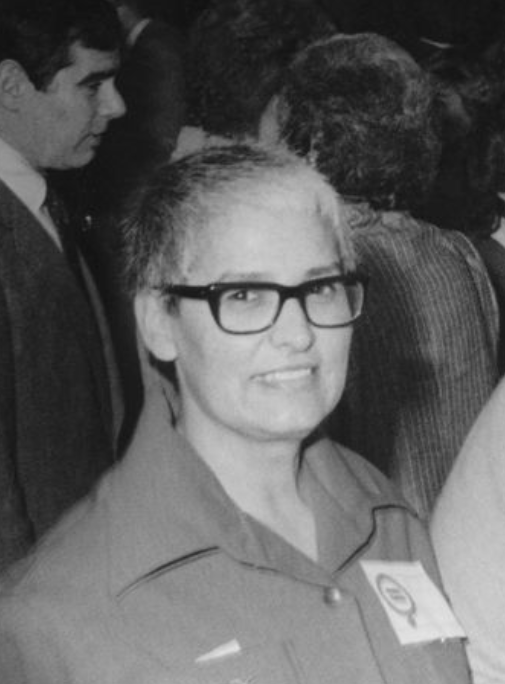
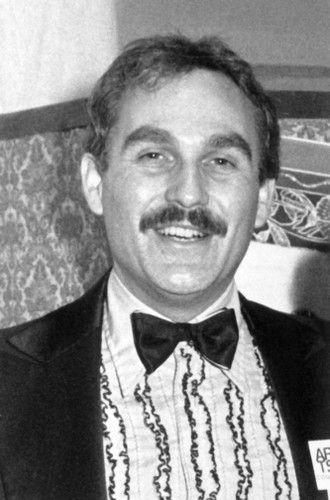
Kathy Wolfe (Expanded)

image

In 1979, Kathy Wolfe saw the powerful documentary Word is Out at the Frameline Film Festival. After presenting the stories of a group of diverse lesbians and gays, the filmmakers challenged the viewers to make a difference of their own.

“I was completely inspired by seeing that film,” remembers Kathy. “I immediately grasped the importance of bringing our stories to the public.” 

Her first approach was to get involved in new emerging video technology. In 1981, Kathy Wolfe produced and directed a twelve-part video series, Fix it Now, featuring women contractors (mostly lesbians) demonstrating the basics of home repair. The series was shown on local public access television in Cupertino, CA, but later was shared throughout the country.

For the next several years, Kathy honed her skills in producing, directing and editing lesbian documentaries, including The Changer and the Changed, an early history of Olivia Records.  

But even as Kathy worked on these projects, she realized that there were limited outlets  to actually showcase her work – or that of other like minded filmmakers. She decided to shift her focus from making movies to the distribution of them.

Gays and lesbians around the country, in those days often completely closeted, were just realizing that they could watch – and rewatch – gay-themed movies in the privacy of their own home. Thus, in 1985, Kathy launched Wolfe Video, her mail order business to distribute movies to the gay community. Her very first mailer was a modest 8.5 x 14 flyer with ten titles. But over the years the catalogs grew to feature several hundred titles per catalog. 

From the outset, however, Kathy’s ultimate goal was wider than mail order. She wanted to spur acceptance of our community by getting these titles seen by both gay and straight audiences.

She began acquiring rights to films, handling everything from the manufacture of the VHS tapes to promoting the titles into the educational market, and developing wholesale distribution to LGBTQ Bookstores. 

The obstacles Kathy faced were daunting. Besides the usual hurdles starting a business (financing, etc), there were challenges that arose from homophobia in the business world. Manufacturers refused to replicate the tapes; printing companies didn’t want to print the catalog. Mainstream wholesale distributors were initially reluctant to consider Wolfe titles which they automatically assumed were pornography. 

provocative matchbook
Matchbook Example

Even as late as 2003, a merchandising company refused to manufacture matchbooks featuring two lesbian vintage “pulp” films, because management objected to the just barely evocative cover art featuring two women.

Initially, Kathy actually faced threats, as the business, located at first in the basement of her home, drew virulent opposition and hate mail. “I worried for the safety of myself and our employees,” she remembers, “but the neighborhood and our local post office stuck by us.” 

In spite of the obstacles, Kathy persisted; over time, she found great vendors, most of whom still work with her today. She also started hiring staff; in 1992, she hired Maria Lynn, who for the next 22 years would work beside Kathy to form the core of the executive team. In 2015, Maria would be succeeded by Jim Stephens.

Wolfe Video quickly developed a large group of loyal mail order customers. This was the golden era of lesbian and gay bookstores, who were happy to carry Wolfe titles. Music festivals, pride festivals, gay community centers – all were growing rapidly during the eighties and nineties, and provided a way to spread the word about gay movies and docs.

A key early filmmaker who contributed to Wolfe Video’s success was Nicole Conn, whose lesbian romances Claire of the Moon, Cynara, Elena Undone, and A Perfect Ending, were immediate hits and remain popular to this day. 

As distribution grew in LGBTQ spaces, Kathy became more determined to break into the mainstream film rental market. 

Key to her success in doing this was her friendship and working relationship with Lily Tomlin. In 1992 Wolfe became the distributor for the VHS of Lily’s play The Search for Signs of  Intelligent Life in the Universe. This created a huge breakthrough into mainstream distribution and gave Wolfe Video access to the giant players of the time: Blockbuster, Hollywood Video, Tower Records as well as the 27,000 neighborhood video stores. Now, Wolfe had the ability to distribute LGBTQ movies nationally via mainstream channels. 

In 2002 Wolfe Video authored their first title on DVD, Big Eden, the biggest commercial hit to date (and the first gay double DVD). Kathy applied to have the film rated PG by the MPAA –  a first for a gay film – which brought Big Eden into many more mainstream outlets and prompted fan mail from community members excited to see gay content in their local video store. 

Soon, Wolfe Video was releasing 12-16 titles a year on the Wolfe label, plus selling the best of the rest via their mail order arm. The company continued to grow exponentially throughout the 1990s. Another big break came in the early 2000s, when Wolfe inked a deal with Showtime to distribute Queer as Folk, and a few years later, The L Word. “When Queer as Folk came out on VHS and DVD, we were shipping them out as fast as they arrived on our dock. There were days when I took multiple truckloads to the local post office. We were spending thousands of dollars in postage and ultimately saved our historic neighborhood post office.” Kathy remembers. 

Kathy developed relationships with U.S. and foreign distribution companies and began offering selected films to other countries. She also brought great foreign films to the U.S. including Oscar submissions Undertow (Peru 2010), Reaching for the Moon (Brazil 2014), and The Circle (Switzerland 2015).

NEW CHALLENGES FOR WOLFE VIDEO

Wolfe Video started six years before the unheralded launching of the World Wide Web (1991), eight years before email seeped into the mainstream (1993), and 12 years before Netflix was founded (1998). Those three developments would completely change the world of film, offering both new avenues to advertise to the gay audience and a whole new way to experience film – streaming. 

The web gave Wolfe Video another way to find customers; early on, Kathy started WolfeVideo.com and began an email newsletter. She also started WolfeReleasing.com, a resource for filmmakers, as well as a way to showcase Wolfe films available for festival and theatrical screenings. 

Soon after Netflix launched, they became a Wolfe Video customer; first of DVDs and later, when they launched their streaming service, Netflix licensed a large number of Wolfe titles for the channel. To this day, Netflix remains one of Wolfe’s largest customers. 

In 2012, Wolfe Video pioneered global access to LGBTQ cinema by launching the first digital LGBTQ platform, WolfeOnDemand.com. Kathy also developed partnerships with a large number of other streaming platforms, including Apple TV, YouTube, Amazon Prime Video, Hulu, Showtime, Peacock, Tubi, Kanopy, Vudu, Fandango NOW, Mubi and more. 

Kathy is philosophical about the state of the business. “These days our films can be streamed all over the world or purchased on DVD for guaranteed rewatching. I take pride in knowing we helped make a difference for our community. We now see ourselves – and are seen – in a much truer light.”

WOLFE’S HISTORIC SIGNIFICANCE

To really get a feel for how revolutionary Wolfe Video is, and the impact Kathy had on bringing out the gay community, consider this: Megahit Philadelphia wasn’t released in theaters until 1993. When Wolfe started shipping LGBTQ titles, television (even the supposedly more open cable channels) had barely dipped their toes into gay programming, Queer as Folk did not air on cable until 2000; The L Word wouldn’t air until 2004.

It is undeniable that Kathy’s determination and vision contributed to making those mainstream titles possible by developing the audience for them. Over the years, the Wolfe Video executive team spent countless hours watching screeners and visiting film festivals around the world to find quality, diverse, representational films – and then many more hours promoting them to as many outlets as possible.  

It’s an especially impressive feat given Wolfe Video is located, not in Hollywood or New York City, but in relatively rural, historic New Almaden, CA. In 2018, Kathy added an L.A. office, but basically she still works from home.

Both the LGBTQ and mainstream community recognize her impact and Kathy has received multiple awards over the years including: Cinequest’s “Maverick Spirit Award;” NCLR’s “Community Partner Award;” the San Francisco Board of Supervisors “Certificate of Honor,” and the National Organization of Women’s “Excellence in Media Award.”

kathy game changers
Kathy Wolfe – a Game Changer

As early as 1999 Forbes Magazine recognized Kathy as an “Up and Comer,” and in 2019, her biography was chosen for the Indie Book Award Winner Game Changers, by Robin Lowey.

But perhaps Kathy’s greatest reward was a touching interaction with a young lesbian on the occasion of Wolfe Video’s 25th anniversary in Miami.  “You’re the creator of Fix it Now?” the woman asked. “That show saved me when I was a gay teenager. I watched it over and over. THANK YOU.” 

Indeed, from all of us, THANK YOU. 

Please visit WolfeVideo.com and WolfeOnDemand.com to see a huge selection of LGBTQ movies.

Ron Taylor

ron taylor

Ron Taylor was motivated to become active in LGBTQ issues for reasons that are familiar to so many of us. In 1973, his partner died and the family wanted nothing to do with Ron. They swept into their house and took everything that had ever been purchased on his partner’s credit cards. For Ron, it was a dehumanizing moment. “This can’t go on,” Ron remembers thinking. “I need to get more politically involved.”

Part of that activism included getting involved in the anti-Briggs Initiative in 1978. Briggs had collected signatures to place an item on the California ballot to prohibit gays from teaching in public schools. The initiative was defeated, which was a great triumph. But optimism about the future of the gay movement was short lived with the rise of the Moral Majority and referenda in San Jose and Santa Clara County that overturned local gay rights ordinances in 1980. Even though he found the backlash demoralizing, he knew he couldn’t give up. “I just had to keep on fighting,” he said.

Ron became active with DIGNITY, the outreach and support group for gay Catholics. He also advised the diocese of San Jose on how to minister to the LGBTQ community, as well as to how to respond to health issues like AIDS. Ron had been strongly influenced by Vatican II and devoted much of his spare time trying to reconcile his Catholic faith with his life as a gay man.

Ron met Rick Rudy when High Tech Gays was just forming. He was active with HTG and often hosted the monthly Sunday potluck meetings at his house, before membership became so large that it needed to move to the Billy DeFrank Center. It was around this time that Ken Yeager attended one of these meetings at Ron’s house. The size of the crowd gave him the confidence that there were enough politically active gays and lesbians in San Jose to make an organization like BAYMEC successful.

By the mid-1980s, the AIDS epidemic began to consume much of Ron’s time. He became a training coordinator for ARIS, a support group for AIDS patients and their families. He served as one of the original members of the county’s AIDS Task Force.

Ron worked for the California Youth Authority for many years as a parole agent until his retirement.

Wiggsy Sivertsen

wiggsy flyers

By Ken Yeager

Born Aimee Devereaux Sivertsen in Southern California, she has gone by Wiggsy since early childhood, after her sister mispronounced “wiggles” to describe her rambunctiousness. She graduated from San Jose State University in 1962, and later received a master’s degree in social work from Tulane University in New Orleans.

Wiggsy’s career as an activist and community leader began after she was outed and then fired while working as a counselor at the Peninsula Children’s Center in Palo Alto. This traumatizing event would later push her to get involved with community organizing.She had already been working part-time at San Jose State’s counseling center so she was able to join the university’s staff full time in 1968. She was SJSU’s first openly gay employee.

While Wiggsy was out at San Jose State, she was not active politically until 1977 when State Senator John Briggs authored an initiative that would have banned gays and lesbians from teaching in California public schools. She took an active part in the campaign to defeat the Briggs Initiative, which was on the November 1978 ballot as Proposition 6, making appearances on both radio and television.

As a result of the Briggs Initiative, Wiggsy’s public profile began to steadily rise. Over the next two decades she would become one of the most visible members of the Silicon Valley’s LGBTQ community.

One night in the summer of 1984 at the Toyon bar in San Jose, Wiggsy and Ken Yeager talked about the need for an LGBTQ political group. The two of them devised the outlines of a regional LGBTQ political action committee focused on Santa Clara, San Mateo, and Santa Cruz counties. The committee would eventually be known as the Bay Area Municipal Elections Committee (BAYMEC), modeled after a similar organization in Southern California known as the Municipal Elections Committee of Los Angeles (MECLA).

Wiggsy heavily shaped how BAYMEC operated. She helped prepare their initial budget, was one of the signers of the first checks, and the architect of their endorsement policy for political candidates.

As a professor and counselor at San Jose State University, she campaigned against ROTC programs on campus because of the Defense Department’s discriminatory policies toward lesbians and gays. She was active in other ways on campus, too, including as a faculty advisor to the Gay and Lesbian Alliance and the Women’s Center. It was in these roles she counseled hundreds of students in the coming out process.

Wiggsy has been a tireless advocate, teaching classes to San Jose police officers about LGBTQ lifestyles, fighting for more programs for those who experienced domestic violence, advocating for LGBTQ seniors, being president of the California Faculty Union, and serving on the county’s Commission on the Status of Women, the Senior Commission, and the Human Rights Commission, to name a few. In 1988, she began teaching a sociology class at SJSU on gay and lesbian issues. In 1994, the university would establish a scholarship in her honor that focused on students who worked to support LGBTQ rights.

In short, there hasn’t been a single human rights issue that she hasn’t been involved in for the last half century.

Amy Caffrey

amy caffrey

Amy Caffrey’s father was in the military so she grew up moving around the country, but eventually settled in Virginia. She remembers growing up in Virginia as “a terrible place to come out. They’re still fighting the Civil War. I was dating a black woman and that really didn’t go well.” After doing research to find safer areas to live as a lesbian, she landed on moving to California and moved to San Jose in 1982.

A strong lesbian and women community existed at this time but they needed somewhere to meet. Amy had been collaborating with students at SJSU around the time that Sisterspirit was being born. “One of the reasons why Mary contacted me was due to my work at the San Jose State radio program, which I worked on with Kathy Carter. We played women’s music, which was a different type of music in the world at that time.” From there she met the other women and formed Sisterspirit alongside them.

Amy works in counseling, focusing on the LGBTQ community, and teaches at SJSU now. She advocates to have more conversations about same sex domestic violence and works with LGBTQ youth at SJSU to help them find community. Noticing that students come to her to try to find community, that it is not easy to get into groups, or it feels exclusive and not as open to everyone as it was previously. Amy does what she can to help guide them into the organizations she knows are still operating.

Reflecting on her time in San Jose, Amy said in a recent interview, “I’ve been here 37 years, which is cool because I’ve been with my partner for 36 of those, and it’s very cool that we still like each other. What’s interesting to me is that it’s a long time, but I’m not sure how much actually happened during that time in terms of progress. We have a lot further to go but how do you really get people interested again in fighting for rights when they think they already have them?”

Johnie Staggs

johnie staggs profile

After moving to San Jose from rural Oroville in 1974, Johnie Staggs was emboldened with a vision for liberation. Together with Rosalie ‘Nikki’ Nichols, Lesbian Voices was founded that year as a quarterly journal for feminist-lesbians. Complementing Lesbian Voices was Ms. Atlas Press, which was established by them. It would later become the largest gay print shop and contribute to the publication of many of Silicon Valley’s gay newspapers. In 1976, Johnie became an avid volunteer at the newly formed Lambda News, which was the first gay newspaper in Silicon Valley.

The press wasn’t Johnie’s sole passion, however. Due to rising threat of the Briggs Initiative in 1977, she became heavily involved with local gay politics, with her work with the Santa Clara Valley Coalition for Human Right. The coalition was an organization primarily dedicated to the plight of the LGBTQ community and combating efforts to criminalize or discriminate against it. Johnie’s work helped to organize its first press conference in September 1977. However, after the temporary stop to the Briggs Initiative, the coalition lost momentum of its support for gay issues. Meanwhile, Johnie had continued to network with and establish groups like the Sisters of Sappha and the Susan B. Anthony Democratic Club.

By February 1978, the controversy over the recognition of Gay Pride Week in San Jose was all the rage. Johnie was instrumental in advocating for the resolution by organizing an overnight protest that gathered over a hundred people. After both mayoral candidate switched their votes against recognition, the gay community was caught in a dilemma whom to support. Since Johnie’s organizing and work was well known, community groups expressed their support for her and Sal Accardi (co-owner and founder of the Watergarden) to run for mayor and city councilmember respectively. Their write-in campaign was unsuccessful, but it was a significant step towards LGBTQ participation in electoral politics in Silicon Valley.

Despite the defeat of the Briggs Initiative in November 1978, there was an overwhelming presence of opposition towards the LGBTQ community with the rise of the Moral Majority and religious fundamentalists. Due to her previous work within the community, Johnie was thrust into the position of campaign manager for both the county-level Measure A and San Jose’s Measure B. While the campaign was wrought with a lack of funds and support, Johnie was credited with holding it together and upholding what was left of the opposition to the religious right.

The defeat of Measures A and B were incredibly devastating, with Johnie declaring her retirement from politics right after the election. For the community at large and those personally involved in the campaign, the loss was innumerable. Seeking a reprieve from those traumatizing events, Johnie went back to publishing Lesbian Voices with Nikki in 1980. In spite of her so-called retirement, Johnie would be elected to the State Democratic Party Executive Committee in December 1980.

After leaving Lambda News in 1982, Johnie remained involved in the gay press through the creation of Our Paper/Your Paper. She would continue her work in the newspaper until 1985, when she began a brief six-month publication of her own paper X-tra X-tra. Johnie would then retire from the press after 20 years, and moved away from San Jose with her partner Teri Espy that year.

Nikki Nichols

rosalie nichols profile

Rosalie Nichols, who went by Nikki, was born in Sacramento and came to San Jose after attending Sacramento and San Francisco State Universities.

In 1975, she and her partner Johnie Staggs opened Ms. Atlas Press, a bookstore and publisher, on West San Fernando Street near downtown San Jose. It carried books and magazines by LGBTQ authors, and focused on the LGBTQ community. It also served as a social hub for the community at a time when there were not a lot of public gathering places for LGBTQ people in the South Bay besides bars.

Ms. Atlas Press also published the literary quarterly Lesbian Voices, which contained short stories, poetry, and essays. It had readers both across the United States as well as overseas.

Nikki became more active in LGBTQ politics in 1977 when she served as treasurer for the effort to defeat Proposition 6, otherwise known as the Briggs Initiative. In 1979, she was one of the founding members of San Jose’s Susan B. Anthony Democratic Club. As co-chair of that club she addressed the meeting of the California Democratic Party’s Executive Committee that was held in San Jose in July 1979.

Nikki and Johnie were also contributors to the pioneering South Bay LGBTQ newspaper Lambda News. Following disagreements with the paper’s publisher, she, Johnie and several others founded Our Paper in 1982. Lambda News would fold in 1983 but Our Paper continued regular publication until 1995.

She received a commendation from Santa Clara County’s Human Relations Commission in 1984. That same year she would become one of the first board members of BAYMEC.

Rich Gordon

rich gordon profile

Rich spent his childhood on the Peninsula before moving to Orange County for high school. He stayed in Southern California for college, at USC, before moving to the Midwest to attend divinity school at Northwestern. He was ordained as a Methodist minister and began working with homeless youth in inner city Chicago. He left the ministry rather than accept a transfer to a church near San Diego County’s massive Marine base at Camp Pendleton where he would mostly minister to suburban military families.

By this time, Rich knew his passion lay in helping those most in need, especially young people. He found a job doing social work through the YMCA, first in Orange County and then back on the Peninsula in Redwood City. He eventually formed a nonprofit group in San Mateo County—Youth and Family Assistance—that grew to have 60 employees and a $5 million annual budget.

Rich dated girls in high school and women in college. He would get married in 1974 to a woman he had met at a Methodist church in Southern California and who he had lived with for two years before marriage. However, by the time he was in his mid-30s he was ready to accept who he was. He undertook the difficult process of ending his marriage and coming out in 1982.

Rich had an early interest in politics. He was elected student body president in high school. His work with the YMCA and in the nonprofit sphere had already exposed him to public policy at the local level. Then, he began to get involved with the nascent LGBTQ political movement on the Peninsula. He became very active with the Peninsula Business Guild, a gay business group, and in late August 1984 Doug De Young introduced him at one of the founding meetings of the BAYMEC board. In September, he was elected to the board, and in 1985 he became BAYMEC’s president.

In 1992, Rich would run for San Mateo County Board of Education and win. Later in 1997, Rich was elected to the San Mateo County Board of Supervisors and in 2010 to the State Assembly, representing the heart of Silicon Valley – including parts of both San Mateo and Santa Clara counties. In the Assembly, he would spend more than four years as chair of the influential Rules Committee. In 2012, he was chosen to chair the full Legislature’s LGBTQ caucus, which would include two successive Assembly speakers during his tenure: John Perez and Toni Atkins. He would remain caucus chair until term limits forced him out of the Assembly.

In July 2017, Rich was named President and CEO of the California Forestry Association.

Rick Rudy

rick-rudy

Today, the tech industry is hailed as a model of inclusiveness. It is considered to be one of the most LGBTQ-friendly industries in the U.S. The CEO of the world’s most valuable tech company, Apple, is gay.

This reputation did not happen naturally or overnight. It took years of struggle by LGBTQ engineers, programmers, and other tech workers. The late Rick Rudy played a key role in that struggle.

Rick was born and raised in New York City. He received his bachelor’s and master’s degrees in engineering from MIT and afterwards began a career in the tech industry that brought him to San Jose in the early 1970s.

In June 1982, more than two years before BAYMEC was founded, Rick was one of a handful of tech industry workers who met in San Jose to form a South Bay chapter of the San Francisco-based Lesbian and Gay Associated Engineers and Scientists. By the following February, the organization had separated from San Francisco and was renamed High Tech Gays. Rick would be its first president and help write its by-laws.

Rick was a board member of BAYMEC from the very beginning. He hosted some of the earliest meetings at his house, helped write their by-laws, and provided them with early publicity in the High Tech Gays newsletter. Rick made the time for BAYMEC when he was busier than ever. He had gotten involved in gay rights at a national level, joining the board of the National Gay and Lesbian Task Force in 1985. This led to interviews both locally in the Mercury News and nationally in the Advocate and the Wall Street Journal.

Sadly, Rick was one of the more than 2,000 Santa Clara County victims of the AIDS epidemic. His life was tragically cut short in 1990 at age 44.