
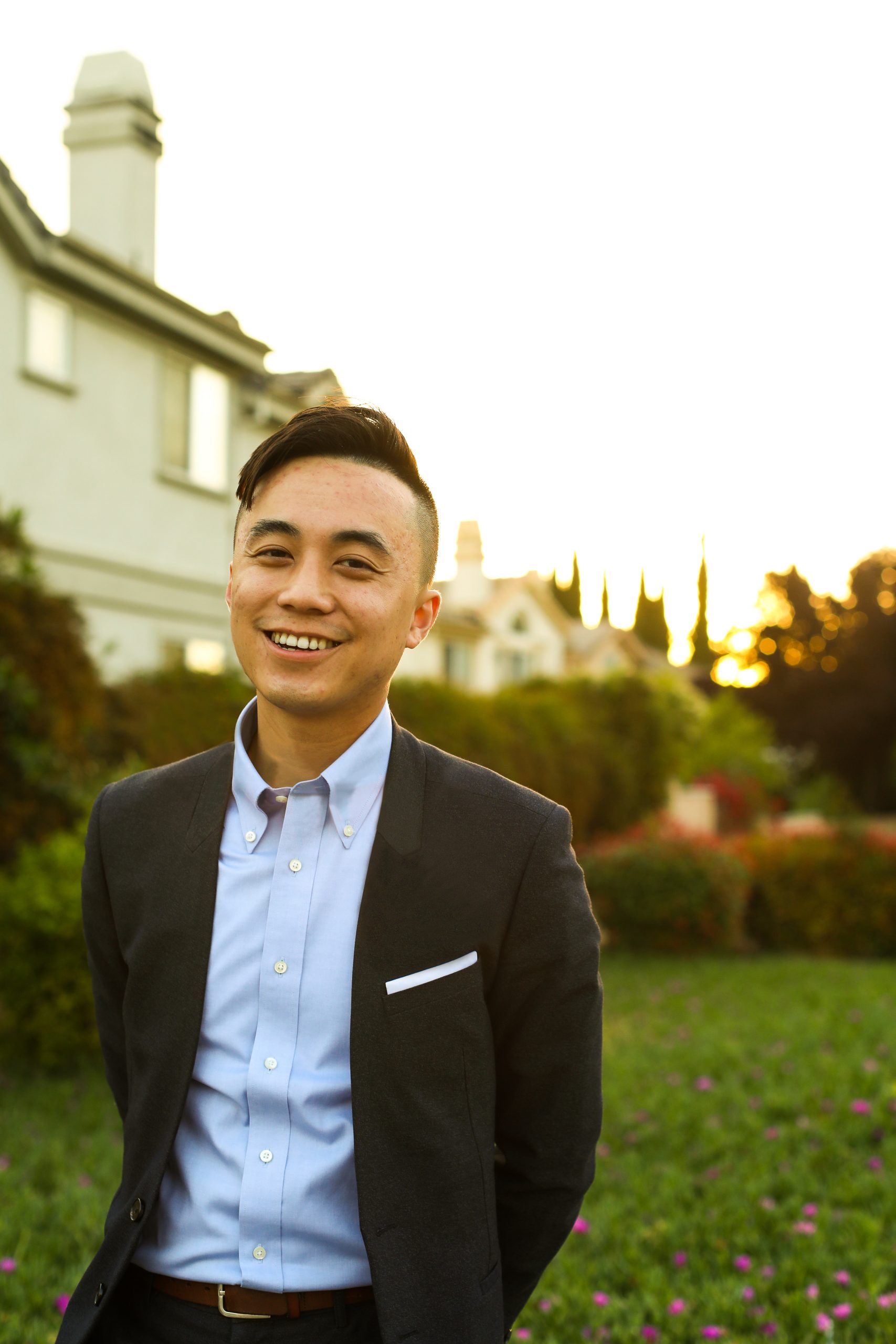
- California State Assembly (2021-present)
People
Elizabeth Birch

As a lawyer, corporate executive and open lesbian, Elizabeth Birch helped coordinate LGBT company policies and guide cultural perspectives of the queer community on a national scale throughout the 1980s and 90s.
While activists and LGBTQ+ workers pushed for civil rights, she used her legal expertise to solidify changes and acceptance during six years at Apple and nearly a decade with the Human Rights Campaign (HRC), the United States’ largest LGBT organization.
Elizabeth first arrived in the South Bay to attend Santa Clara University School of Law, where she graduated in 1985. She was previously living out of her home at the age of 17 as an open lesbian, moving around the United States. She credits those experiences and struggles for her ability to advocate within both a legal and corporate structure.
While still a student, Elizabeth brazenly called the head of Apple’s legal department asking for her dream job. To her surprise she was told she could work there—once she got a few years of experience practicing law under her belt. She joined McCutcheon, Doyle, Brown, and Enersen after graduation, where she help found AIDS legal services in San Jose, and left in 1989. She entered the political arena as a member of the San Jose-based Bay Area Municipal Elections Committee.
She was one of the lawyers representing BAYMEC in a case against the Macy’s located at Valley Fair Shopping Mall in 1988. They successfully argued for the First Amendment right to campaign against Prop 102, which would have required people who tested positive for HIV/AIDS to be reported to health authorities.
Elizabeth was thrust into the high-tech world when she joined Apple in 1989, where she directed international litigation. After LGBTQ+ employees formed Apple Lambda and pushed for non-discrimination policies earlier, her influence and rank as Senior Counsel for the company’s Human Resources department essentially ran interference for their continued efforts.
She decided her duty as a lawyer was to break through cultural barriers and make the company even better for LGBTQ employees. The advent of employee resource groups provided both a sanctuary within corporate companies, as well as an organizing platform to accomplish goals and change.
Whether that meant providing contacts, advice, or green-lighting ideas like making shirts with the Apple logo – an ask that initially made Apple Lambda members shiver – she helped garner support and benefits from the inside out.
Most notably, she spent time with then-Apple CEO John Scully, arguing for these changes, especially for a company using a rainbow-colored logo at the time.
Management often brushed off offering benefits, claiming they posed a financial burden. Elizabeth argued equality policies were breakthroughs to productivity, creativity and innovation—all coveted by high tech companies in competition with each other—in addition to offering to cover any costs from her own salary.
If one employer didn’t offer benefits, talent could move to the next town over or across the street to places that did, which led to a wave of change in Silicon Valley.
Scully eventually kicked off a 100-employee meeting by committing to domestic partner benefits by that January. This was the third attempt of Apple Lambda, after previous rejections.
“Every member of the board, you just saw the outpouring of emotion. There were tears,” Elizabeth said. “I saw the cascading through the culture, and that was a big lesson for me up up to and including Apple.”
Former Apple employees and South Bay activists have credited Elizabeth with the decision to work with businesses before politicians; her pragmatic approach to make incremental policy changes proved successful, as opposed to solely pursuing slow, polarizing legislation.
While on business trips for Apple, Elizabeth said she would travel to nearby companies, such as Kodak, Chevron, McDonald’s and General Mills, to speak with employee resource groups and CEOs. These heartfelt, genuine and trusting conversations about personal experiences are what she says allowed people to learn about and become comfortable with the LGTBQ community.
Despite a few holdouts, including Perot Systems and Exxon Mobil, as those companies passed more progressive policies, more liberal people went to work for those companies—not exclusive to LGBTQ people.
Elizabeth’s work in Silicon Valley was just the tip of the iceberg of her legal and political career.
She was the co-chair of the National Gay and Lesbian Task Force from 1992 to 1994. Around that same time, Elizabeth sat on the board of Digital Queers, a Castro-based activist group founded to bring LGBTQ+ organizations across the country up-to-speed online, in part through organizations like NGLTF.
“By the time I leave the San Jose area, I’m now thinking big,” Elizabeth said. “How do we really use corporate America to help revolutionize progress?”
By January 1995, she accepted the position of president and executive director of HRC, where she spent nearly a decade working to stem discrimination of LGBTQ+ people by sharing their stories, struggles and successes within society.
She helped acquire, rewrite and implement the Corporate Equality Index for LGBTQ employees–which she retroactively sees as her best contribution to the organization–in addition to helping form the Human Rights Business Council, which brought together gay executives across industries, from airlines to entertainment. Together, they figured out who to talk to within top management to have their friends and competitors fall in line.
Elizabeth continued efforts to change how people across the United States viewed the LGBTQ+ community through programming on Good Morning America, the Today Show and NewsHour, as well as an entire rebranding of HRC.
She also revisited her Silicon Valley roots in company-driven policy making when the HRC formed its Business Council in 1997, which brought together dozens of LGBT employees—including those at Apple—who already had on-the-ground experience making policy changes. They leveraged internal knowledge, such as budgetary timelines and proposal requirements, to craft best practices for other hopeful LGBT employees nationwide.
Some have estimated that the HRC Business Council helped around 100 companies across different industries earn nondiscrimination and domestic partner benefits by 2002.

Elizabeth Birch, courtesy Joanne Lawton

Elizabeth Birch

Elizabeth Birch in an HRC shirt

Elizabeth Birch

Elizabeth Birch at BAYMEC in 1988

Elizabeth Birch with Hillary Clinton
Karla Papula

Karla Papula(she/her/they/them) is a Therapist, Belonging Activist and LGBTQQIA+ Youth Ambassador. She moved to the Bay Area from New York in 2014 and received a Master’s Degree in Holistic Counseling Psychology. She is now an Associate Marriage and Family Therapist and a doctoral student at Pacifica Graduate Institute in their Depth Psychology Program with a specialization in Community, Liberation, Indigenous and Eco-Psychologies. Her experience at community-based nonprofits committed to meeting the needs of folx that have been historically marginalized led her to ACS’ Outlet Program. She is dedicated to being an active agent in dismantling systems of oppression in the field of psychology and to making mental health education and therapy accessible to more people. She believes in the formation of a psychology and practice that reaches out beyond the fragility of the independent mind and into the interdependent heart, soul, culture, nature, spirit, body and politics of our modern world. She maintains a private practice where she works with queer couples, youth and families. Outside of advocacy, you can find Karla parenting her plants, near running water or drinking hot sauce from the bottle.
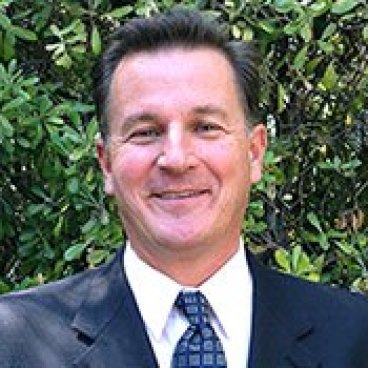
John Laird
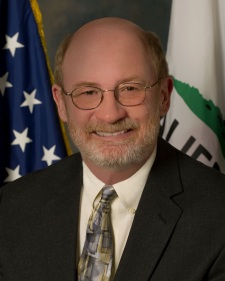
John Laird grew up in Vallejo and had come to Santa Cruz in 1968 to attend UCSC. In 1974, he began working for Santa Cruz County as a budget analyst. He ran for Santa Cruz City Council in 1981 and was the leading vote getter that year. In 1983, he was selected by his council colleagues to serve as mayor for a one-year term. That year he would receive national media attention as one of the first openly gay mayors in the U.S. He would serve a second term as mayor in 1987-88.
During his time on the city council, John led Santa Cruz to become the third city in the nation—after West Hollywood and Berkeley—to offer domestic partner benefits to its employees. He also advocated for the designation of Monterey Bay as a national marine sanctuary. John joined the BAYMEC board in early 1985, significantly increasing our visibility and presence in Santa Cruz County.
After being termed out of the city council, John served as executive director of the Santa Cruz AIDS Project from 1991-94. He was then elected to the Cabrillo Community College board for two terms from 1994-2002 .In 2002, John won a seat in the State Assembly representing a district that included parts of Monterey, Santa Clara, and Santa Cruz counties. That year, he and San Francisco’s Mark Leno became the first two openly gay men to be elected to the state legislature in California.
John continued to be a strong advocate for the environment in the Assembly. He was one of the co-authors of AB 32, the landmark 2006 state law that regulated greenhouse gases and established California’s cap and trade program. He also authored the bill that established the Sierra Nevada Conservancy, a state agency focused on protecting and preserving the environment in the Sierra Nevada mountains. He also had a major influence on the state’s finances during his four years as chair of the Assembly Budget Committee from 2004 to 2008. He was termed out of the Assembly at the end of 2008, but that was not the end to John’s career in public service.
John served as California’s Secretary for Natural Resources under Governor Jerry Brown from 2011-2019. In 2013, he was one of 10 LGBTQ public officials who were honored by the Obama Administration as a “Harvey Milk Champion of Change” at a White House ceremony. In November 2022, he won election to the State Senate in the greater Santa Cruz/Monterey Bay/Santa Clara area.
Kim Harris and Bennet Marks

Kim Harris is a computer scientist and gay rights activist based out of Sunnyvale, California.
Born in 1946, he studied physics at Louisiana State University, later earning his masters in computer science at Purdue. The Texas native moved to the Bay Area in 1974 to work on a super computer for NASA. He was not yet openly gay.
As Kim incrementally came out to friends and colleagues, he joined a gay men’s discussion group at Stanford where he met Bennet Marks, with whom he started a relationship in 1982 and married in September 2008. He also began attending High-Tech Gays meetings by 1983.
Kim joined Hewlett-Packard in 1984, where he joined unofficial gay employee groups like Friends of Dorothy and the Gay and Lesbian Employee Network (GLEN). From there, he helped get the ball rolling at HP to implement nondiscrimination policies and expand diversity training and AIDS-related health care coverage. He retired in 2001 at the age of 55.
During the 1990s, he joined groups like the Parents and Friends of Lesbians and Gays speakers bureau, Peninsula Business and Professional Association, Billy DeFrank LGBT Community Center Board of Directors and the HRC Business Council in 1998.
-

Bennet Marks & Kim Harris -

Bennet Marks & Kim Harris -
Bennet Marks & Kim Harris at Google -

Bennet Marks & Kim Harris
Bennet Marks
He also was involved with support and advocacy groups like Silicon Valley Gay Men’s Chorus, Outlet and Outlook TV.
Bennet Marks is a software engineer and gay rights activist based in Sunnyvale, California.
Born in 1954 in Long Island, he studied at Brown University before starting a graduate math program at Stanford. He ultimately left before presenting his final thesis, earning a masters degree.
Bennet got a job at Ford Aerospace in 1981, where he obtained a security clearance, in part, due to not yet being openly gay to himself or others. Beginning to come out, he met Kim Harris at a Stanford gay men’s discussion group. The two have been in a relationship since November 1982, and married in September 2008, before California’s Prop 8 initially passed later that year.
Bennet later moved onto a job at Apple, where he started a gay employee group named Apple Lambda in 1986. That group sparked nondiscrimination policies and domestic partner benefits at Apple. Not long after he joined the BAYMEC board in 1986 and Outlet TV.
He transitioned to working at Google in 2004, where he created the Gayglers in 2006. Bennet retired in 2011, and continues to live with Kim in the South Bay.
Aejaie Franciscus

Aejaie Franciscus’s story starts with a letter to Santa Claus at five years old, “I asked Santa, to make me a little girl for Christmas, as I was born a boy. To say the least, that present wasn’t under the tree, but it did set me on my life’s journey,” she recalled.
She endured bullying throughout high school and, with the support of her family, finished her transition before heading off to college in 1982. She moved to San Jose in 2004 and met her husband, Tony. The couple married during the “Summer of Love” in 2008.
“Other than the drag queens, people did not see much of this community. It was an underground community. It wasn’t until the last ten years that folks were seeing transgender folks in the LGBTQ community even,” Aejaie remembered, “I think it was about three years ago that the community saw representation at Pride events.”
Aejaie worked in the nonprofit arena for 20 years before being hired as the first transgender executive director of the Billy DeFrank Center. In an article from the Bay Area reporter, Aejaie mentioned that she was excited to start working, “This job offered me an opportunity to bring my personal life and professional life together. It’s like a coming out party.” This was the first job where she was able to speak about being transgender safely. She served as director from 2005 to 2008, during which time she spearheaded a HIV rapid testing program and worked with local schools to support kids dealing with homophobia.
Aejaie now owns the Carla’s Social Club, a space for transgender people to find resources for transitioning and get support among other transgender people.
“It will be interesting to see what happens once we come out of the pandemic, because the work we do is so social and interactive. We had events and discussion groups activities at Carla’s Salon that are online, but are more effective in person,” she explained about the local impact of the global COVID-19 crisis. “Other than discussion groups online, and anything else we can move online, there’s only so much social activity you can do. It’s hard to help girls pick out clothes online, you need to see someone in person to help them put together outfits. You need to see someone in person to give them a hug for support.”
Jules Chyten-Brennan

Jules Chyten-Brennan is the medical director of the Gender Health Center, where they are building a medical center for trans, non-binary, gender expansive people. Before moving to the Bay Area, they worked in New York City reforming health care for people incarcerated in jails.
Sera Fernando

Sera Fernando was born and raised in San Jose, and now works as a senior management analyst in Santa Clara County’s Office of LGBTQ affairs. As a transgender Filipino woman, she focuses on economic empowerment for people who are transgender, non-binary, gender non-conforming and gender diverse.
Ken Yeager
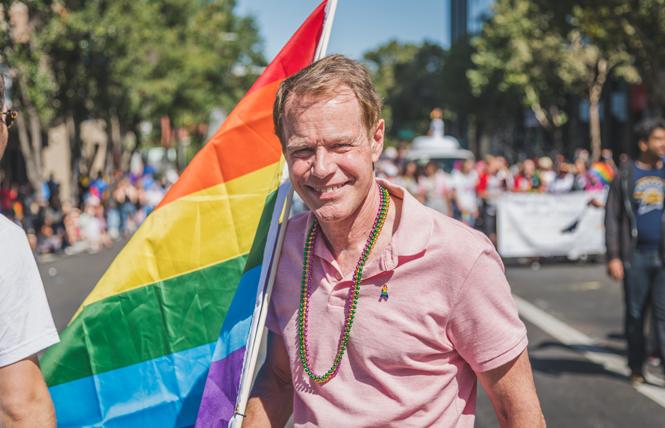
Ken had come to San Jose when he was 18 to start a new life away from conservative Riverside, where he knew he could not be openly gay. He graduated from San Jose State University with a degree in political science and held numerous jobs working on public policies to improve his adopted city.
It was in early 1984 when he picked up the Sunday San Jose Mercury News and read an opinion piece by a local state Assembly member Alister McAlister stating that homosexuals should have no legal, social, or political standing in society.
It was a remarkable statement. The Assemblyman, Alister McAlister, was urging then-Governor George Deukmejian (R) to veto Assembly Bill 1, the law passed by the Legislature that would make it illegal to discriminate based on sexual orientation. If such laws were passed, he argued, LGBTQ people would become a legitimate class deserving of legal protection. (Deukmejian did, in fact, veto the bill.)
Ken was well aware of the hatred and persecution that gay people faced but this was the first time someone had phrased it so bluntly: You are undeserving of the benefits provided by society. Putting the paper down, he said to himself: “Ken, if you don’t fight for your rights to be a part of this community then no one else will.” He came out publicly a week later in a Mercury News opinion piece denouncing McAlister and arguing for acceptance of gays and lesbians (the term that was used then) as full participants in society.

Thereafter, Ken co-founded BAYMEC—the Bay Area Municipal Elections Committee—with Wiggsy Sivertsen. This political experience and work allowed Ken to run for San Jose/Evergreen Community College Board in 1992 and become the first openly gay elected official in Santa Clara County. In 2000, Ken ran for San Jose City Council and was elected. After winning reelection in 2004, he ran for Santa Clara County Board of Supervisors in 2006 and won. He was reelected in 2010 and 2014.
During his time on the Board of Supervisors, Ken would create the Office of LGBTQ Affairs, the first such county office in the nation. With a staff of 7, the office has taken on a wide spectrum of issues to improve services to the LGBTQ community. After reaching term-limits, Ken has turned his attention back to BAYMEC through its Community Foundation.
- Video: Highlights from 3 Milestone Celebration
- Video: Ken’s Oath of Office for San José City Council
- The Making of a Candidate: A Personal Memoir (Book chapter from Trailblazers: Profiles of America’s Gay and Lesbian Elected Officials)
- Guest Opinion: The day I was told I didn’t belong in society (Bay Area Reporter)
- The Long Struggle for LGBTQ Equality in Santa Clara County (PDF)
- Battle Against HIV/AIDS: A Look Back at the First Decades of the Santa Clara County Experience (PDF)