

Sera Fernando was born and raised in San Jose, and now works as a senior management analyst in Santa Clara County’s Office of LGBTQ affairs. As a transgender Filipino woman, she focuses on economic empowerment for people who are transgender, non-binary, gender non-conforming and gender diverse.
Community & Culture
Gender Health Center
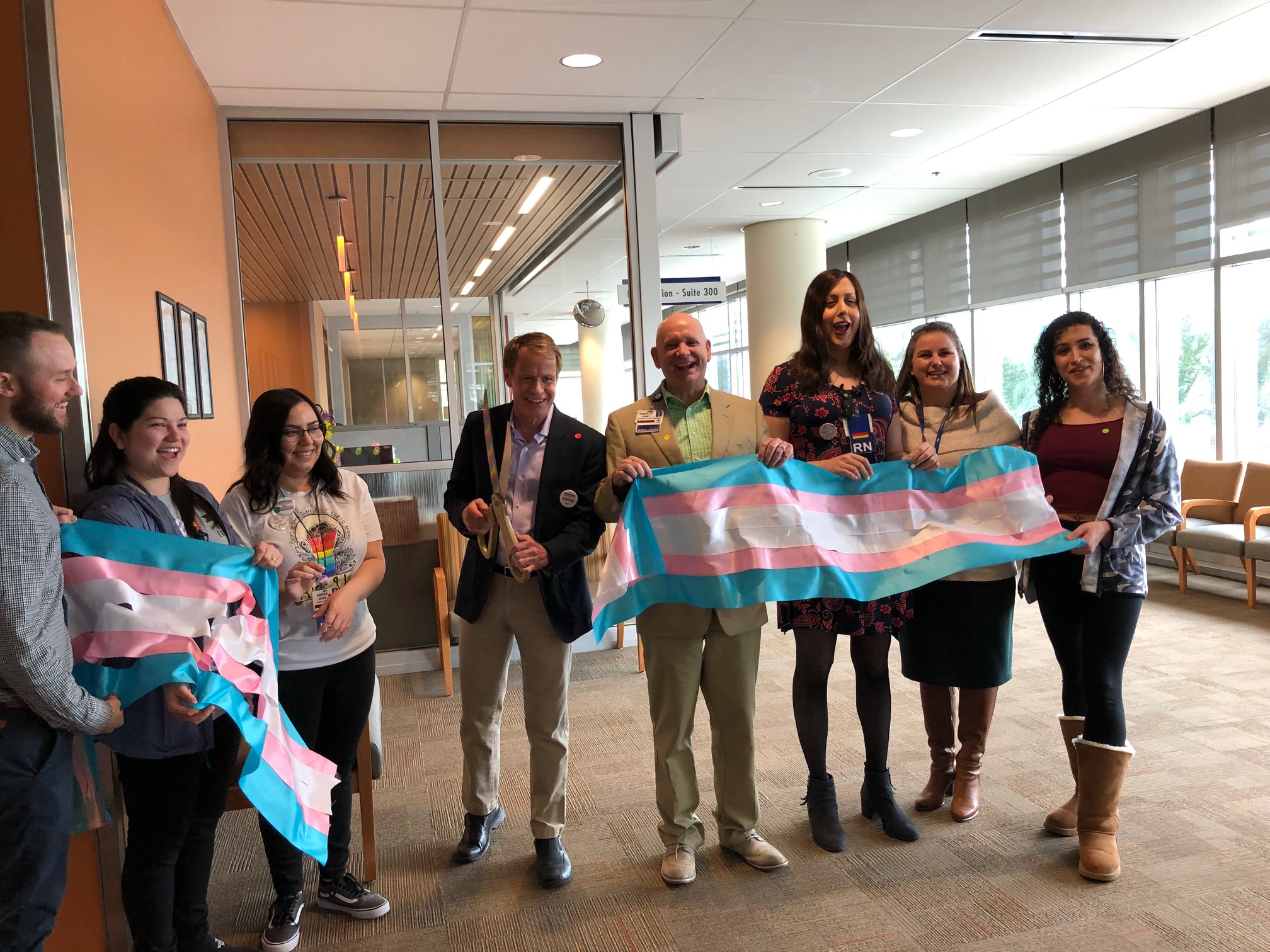
While activists and politicians continue to advocate for transgender rights across the country, people who are transgender, non-binary and gender diverse in the South Bay never have had specialized access to healthcare for years.
Santa Clara County established the Gender Health Center in November 2018—the first of its kind in the nation. The need for the health center came after then-President of the Board of Supervisors Ken Yeager called for a health assessment of the LGBTQ+ community in his January 2013 State of the County address. Not surprising, the report found that 28% of transgender, gender non-binary, and gender expansive people had experienced healthcare discrimination, while 38% were unable to access medical care at all.
Part of the second largest county-owned health and hospital system in the state of California, it was the first all-ages clinic dedicated to LGBTQ-centered medical, mental and emotional health care, including social work. By having the ability to partner with institutions across the county system, more comprehensive care can be readily provided for needs like transitioning, which often requires physical, mental and emotional support.
This unique opportunity within a public health system is why Jules Chyten-Brennan, the center’s medical director, moved from New York City to guide the center’s work two years ago. They said concerns ranging from hormones and loneliness to unsupportive families and unstable employment environments are more easily addressed when hosting services under one roof.
“The center is not just giving people hormones and doing those things which are essential,” they said, “It’s really seeing someone as a whole person, and being able to reach across those different departments to treat someone like a whole person.”
The need for the Gender Health Center was clear.
When Sera Fernando, a senior management analyst in the county’s Office of LGBTQ Affairs, first came out as transgender, she had to travel to Santa Cruz or San Francisco monthly to find resources like a therapist and treatment.
When options finally became accessible in San Jose, she said those resources allowed her to live more authentically and create community in the place she was born and raised.
The specified care expanded beyond the Gender Health Center. Since LGBTQ folks comprise nearly one-third of homeless youth and young adults under the age of 25 and 10% of homeless adults, a separate, federally funded Gender Clinic within the Valley Homeless Healthcare Program was also started to offer a one-stop approach where people can access a primary care doctor, mental health support and housing assessments.
Being the first in the nation doesn’t mean the work stops to address gaps still present in healthcare. While 2019 solidified work in areas like primary care and surgery options, Jules said they staff will start offering services like speech therapy and electrolysis in the coming months, as well as partnering with community support groups.
“I think (those additions are) rare to have in a clinic in general, and will be such a huge door opened for a lot of our community,” they said. “We know so much of our health is not what happens in the clinic, but it’s community connection, finding those other supports that bring joy to our lives.”
Working on Gay Pride

From 1988 to 1993, Whayne Herriford was apart of the Board of Directors of the Gay Pride Celebration Committee of San Jose. With the emergence of political support from elected officials in 1989 and the debut of first pride parade in 1991, pride became more and more important to the local community in San Jose and the rest of Silicon Valley.
Sal Accardi and the Watergarden

In the Spotlight: Sal Accardi
By John Follesdal, Esq.
From South Bay Times, February 1989
Sal Accardi is the President of the Board of the Watergarden bathhouse in San Jose. Throughout the AIDS crises, his position on keeping the Watergarden open has raised controversy in our community. South Bay Times met with Sal to discuss his views on AIDS, bathhouse closings, and some of the other political issues he has been involved with.
Q: You are probably best known in our community as the President of the Board of the Watergarden. How has AIDS affected your business?
A: We started off with 64 investors when the Watergarden opened up. When AIDS hit a lot of them panicked and it was very difficult to try to make good their investments so quickly. But we set up payment schedules, and I can proudly say that no one has lost a dime; everyone has made a profit In the Watergarden.
Now It’s a smaller corporation, and that works out better, with less problems that I have to deal with. On the other hand, my ideal was to have a community bathhouse that was actually owned by the community. We’ve got people from literally all walks of life that have been and are investors In the Watergarden – business people, religious people, laymen, old and young.

I think the Watergarden has, through the employees, the managers, and the executives, developed an advertising program that has been tremendous, a whole promotional concept about how to deal with AIDS. We’ve spent $ 140,000 on safe sex advertising and programs.
I’m proud of the way we’ve dealt with AIDS as a community and the way the Watergarden has dealt with it… Some time ago, I came to a reckoning about the Watergarden and the AIDS crises, and it was clear to me that I was right on track. Something in my gut lead me in this direction, and I know we’re doing the right thing, there is no question in my mind.
AIDS is a tremendous crisis and setback for us… It’s been very difficult for me watching my friends die around me, but still I’m so proud that we’ve managed to survive the way we have. To me AIDS is eventually going to make a statement about life, not about death. It’s going to show how we are on a one-to-one basis and on a collective basis as a group.
People need love, they need compassion, and that’s not going to stop. There are many selfish, greedy people who think that they are going to stop us, or make us go back in the closet, but that’s not going to happen… When they find a cure, we’re going to be so much better for having gone through this, I’m convinced of it. We’ll have a perspective on ourselves that maybe we wouldn’t have had If we had not had the crises.

O: Many cities have closed their bathhouses, haven’t they?
A: No, not many. That’s an impression that the politicians like to give. Initially, in the beginning of the crises, people were very frustrated. All they saw was the rising statistics of AIDS. And some politicians, especially Diane Feinstein who became obsessed with the issue, got on a vendetta and wanted the baths closed. Actually very few cities have followed suit, thank God.
I not only felt it was unwise – and I don’t mean that from a vested interest – it was downright threatening to the community because it was counter-productive. It was forcing people to go into environments where they were going to continue to have sex, but in a less safe environment with no options for cleanliness or for condom use or for safe sex consciousness raising. I thought It was ideal for the baths to be instrumental in being part of the solution rather than being part of the problem. But politicians want to grandstand, especially when they know homosexuality Is going on. They want to use it somehow…
I think gay people are more than sexual objects, but some of them choose to have a more limited persona. But to me, I’m convinced that the bottom line is not horniness or the desire to get laid. The bottom line Is a need for companionship and an affirmation of ourselves as human beings.
However, many people have learned to use sex as a means of getting attention and establishing human rapport. They get caught up in the superficial to the extent that they lose sight of their real goal – to become at one with themselves and with each other. I think that is the bottom line of human sexuality, and if that is true, we should try to foster environments that encourage people to express themselves in a variety of ways as long as they are not laying a trip on somebody else. That’s the philosophy of where I’m coming from with the Watergarden.
O:You’ve also been politically active for a long time?
A: Ironically, the first time I went to college, at Foothill College in the sixties, I was openly gay but conservative. I wasn’t for the Vietnam war, (but rather) for either winning it or getting out. I realize now that there was no chance of winning it, that it was an ignoble war.
During the whole period of the flower children and the consciousness raising and the encounters and the gestalt, I got very actively involved in psychology and transactional analysis. I was very much into that. It was my rebellion, I guess, against the times when I considered myself conservative, I went from conservative fascist to hippie to being a left-wing entrepreneur.
O: You grew up in Santa Clara County. Were you born here also?
A: No. I was born In Brooklyn, New York. I came out to California in 1959, when I was thirteen years old, and I learned three things in that year: I learned how to ride the bicycle, I learned how to masturbate, and I learned that most people weren’t Italian or Jewish. I had lived in the middle of a Jewish neighborhood and all the people I knew were family people or neighbors that were Jewish. I never understood why we had a Protestant president. The whole world seemed to me to be Irish, Jewish, or Italian.
I got in touch with my homosexuality at a very personal level – I had to confront It -when I was seventeen. I grew quite attached to a fellow at Los Altos High School in my Junior year, and I had sort of a mini-breakdown because It was scary. I got all sick. But I got over that period and went to the other extreme. I became vociferous in my gayness. At the time it was not so much political but a psychological reinforcement for myself. The more I talked about it, the more comfortable I was. It was a way to stir people, and it worked.
I was very popular in high school, in the sense that even though I was openly gay, I was very successful as an actor. I was very popular even with the football team – we used to play poker games on Fridays and Saturdays at my house.
I came from a very loving supportive family, so It was easy for me to come out… My grandmother’s philosophy was – and she was the head of the household – she said “You were given a special kind of love, and therefore you need to be loved in a special kind of way.” And then she told my family that If anyone didn’t accept my “situation” they could get out, and that anybody that I loved would be loved and respected in our home.
It was as simple as that, and from then on my homosexuality, I feel, has been an advantage to me. I like to deal with the issue. It gives me a way to confront society and shake up society. But If I hadn’t been homosexual, I probably would have been rebelling on some other issue.
Q: You went to college here also, right?
A: Yes. I went to Foothill and San Jose State. While I was going to San Jose State I worked In a third-rate health club/bath house in Redwood City, and that’s when I got Interested In the baths environment. I was a Jack-of-all trades -It was a small operation -I was a receptionist, I was a laundry person, etc.
While l was going to San Jose State I also started coming out socially In the gay world. Up until then I had had a lover for five years. It was a very closed, quiet, paranoid, uptight relationship. He was unhappy and I was unhappy for the last two years of that relationship. We were too afraid to be ourselves, and I didn’t know anything else.
After we broke up I was forced to find my first bar, the Locker Room, and I paced for two hours up and down the street before I had the courage to walk In. As soon as I walked in the bartender said “Oh. This must be the first time you’re in a gay bar.He had spotted me!
After that I thought the best way to get involved, and a more comfortable way to get involved than by being a patron, was to become a cocktail waiter… I could be the person In control, I could limit it, and I could be less inhibited. I didn’t have to be rejected or repudiated as easily, and that helped me to come out…
During my time at San Jose State I also co-founded the gay student union there. That was in 74- ’75. There was a lesbian friend of mine in the drama department, and we wanted to make some waves. It was done almost for fun at first, but then we realized that there was a need there. We started having semesterly elections, and so on. A lot of people wanted to get Involved for social reasons; I was Into It for political reasons, to make a statement.
Q: What other organizations have you been involved with?
A: I kind of regret it now, but when I was a kid, when I was thirteen, I was captain of the Young Republicans in Los Altos. Later on I was actively involved with Richard Nixon’s first campaign against Kennedy. I regret that now, but I was politically active from early on.
I’ve found a need, certainly through the Watergarden, to remain vigilant as to the possibility that homophobic people would want to moralize or use the Watergarden as some kind of football. I see the Watergarden as a cause, not just a business. There was a need for a bathhouse when I opened It, and It was a political statement.
We have a lot of business dealings and we try to spend our money within the gay community to keep other businesses going. And that’s been a philosophy of mine. Sometimes I pay a little more for that, and sometimes I have no choice – we suffer discrimination. When the AIDS crises hit contractors wouldn’t work for us because they were afraid to get AIDS.
I’m temperamentally suited to politics in an activist way. I’m not a moderate type person. I’m very theatrical, and my theatricalism plus my political interest plus my homosexuality and my Italian background created who I am. But I’m more Italian than I am gay. I think of myself as very Italian. I’m very proud of my heritage, the language. the food, the culture, everything. And for the public record, I am not a member of any Mafia organization, even though I am three quarters Sicilian!
Q: How about social activities and hobbies?
A: I love food, as you can see. I love to eat, and every now and then I love to cook. It’s very relaxing to me, but because of my Job – I travel a lot – I eat a lot at restaurants. Predominantly Italian restaurants.
I’m not an outgoing sportsman/activist type person. I like to read a lot, magazines and books, mostly biographies, be they political biographies, historical biographies, or Hollywood-type biographies. I love movies, and I like television. To the disappointment of my lover I can look forward to a whole weekend of going home on Friday evening when I get out of work, taking off my clothes, and literally staying In bed for three days, reading, watching television, and from time to time petting my cat.
Occasionally I go out to the bars, but I don’t party as much as I used to. I also like the peace and tranquility of going to the Russian river or going fishing, and I like theatre a lot – I go to New York usually every year. I’m not into hiking or boating; I’m not into sports, but I do like looking at the guys who are. They seem to be better developed than me. I wonder if there is a correlation between that? I don’t know which came first, their bodies or their physical activity!
Ensamble Folclórico Colibrí

Arturo Magaña attended a ProLatino meeting in 1992 where he first experienced, at 18 years old, a folclórico performance. He witnessed men dancing together to express stories, and he joined immediately. For two years, the group was invited to Washington to dance for the Peace March as well as San Jose Pride and San Francisco Pride. Around 1995, ProLatino dissolved, and Arturo looked elsewhere to continue to dance.
Arturo joined the Los Lupenos de San Jose dance company around this time as a lead dancer. It was important to him to have the LGBTQ aspect of dancing represented, so he requested approval from the Dean of Dance at Stanford, the co-founder of Los Lupenos, to bring men together to represent the LGBTQ community. He was denied time and time again to create this type of group in the company.
Around 2013, Colectivo ALA invited Arturo and Los Lupenos to put on a folclórico performance at their anniversary event. Arturo remembers fighting to get permission for this performance, “I said, ‘you can’t repress me. This is who I am. I need to represent myself,’ and Dr. Susan Cashion, a co-founder of the Los Lupenos Dance Company, said, ‘absolutely we have your back. Anything that you need, costumes, music, choreography, you do it. This is you.’ She gave me the opportunity to represent myself and bring that to Colectivo ALA anniversaries and that sort of seeded the idea for Rodrigo and myself to bring a program to the LGBTQ community.”
Arturo started the LGBTQ dance group at Colectivo ALA and left Los Lupenos. The group was named Ensamble Folclórico Colibri, and they were part of the Colectivo ALA group. At a certain point, Folclórico grew beyond the Colectivo ALA group and became independent. In 2016, the group marched in the San Francisco Pride Parade and received honorable mention from the City and County of San Francisco as well as receiving an award for the most vibrant and colorful group. Every year since 2016, they have participated in Silicon Valley Pride.
In 2017, the Ensamble was adopted by the School of Arts and Culture as a cultural partner at the Mexican Heritage Plaza. In 2018, the Ensamble was able to put together a full stage production where they invited an ensamble from Mexico, Grupo Folclórico Teocalli. That was the first time that they had over forty dancers, some men in Mexican Folclórico skirts, on the main stage of the Mexican Heritage Plaza stage.
In Seattle, a group called Somos Seattle, a queer organization focused on representation of the Latino community, brought Ensamble Folclórico Colibri to headline their Latino Pride. This was a great honor for Arturo and the ensamble.
In 2018, the organization experienced push back by an organization in Mexico who threatened to sanction them and contact the Mexican government to stop them from continuing. The worst part of this experience was that it was coming from the Folclórico community, a director. Arturo stood his ground, “We put our foot down and we said, ‘we’re not going anywhere. You can do whatever you want. We have a freedom of expression.’ That brought us to be more recognized, to the point where our Facebook page had like less than a thousand likes and within a month we ended up with about 9,000 likes. So the world and the community started seeing Folclórico Colibri more seriously.”
Ensamble Folclórico Colibri is an LGBTQ+ group, including folks that are in the LGBTQ community as well as others who are not. Arturo and the group believes that it is important to not repress those that are repressing you, so by accepting the straight members into their group they are showing solidarity with their allies who will stand with them.
The group still faces backlash today by those in California and other communities. The Folclórico community is still close minded, but there is progress being made. Arturo said, “I want to say that maybe 60% of the men who dance folclórico are part of our LGBTQ community. I feel that it’s more of this fear and repression that they have and they translate this into us not being traditional or being offensive to our culture. When we put on our show, I added a tagline that said, ‘we’re not here to change tradition. We’re here to add our stories because they matter.’ I know for a fact that in the fifties, when Folclórico became a bigger thing, there were queer people dancing. It’s just they’re not permitted to put it on stage.”
It’s important to Arturo that the group features their stories on the stage and add to the folklore of folclórico. “For example, in 2018, in one of the very traditional pieces, we call it Quadro, we put together a lesbian wedding, and it was on stage and was received well. Another piece I choreographed was a coming out story, two men falling in love. People saw us in a different light. They saw that it wasn’t just about movement. It wasn’t just about dancing men to men or women to women. It was for us to convey our day to day story because that’s what folclórico does. When you see a performance of folclórico, you see a representation of either a town, a festivity, or a main event in a family. I wanted to do the same thing, but with our queer identity, that’s one of our main components now.”
“I’ve seen the faces of young people and their parents when we are performing and they see themselves and they see the representation and the pride of our heritage as queer men or as a lesbian or as a nonbinary person. We have had a whole family unit, after our performance, come to us and thank us for giving them the platform to endorse their identity through culture, because they didn’t have that. Not only have they been removed from their place of origin, but also affcted by the cultural shock that they receive from living here. So to see a representation, through folclórico and costumes on stage, it’s been a major impact for them,” said Arturo on the group’s impact on the community.
Read more about Arturo Magaña here.
To learn more about Ensamble Folclórico Colibri, visit their website: Ensamble Folclórico Colibri
“We had an event with the California School for the Deaf, which was a challenge because we’re going to dance and do videos and they couldn’t hear our footwork, but that’s when we met our first trans dancer. There was a student who was seven years old and she was already transitioning. When we performed, even though she couldn’t express with her voice, she came up on stage and she started crying. I’m gonna start crying myself. She started crying and just hugging us and feeling so comfortable. She asked us to take one of our skirts so she could wear it. That to me was probably the best acknowledgement that we have received. Her mom also came up and said, ‘Oh my God, you guys have completely changed my daughter’s life because she feels like she’s important. She matters.’ That was beautiful. That was really beautiful,” Arturo Magaña.
The Drag Queens of Silicon Valley

Currently in San Jose, Drag Queens participate in pageants or shows, where they express themselves through their performances. There is a strong partnership between the San Jose and Santa Clara County Queens and Kings and the San Francisco scene as well, making the community stronger with so many participating.
Since the onset of Covid-19, the performers have been turning to virtual spaces. To catch some of their shows, sign up for newsletters and notifications from the venues’ websites:
- Splash San Jose
- Renegades Facebook
Explore the Imperial Courts and Drag Community

Jeff McGee AKA Kelli Collins
Jeff was an integral part of the gay community in the 80s and 90s. His performances as Kelli Collins in innumerable drag shows raised thousands of dollars for many causes, primarily for early AIDS victims who had no financial or medical support at that time. Jeff moved to the South ...
Imperial Courts
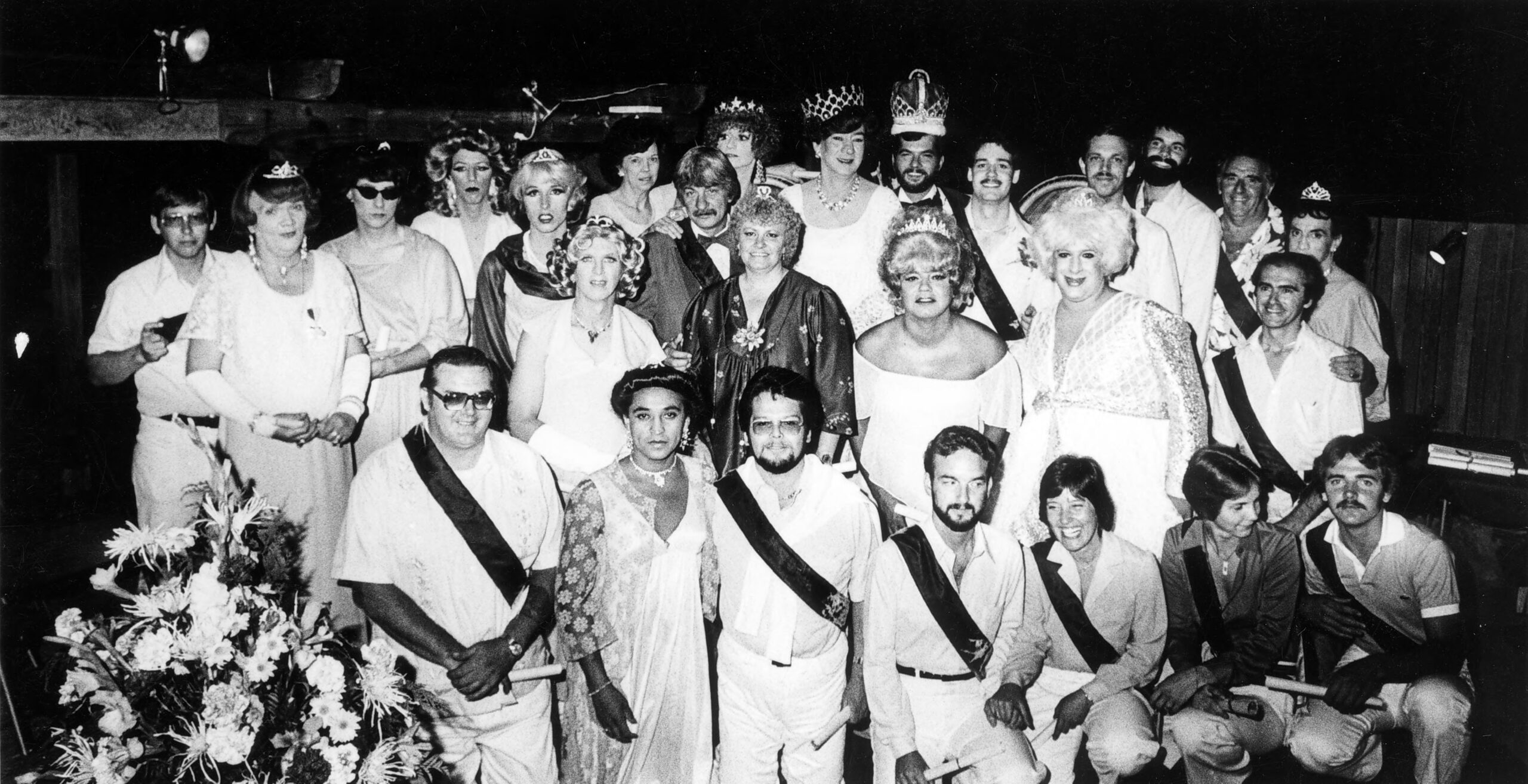
Kevin Roche, a member of the Imperial Courts, remembers that it was over fifty years ago when groups in Portland and San Francisco first started drag balls. “This is when being in drag was a more transgressive activity than it is considered nowadays,” he said in an interview. This was ...
Casa de San Jose
In the early days of Casa de San Jose’s informal association of drag queens, they would travel to San Francisco for the city's world-famous drag shows. Ray Aguilar, a San Jose drag queen, requested permission to form an IICS chapter in San Jose, which formed as Casa de San Jose ...
Ray Aguilar
Aguilar always urged family members to celebrate holidays together. He was a founding member of The Imperial AIDS Foundation, which provided hot meals, paid rent, prescriptions, and provided transportation to medical appointments for people living with AIDS . Ray Aguilar died due to complications from AIDS in February 1995 ...
LGBTQ+ Tech Employees

The diverse, liberal work climates touted by Silicon Valley’s high-tech companies first began with a push for increased civil rights by gay and lesbian employees in the 1980s. As companies like Apple and HP advocated for internal nondiscrimination policies and domestic partner benefits, news spread through the software, hardware and conventions created by the tech industry itself. Gay employee groups and business collectives led to expanded networks of in-person, internal and inter-corporate communication, which directly helped disseminate increased protections inside company walls and national politics.
The liberally diverse culture within Silicon Valley’s high-tech companies was sparked by an employee-led push for increased civil rights for gay and lesbian employees in the mid-1980s.
At a time when California politics, like Propositions 6 and 64, pushed ideas of removing gay teachers from classrooms and quarantining people with AIDS altogether, South Bay companies from Apple to Hewlett-Packard approved internal nondiscrimination policies, with domestic partner benefits following throughout the next decade.
In the high-tech industry—where Silicon Valley employers battled each other for a stiffly competitive pool of talent—more LGBTQ people flocked to jobs where protections increased. This snowballed into a cultural shift that eventually applauded diversity, moving away from tech’s more conservative roots.
But at the same time, the AIDS crisis was devastating the LGBTQ community. While it forced many people to come out to family, friends and coworkers, being out at work was terrifying as the lack of safety in the corporate world left workers vulnerable to lose everything: jobs, families and homes.
Some came out by necessity, others as an attempt to humanize the disease and advocate for change. Many employees, however, stayed closeted out of retribution or being passed up for promotions, especially in high-tech government jobs that demanded security clearances.
Employees pushed back in 1983, when the Defense Industrial Security Clearance Office was sued by the South Bay-based group High Tech Gays (HTG) for subjecting gay and lesbian employees to more intense scrutiny and investigation for secret and top-secret clearances because of sexual orientation. A judge eventually sided with the Sunnyvale-based plaintiffs in 1990, closing the iconically named federal court case High Tech Gays v. DISCO.
The existence of HTG and conversation between gay people not only opened up a vision of possibility for other groups to start but also raised awareness with such a brazen name that was unable to be ignored.
Other unofficial gay employee social groups were established—such as Friends of Dorothy and the Gay and Lesbian Employee Network—which stretched across Silicon Valley corporations like HP, Sun Microsystems and Oracle.
Beginning as communities for connection, camaraderie and a dating pool, these gatherings soon led to redacted membership directories and discreet newsletters, which helped crowdsource knowledge of internal business practices across the high-tech sector to secure protections in workplaces at a time when no state or federal protections existed.
After a stint in political activism, Bennet Marks, a former Apple software manager inspired by stories from HTG and his experience on the company’s AIDS Response Committee, wanted to work directly with the company to develop staff policy.
He formed Apple Lambda in August 1986, and came out to the entire company in the process. Named after the Greek letter that had quietly emerged as a gay symbol at the time, the group welcomed in employees by word-of-mouth, even those otherwise afraid of retaliation.
Bennet said their work was the driving force behind Apple adopting nondiscrimination policies—the first Silicon Valley company believed to do so—and pushed others to follow.
By 1987, Apple Lambda marched in the San Francisco Pride Parade and started publicly shifting what was acceptable in the high-tech workplace.
But not all Silicon Valley companies welcomed these policies with open arms out of the gate. Older, more conservative companies took longer to welcome these employee protections.
Kim Harris, a manager at HP, learned from previous successes and failures in organization and advocacy from Bennet, with whom he was (and still is) in a relationship starting in 1982. Together, they eventually became known as the Silicon Valley poster boys.
Despite having one of the first unofficial gay employee groups, HP was hesitant to offer direct company resources. Kim began by stealthily parsing out company health plans, eventually calling out the denial of AIDS treatments for former staff.
“I marched right into HR and benefits, and I said, ‘Is this the kind of company you run? Is this the kind of company you’re proud of?’ Kim said. “All of a sudden it was approved.”
This got the ball moving at HP in working toward nondiscrimination and diversity education policies across the global company. After a unanimous “no” vote, Kim organized reader’s theater performances to dozens of executive staff, featuring personal stories from employees who dealt with internal harassment, jokes and the AIDS epidemic.
One year after the initial denial, an unanimous “yes” arrived in the late 1980s. Despite fears of negative reactions from the press and public, HP’s decision made only whispers in the local news. Combined with Apple’s work, however, the news started circulating regionally.
“Apple then was Apple; Apple now is Apple,” Bennet said. “It was my very strong opinion that anything we did at Apple would have ripple effects throughout Silicon Valley and throughout the country.”
It did ripple. The start of internal policies for gay and lesbian employees at Apple arrived not only before California state law, but also before federal precedent.
In September 1992, California Gov. Pete Wilson signed non-discrimination protections for sexual orientation into the state’s Labor Code—an effort first vetoed eight years prior. By 1993, there were around eight Fortune 500 companies that provided domestic partner benefits. The number was more than 100 by 2001.
This work was continued through external groups like the Bay Area Municipal Elections Committee (BAYMEC), Peninsula Business and Professional Association, and the invite-only HRC Business Council, as members met with hundreds of other gay employees and learned how internal business hierarchies and organization could advance approval of nondiscrimination policies.
Google, which was established in 1998, did not have any formal group until the Apple Lambda founder also helped create the Gayglers group in 2006.
That group continued to push for more civil rights for gay and lesbian employees, advocating in 2010 for “grossing up,” which increased compensation to offset unequal taxes for same-sex partners, and kicking off the nationwide “It Gets Better” project through Google subsidiary YouTube.
As LGBTQ issues continue to arise to the forefront, the work of gay employee groups remains vital to furthering liberal expectations for the high-tech industry in Silicon Valley and across the country, especially as they worked to create new expectations of office life.
“I think every generation paves the way for the next generation,” Bennet said. “I believe that the Silicon Valley corporations had a direct impact on (protections) going through the legislature.”
Rick Rudy
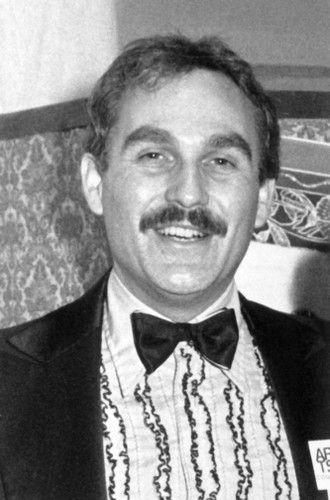
Today, the tech industry is hailed as a model of inclusiveness. It is considered to be one of the most LGBTQ-friendly industries in the U.S. The CEO of the world’s most valuable tech company, Apple, is gay.
This reputation did not happen naturally or overnight. It took years of struggle by LGBTQ engineers, programmers, and other tech workers. The late Rick Rudy played a key role in that struggle.
Rick was born and raised in New York City. He received his bachelor’s and master’s degrees in engineering from MIT and afterwards began a career in the tech industry that brought him to San Jose in the early 1970s.
In June 1982, more than two years before BAYMEC was founded, Rick was one of a handful of tech industry workers who met in San Jose to form a South Bay chapter of the San Francisco-based Lesbian and Gay Associated Engineers and Scientists. By the following February, the organization had separated from San Francisco and was renamed High Tech Gays. Rick would be its first president and help write its by-laws.
Rick was a board member of BAYMEC from the very beginning. He hosted some of the earliest meetings at his house, helped write their by-laws, and provided them with early publicity in the High Tech Gays newsletter. Rick made the time for BAYMEC when he was busier than ever. He had gotten involved in gay rights at a national level, joining the board of the National Gay and Lesbian Task Force in 1985. This led to interviews both locally in the Mercury News and nationally in the Advocate and the Wall Street Journal.
Sadly, Rick was one of the more than 2,000 Santa Clara County victims of the AIDS epidemic. His life was tragically cut short in 1990 at age 44.
Amy Caffrey

Amy Caffrey’s father was in the military so she grew up moving around the country, but eventually settled in Virginia. She remembers growing up in Virginia as “a terrible place to come out. They’re still fighting the Civil War. I was dating a black woman and that really didn’t go well.” After doing research to find safer areas to live as a lesbian, she landed on moving to California and moved to San Jose in 1982.
A strong lesbian and women community existed at this time but they needed somewhere to meet. Amy had been collaborating with students at SJSU around the time that Sisterspirit was being born. “One of the reasons why Mary contacted me was due to my work at the San Jose State radio program, which I worked on with Kathy Carter. We played women’s music, which was a different type of music in the world at that time.” From there she met the other women and formed Sisterspirit alongside them.
Amy works in counseling, focusing on the LGBTQ community, and teaches at SJSU now. She advocates to have more conversations about same sex domestic violence and works with LGBTQ youth at SJSU to help them find community. Noticing that students come to her to try to find community, that it is not easy to get into groups, or it feels exclusive and not as open to everyone as it was previously. Amy does what she can to help guide them into the organizations she knows are still operating.
Reflecting on her time in San Jose, Amy said in a recent interview, “I’ve been here 37 years, which is cool because I’ve been with my partner for 36 of those, and it’s very cool that we still like each other. What’s interesting to me is that it’s a long time, but I’m not sure how much actually happened during that time in terms of progress. We have a lot further to go but how do you really get people interested again in fighting for rights when they think they already have them?”
Trans Pride Flag

On the 6th annual International Transgender Day of Visibility on March 22, 2016, the county raised the Transgender Pride Flag at the County Government Center, making it the first county in the nation to do so. Afterwards, it was decided to fly it under the rainbow flag everyday as well. Read more about Pride flags in Santa Clara County