

- San Mateo County Superintendent of Schools (2019-present)
 Steven Peck
John Laird
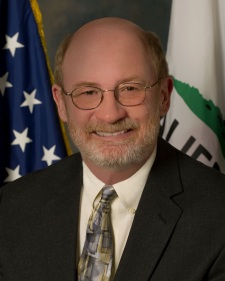
John Laird grew up in Vallejo and had come to Santa Cruz in 1968 to attend UCSC. In 1974, he began working for Santa Cruz County as a budget analyst. He ran for Santa Cruz City Council in 1981 and was the leading vote getter that year. In 1983, he was selected by his council colleagues to serve as mayor for a one-year term. That year he would receive national media attention as one of the first openly gay mayors in the U.S. He would serve a second term as mayor in 1987-88.
During his time on the city council, John led Santa Cruz to become the third city in the nation—after West Hollywood and Berkeley—to offer domestic partner benefits to its employees. He also advocated for the designation of Monterey Bay as a national marine sanctuary. John joined the BAYMEC board in early 1985, significantly increasing our visibility and presence in Santa Cruz County.
After being termed out of the city council, John served as executive director of the Santa Cruz AIDS Project from 1991-94. He was then elected to the Cabrillo Community College board for two terms from 1994-2002 .In 2002, John won a seat in the State Assembly representing a district that included parts of Monterey, Santa Clara, and Santa Cruz counties. That year, he and San Francisco’s Mark Leno became the first two openly gay men to be elected to the state legislature in California.
John continued to be a strong advocate for the environment in the Assembly. He was one of the co-authors of AB 32, the landmark 2006 state law that regulated greenhouse gases and established California’s cap and trade program. He also authored the bill that established the Sierra Nevada Conservancy, a state agency focused on protecting and preserving the environment in the Sierra Nevada mountains. He also had a major influence on the state’s finances during his four years as chair of the Assembly Budget Committee from 2004 to 2008. He was termed out of the Assembly at the end of 2008, but that was not the end to John’s career in public service.
John served as California’s Secretary for Natural Resources under Governor Jerry Brown from 2011-2019. In 2013, he was one of 10 LGBTQ public officials who were honored by the Obama Administration as a “Harvey Milk Champion of Change” at a White House ceremony. In November 2022, he won election to the State Senate in the greater Santa Cruz/Monterey Bay/Santa Clara area.
Santa Clara County Trans Leaders In Conversation

Supervisor Ken Yeager interviews Sera Fernando, senior management analyst in Santa Clara County’s Office of LGBTQ Affairs, and Jules Chyten-Brennan, medical director of the Gender Health Center, about Santa Clara County’s efforts in ensuring healthcare for transgender, gender-non-binary and gender expansive people.
Working on Gay Pride

From 1988 to 1993, Whayne Herriford was apart of the Board of Directors of the Gay Pride Celebration Committee of San Jose. With the emergence of political support from elected officials in 1989 and the debut of first pride parade in 1991, pride became more and more important to the local community in San Jose and the rest of Silicon Valley.
Kathy Wolfe (Expanded)

In 1979, Kathy Wolfe saw the powerful documentary Word is Out at the Frameline Film Festival. After presenting the stories of a group of diverse lesbians and gays, the filmmakers challenged the viewers to make a difference of their own.
“I was completely inspired by seeing that film,” remembers Kathy. “I immediately grasped the importance of bringing our stories to the public.”
Her first approach was to get involved in new emerging video technology. In 1981, Kathy Wolfe produced and directed a twelve-part video series, Fix it Now, featuring women contractors (mostly lesbians) demonstrating the basics of home repair. The series was shown on local public access television in Cupertino, CA, but later was shared throughout the country.
For the next several years, Kathy honed her skills in producing, directing and editing lesbian documentaries, including The Changer and the Changed, an early history of Olivia Records.
But even as Kathy worked on these projects, she realized that there were limited outlets to actually showcase her work – or that of other like minded filmmakers. She decided to shift her focus from making movies to the distribution of them.
Gays and lesbians around the country, in those days often completely closeted, were just realizing that they could watch – and rewatch – gay-themed movies in the privacy of their own home. Thus, in 1985, Kathy launched Wolfe Video, her mail order business to distribute movies to the gay community. Her very first mailer was a modest 8.5 x 14 flyer with ten titles. But over the years the catalogs grew to feature several hundred titles per catalog.
From the outset, however, Kathy’s ultimate goal was wider than mail order. She wanted to spur acceptance of our community by getting these titles seen by both gay and straight audiences.
She began acquiring rights to films, handling everything from the manufacture of the VHS tapes to promoting the titles into the educational market, and developing wholesale distribution to LGBTQ Bookstores.
The obstacles Kathy faced were daunting. Besides the usual hurdles starting a business (financing, etc), there were challenges that arose from homophobia in the business world. Manufacturers refused to replicate the tapes; printing companies didn’t want to print the catalog. Mainstream wholesale distributors were initially reluctant to consider Wolfe titles which they automatically assumed were pornography.

Even as late as 2003, a merchandising company refused to manufacture matchbooks featuring two lesbian vintage “pulp” films, because management objected to the just barely evocative cover art featuring two women.
Initially, Kathy actually faced threats, as the business, located at first in the basement of her home, drew virulent opposition and hate mail. “I worried for the safety of myself and our employees,” she remembers, “but the neighborhood and our local post office stuck by us.”
In spite of the obstacles, Kathy persisted; over time, she found great vendors, most of whom still work with her today. She also started hiring staff; in 1992, she hired Maria Lynn, who for the next 22 years would work beside Kathy to form the core of the executive team. In 2015, Maria would be succeeded by Jim Stephens.
Wolfe Video quickly developed a large group of loyal mail order customers. This was the golden era of lesbian and gay bookstores, who were happy to carry Wolfe titles. Music festivals, pride festivals, gay community centers – all were growing rapidly during the eighties and nineties, and provided a way to spread the word about gay movies and docs.
A key early filmmaker who contributed to Wolfe Video’s success was Nicole Conn, whose lesbian romances Claire of the Moon, Cynara, Elena Undone, and A Perfect Ending, were immediate hits and remain popular to this day.
As distribution grew in LGBTQ spaces, Kathy became more determined to break into the mainstream film rental market.
Key to her success in doing this was her friendship and working relationship with Lily Tomlin. In 1992 Wolfe became the distributor for the VHS of Lily’s play The Search for Signs of Intelligent Life in the Universe. This created a huge breakthrough into mainstream distribution and gave Wolfe Video access to the giant players of the time: Blockbuster, Hollywood Video, Tower Records as well as the 27,000 neighborhood video stores. Now, Wolfe had the ability to distribute LGBTQ movies nationally via mainstream channels.
In 2002 Wolfe Video authored their first title on DVD, Big Eden, the biggest commercial hit to date (and the first gay double DVD). Kathy applied to have the film rated PG by the MPAA – a first for a gay film – which brought Big Eden into many more mainstream outlets and prompted fan mail from community members excited to see gay content in their local video store.
Soon, Wolfe Video was releasing 12-16 titles a year on the Wolfe label, plus selling the best of the rest via their mail order arm. The company continued to grow exponentially throughout the 1990s. Another big break came in the early 2000s, when Wolfe inked a deal with Showtime to distribute Queer as Folk, and a few years later, The L Word. “When Queer as Folk came out on VHS and DVD, we were shipping them out as fast as they arrived on our dock. There were days when I took multiple truckloads to the local post office. We were spending thousands of dollars in postage and ultimately saved our historic neighborhood post office.” Kathy remembers.
Kathy developed relationships with U.S. and foreign distribution companies and began offering selected films to other countries. She also brought great foreign films to the U.S. including Oscar submissions Undertow (Peru 2010), Reaching for the Moon (Brazil 2014), and The Circle (Switzerland 2015).
NEW CHALLENGES FOR WOLFE VIDEO
Wolfe Video started six years before the unheralded launching of the World Wide Web (1991), eight years before email seeped into the mainstream (1993), and 12 years before Netflix was founded (1998). Those three developments would completely change the world of film, offering both new avenues to advertise to the gay audience and a whole new way to experience film – streaming.
The web gave Wolfe Video another way to find customers; early on, Kathy started WolfeVideo.com and began an email newsletter. She also started WolfeReleasing.com, a resource for filmmakers, as well as a way to showcase Wolfe films available for festival and theatrical screenings.
Soon after Netflix launched, they became a Wolfe Video customer; first of DVDs and later, when they launched their streaming service, Netflix licensed a large number of Wolfe titles for the channel. To this day, Netflix remains one of Wolfe’s largest customers.
In 2012, Wolfe Video pioneered global access to LGBTQ cinema by launching the first digital LGBTQ platform, WolfeOnDemand.com. Kathy also developed partnerships with a large number of other streaming platforms, including Apple TV, YouTube, Amazon Prime Video, Hulu, Showtime, Peacock, Tubi, Kanopy, Vudu, Fandango NOW, Mubi and more.
Kathy is philosophical about the state of the business. “These days our films can be streamed all over the world or purchased on DVD for guaranteed rewatching. I take pride in knowing we helped make a difference for our community. We now see ourselves – and are seen – in a much truer light.”
WOLFE’S HISTORIC SIGNIFICANCE
To really get a feel for how revolutionary Wolfe Video is, and the impact Kathy had on bringing out the gay community, consider this: Megahit Philadelphia wasn’t released in theaters until 1993. When Wolfe started shipping LGBTQ titles, television (even the supposedly more open cable channels) had barely dipped their toes into gay programming, Queer as Folk did not air on cable until 2000; The L Word wouldn’t air until 2004.
It is undeniable that Kathy’s determination and vision contributed to making those mainstream titles possible by developing the audience for them. Over the years, the Wolfe Video executive team spent countless hours watching screeners and visiting film festivals around the world to find quality, diverse, representational films – and then many more hours promoting them to as many outlets as possible.
It’s an especially impressive feat given Wolfe Video is located, not in Hollywood or New York City, but in relatively rural, historic New Almaden, CA. In 2018, Kathy added an L.A. office, but basically she still works from home.
Both the LGBTQ and mainstream community recognize her impact and Kathy has received multiple awards over the years including: Cinequest’s “Maverick Spirit Award;” NCLR’s “Community Partner Award;” the San Francisco Board of Supervisors “Certificate of Honor,” and the National Organization of Women’s “Excellence in Media Award.”

As early as 1999 Forbes Magazine recognized Kathy as an “Up and Comer,” and in 2019, her biography was chosen for the Indie Book Award Winner Game Changers, by Robin Lowey.
But perhaps Kathy’s greatest reward was a touching interaction with a young lesbian on the occasion of Wolfe Video’s 25th anniversary in Miami. “You’re the creator of Fix it Now?” the woman asked. “That show saved me when I was a gay teenager. I watched it over and over. THANK YOU.”
Indeed, from all of us, THANK YOU.
Please visit WolfeVideo.com and WolfeOnDemand.com to see a huge selection of LGBTQ movies.
Sal Accardi and the Watergarden

In the Spotlight: Sal Accardi
By John Follesdal, Esq.
From South Bay Times, February 1989
Sal Accardi is the President of the Board of the Watergarden bathhouse in San Jose. Throughout the AIDS crises, his position on keeping the Watergarden open has raised controversy in our community. South Bay Times met with Sal to discuss his views on AIDS, bathhouse closings, and some of the other political issues he has been involved with.
Q: You are probably best known in our community as the President of the Board of the Watergarden. How has AIDS affected your business?
A: We started off with 64 investors when the Watergarden opened up. When AIDS hit a lot of them panicked and it was very difficult to try to make good their investments so quickly. But we set up payment schedules, and I can proudly say that no one has lost a dime; everyone has made a profit In the Watergarden.
Now It’s a smaller corporation, and that works out better, with less problems that I have to deal with. On the other hand, my ideal was to have a community bathhouse that was actually owned by the community. We’ve got people from literally all walks of life that have been and are investors In the Watergarden – business people, religious people, laymen, old and young.

I think the Watergarden has, through the employees, the managers, and the executives, developed an advertising program that has been tremendous, a whole promotional concept about how to deal with AIDS. We’ve spent $ 140,000 on safe sex advertising and programs.
I’m proud of the way we’ve dealt with AIDS as a community and the way the Watergarden has dealt with it… Some time ago, I came to a reckoning about the Watergarden and the AIDS crises, and it was clear to me that I was right on track. Something in my gut lead me in this direction, and I know we’re doing the right thing, there is no question in my mind.
AIDS is a tremendous crisis and setback for us… It’s been very difficult for me watching my friends die around me, but still I’m so proud that we’ve managed to survive the way we have. To me AIDS is eventually going to make a statement about life, not about death. It’s going to show how we are on a one-to-one basis and on a collective basis as a group.
People need love, they need compassion, and that’s not going to stop. There are many selfish, greedy people who think that they are going to stop us, or make us go back in the closet, but that’s not going to happen… When they find a cure, we’re going to be so much better for having gone through this, I’m convinced of it. We’ll have a perspective on ourselves that maybe we wouldn’t have had If we had not had the crises.

O: Many cities have closed their bathhouses, haven’t they?
A: No, not many. That’s an impression that the politicians like to give. Initially, in the beginning of the crises, people were very frustrated. All they saw was the rising statistics of AIDS. And some politicians, especially Diane Feinstein who became obsessed with the issue, got on a vendetta and wanted the baths closed. Actually very few cities have followed suit, thank God.
I not only felt it was unwise – and I don’t mean that from a vested interest – it was downright threatening to the community because it was counter-productive. It was forcing people to go into environments where they were going to continue to have sex, but in a less safe environment with no options for cleanliness or for condom use or for safe sex consciousness raising. I thought It was ideal for the baths to be instrumental in being part of the solution rather than being part of the problem. But politicians want to grandstand, especially when they know homosexuality Is going on. They want to use it somehow…
I think gay people are more than sexual objects, but some of them choose to have a more limited persona. But to me, I’m convinced that the bottom line is not horniness or the desire to get laid. The bottom line Is a need for companionship and an affirmation of ourselves as human beings.
However, many people have learned to use sex as a means of getting attention and establishing human rapport. They get caught up in the superficial to the extent that they lose sight of their real goal – to become at one with themselves and with each other. I think that is the bottom line of human sexuality, and if that is true, we should try to foster environments that encourage people to express themselves in a variety of ways as long as they are not laying a trip on somebody else. That’s the philosophy of where I’m coming from with the Watergarden.
O:You’ve also been politically active for a long time?
A: Ironically, the first time I went to college, at Foothill College in the sixties, I was openly gay but conservative. I wasn’t for the Vietnam war, (but rather) for either winning it or getting out. I realize now that there was no chance of winning it, that it was an ignoble war.
During the whole period of the flower children and the consciousness raising and the encounters and the gestalt, I got very actively involved in psychology and transactional analysis. I was very much into that. It was my rebellion, I guess, against the times when I considered myself conservative, I went from conservative fascist to hippie to being a left-wing entrepreneur.
O: You grew up in Santa Clara County. Were you born here also?
A: No. I was born In Brooklyn, New York. I came out to California in 1959, when I was thirteen years old, and I learned three things in that year: I learned how to ride the bicycle, I learned how to masturbate, and I learned that most people weren’t Italian or Jewish. I had lived in the middle of a Jewish neighborhood and all the people I knew were family people or neighbors that were Jewish. I never understood why we had a Protestant president. The whole world seemed to me to be Irish, Jewish, or Italian.
I got in touch with my homosexuality at a very personal level – I had to confront It -when I was seventeen. I grew quite attached to a fellow at Los Altos High School in my Junior year, and I had sort of a mini-breakdown because It was scary. I got all sick. But I got over that period and went to the other extreme. I became vociferous in my gayness. At the time it was not so much political but a psychological reinforcement for myself. The more I talked about it, the more comfortable I was. It was a way to stir people, and it worked.
I was very popular in high school, in the sense that even though I was openly gay, I was very successful as an actor. I was very popular even with the football team – we used to play poker games on Fridays and Saturdays at my house.
I came from a very loving supportive family, so It was easy for me to come out… My grandmother’s philosophy was – and she was the head of the household – she said “You were given a special kind of love, and therefore you need to be loved in a special kind of way.” And then she told my family that If anyone didn’t accept my “situation” they could get out, and that anybody that I loved would be loved and respected in our home.
It was as simple as that, and from then on my homosexuality, I feel, has been an advantage to me. I like to deal with the issue. It gives me a way to confront society and shake up society. But If I hadn’t been homosexual, I probably would have been rebelling on some other issue.
Q: You went to college here also, right?
A: Yes. I went to Foothill and San Jose State. While I was going to San Jose State I worked In a third-rate health club/bath house in Redwood City, and that’s when I got Interested In the baths environment. I was a Jack-of-all trades -It was a small operation -I was a receptionist, I was a laundry person, etc.
While l was going to San Jose State I also started coming out socially In the gay world. Up until then I had had a lover for five years. It was a very closed, quiet, paranoid, uptight relationship. He was unhappy and I was unhappy for the last two years of that relationship. We were too afraid to be ourselves, and I didn’t know anything else.
After we broke up I was forced to find my first bar, the Locker Room, and I paced for two hours up and down the street before I had the courage to walk In. As soon as I walked in the bartender said “Oh. This must be the first time you’re in a gay bar.He had spotted me!
After that I thought the best way to get involved, and a more comfortable way to get involved than by being a patron, was to become a cocktail waiter… I could be the person In control, I could limit it, and I could be less inhibited. I didn’t have to be rejected or repudiated as easily, and that helped me to come out…
During my time at San Jose State I also co-founded the gay student union there. That was in 74- ’75. There was a lesbian friend of mine in the drama department, and we wanted to make some waves. It was done almost for fun at first, but then we realized that there was a need there. We started having semesterly elections, and so on. A lot of people wanted to get Involved for social reasons; I was Into It for political reasons, to make a statement.
Q: What other organizations have you been involved with?
A: I kind of regret it now, but when I was a kid, when I was thirteen, I was captain of the Young Republicans in Los Altos. Later on I was actively involved with Richard Nixon’s first campaign against Kennedy. I regret that now, but I was politically active from early on.
I’ve found a need, certainly through the Watergarden, to remain vigilant as to the possibility that homophobic people would want to moralize or use the Watergarden as some kind of football. I see the Watergarden as a cause, not just a business. There was a need for a bathhouse when I opened It, and It was a political statement.
We have a lot of business dealings and we try to spend our money within the gay community to keep other businesses going. And that’s been a philosophy of mine. Sometimes I pay a little more for that, and sometimes I have no choice – we suffer discrimination. When the AIDS crises hit contractors wouldn’t work for us because they were afraid to get AIDS.
I’m temperamentally suited to politics in an activist way. I’m not a moderate type person. I’m very theatrical, and my theatricalism plus my political interest plus my homosexuality and my Italian background created who I am. But I’m more Italian than I am gay. I think of myself as very Italian. I’m very proud of my heritage, the language. the food, the culture, everything. And for the public record, I am not a member of any Mafia organization, even though I am three quarters Sicilian!
Q: How about social activities and hobbies?
A: I love food, as you can see. I love to eat, and every now and then I love to cook. It’s very relaxing to me, but because of my Job – I travel a lot – I eat a lot at restaurants. Predominantly Italian restaurants.
I’m not an outgoing sportsman/activist type person. I like to read a lot, magazines and books, mostly biographies, be they political biographies, historical biographies, or Hollywood-type biographies. I love movies, and I like television. To the disappointment of my lover I can look forward to a whole weekend of going home on Friday evening when I get out of work, taking off my clothes, and literally staying In bed for three days, reading, watching television, and from time to time petting my cat.
Occasionally I go out to the bars, but I don’t party as much as I used to. I also like the peace and tranquility of going to the Russian river or going fishing, and I like theatre a lot – I go to New York usually every year. I’m not into hiking or boating; I’m not into sports, but I do like looking at the guys who are. They seem to be better developed than me. I wonder if there is a correlation between that? I don’t know which came first, their bodies or their physical activity!
Peter Johnson

Days after the 1993 Walk for AIDS in downtown San Jose, the Mercury News ran an article that illustrated just how devastating the epidemic was in those years.
“As the fourth annual Walk for AIDS drew near, every visitor to the bedside of Peter Johnson had to make a pledge. “He was dying and he was asking people to sponsor him,” said his mother, Helen Johnson. “On Monday, Peter Johnson—down to 100 pounds from his normal 150, 6-foot-1—confided to his friend Bob Clayton: “It’ll be a chair-athon for me (Sunday).” I said, ‘Fine. We’ll all push.’”
Regrettably, Peter Johnson didn’t make it to the annual fund-raising walk for the disease. He died of AIDS on October 13, 1993, just under two months after his 30th birthday.
Throughout his illness, Johnson drew strength from the support of his family. His mother, Helen, volunteered at Aris alongside him and walked in the AIDS Walk with him every year. She continued to walk for many years after Johnson’s death.
Johnson had graduated from Overfelt High School in 1981. He was diagnosed with HIV at the end of the 80s and shortly afterwards began volunteering with Aris. By early 1991, he was a member of the Aris board with the group’s executive
director Bob Sorenson telling the Mercury News that Peter was “one of our best interpersonal ambassadors.”
In 1992, he was appointed to the County AIDS Commission. He attended every commission meeting, even those where there was not a quorum present. Sadly, his time on the commission was too short.
Bob Clayton

James Robert Clayton, known to everyone as Bob, was born in 1934. He was working for the Social Services Agency in 1981 when a man seeking help walked into his office suffering from a new and unknown malady. The man was one of the first county residents with AIDS. For the rest of his life, Clayton would be at the forefront of the Santa Clara County effort to deal with the disease and care for its patients.
In 1985, Clayton opened his home as the first AIDS residence in the county. In March of that year he helped form a weekly support group for AIDS patients that initially called itself “Freedom from Fear.” By January 1986, that group had incorporated as a nonprofit and become the Aris Project.
In 1994, Clayton received national recognition when he was presented with the Family AIDS Network’s National AIDS Caregiver Award. His nomination announcement noted that “Bob cries easily, never afraid to share his grief with other caregivers. Yet, he talks about the pain he carries each day as a ‘small price to pay’ for the rewards he has found reaching out to other people in need. Bob talks about each of the people he has been a caregiver for as a proud parent talks about their child- with love and unconditional acceptance.”
One of the highlights of his life came in 1996 when he carried the Olympic torch in San Jose as it made its way to Atlanta.
At the time of his death in 2003, Clayton was serving as interim director of ARIS.
Helen Miramontes
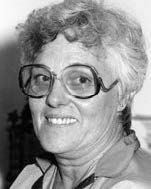
Helen Miramontes’ nursing career began in 1972 in Kaiser Santa Clara’s critical care unit. It later continued at Valley Medical Center where she worked for 20 years, ultimately as a nurse supervisor.
Her involvement with AIDS policy and services came about because of her family. In the 1980’s, one of her sons was openly gay and suffering from alcoholism. “In the beginning, she sort of got into it because she needed to know what this is about because (my parents) thought I was going to get sick,” said her son David Miramontes during an interview with Ken Yeager in October 2018.
David’s twin brother, Jonathan, was also gay but still in the closet at that time. He would ultimately die of AIDS in 2006.
The epidemic was not the first time that Helen had gotten involved in a cause. “My mother was involved in the civil rights movement, the Vietnam War movement, and the migrant farm worker movement in the 60s. I remember being next to her with my siblings, all six of us, listening to Cesar Chavez,” said David Miramontes. “She always said that social work helped her really get started doing AIDS work.”
She developed one of the first train-the-trainer programs that addressed the need for cultural competency in HIV/AIDS care. The course provided nurses straight-forward information, focusing on the role of stigma, ignorance, misconceptions, and intolerance in undermining treatment and research toward a cure. She explained the course’s direct approach by saying, “You don’t change attitudes with slides and didactic lectures.”
As she became nursing’s “go-to” person about HIV/AIDS, she also served on a host of committees and boards, including Santa Clara County’s AIDS Task Force. As chair of the Task Force I got to know her and saw firsthand the dedication and passion she brought to her work.
In 1993, Miramontes became an Associate Clinical Professor in UCSF School of Nursing’s Department of Community Health Systems. She taught and mentored faculty and students and was involved in the UCSF AIDS Research Institute. She continued her public service on numerous local, national, and international boards. In 1995, she was appointed to President Clinton’s Advisory Council on HIV/AIDS, serving on both the research subcommittee and executive subcommittee on international issues.
Miramontes retired from UCSF in 2000 as Full Clinical Professor and relocated to be closer to her children in the Las Vegas area. Her activism continued there. During this time, she also cared for her son Jonathan. She died in May 2016, six days shy of her 85th birthday. Her name, and Jonathan’s, have been inscribed on the Circle of Names at the AIDS Memorial Grove in San Francisco’s Golden Gate Park.
Bob Reed
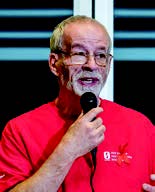
Bob Reed moved to the South Bay from Idaho in 1982, the year before Santa Clara County’s first HIV infections and AIDS deaths were recorded. He first read about the infection that became known as AIDS in 1981. Even though he was a nurse, Reed continued to have unprotected sex and embrace an “eat, drink, and be merry lifestyle,” as he describes it, for the first half of the 1980s.
By 1986, he knew he had HIV. That was confirmed with a terse phone call from his doctor after he got tested. He recalls the doctor saying only “you’re HIV positive” and then following that with “You’re a nurse so you know what that means. Call me if you need anything,” and then hanging up. The entire call lasted less than two minutes.
Reed recalls even then, five years into the epidemic and the year after Rock Hudson’s death, there was still a tremendous amount of ignorance about HIV and AIDS in the county.
His doctor told him he would be dead within six months. His apartment manager worried that he might infect other tenants just by living in the same building. In a hospital lobby, he helped himself to a bowl of popcorn put out for patients but was then reprimanded for contaminating it and making it unsafe for others.
Like many HIV/AIDS patients, Reed internalized a tremendous amount of self-loathing and felt at the time that he deserved a certain amount of this mistreatment.
A turning point came when he began receiving services from the County’s Early Intervention Program. Under the leadership of Marty Fenstersheib, it was one of the few dedicated HIV/AIDS clinics in the nation at that time. It did not do a significant amount of advertising. He learned about it the way most patients did, through word of mouth. He described its services as “life-saving.”
Ultimately, Reed would spend three years working as a nurse at the clinic. His personal experience as someone living with HIV made him especially effective. This was particularly true in the years before the AIDS cocktail became widely available, when an HIV diagnosis was considered akin to a death sentence. Reed provided an example for so many others in those years just by living his life and doing his job.
In 2004, Reed became a member of the County’s HIV/AIDS Planning Council for Prevention and Care, now known as the Santa Clara County HIV Commission. He has been elected co-chair of the commission on two separate occasions.
Reed says overall Santa Clara County is an “exemplary” place to live for the LGBTQ community, and the County’s response to the HIV/AIDS crisis was one of the best in the nation. “I’ve lived here since ’82, and I’ve stayed here because there are no villains.