

- Cupertino City Council (2023-present)
People
Fred Ferrer

Fred Ferrer – former CEO of The Health Trust and now CEO of Child Advocates of Silicon Valley – talks about how he dealt with homophobia with his family, Santa Clara University and his career.
Frederick Ferrer grew up in Marin County, just twenty minutes outside of San Francisco, but to him the gay world felt “millions of miles away.” He knew he was gay as early as kindergarten, but it was the era of ‘don’t ask, don’t tell, don’t even think about it.’
Although Ferrer was unable to fully be himself growing up, he felt surrounded by love. “I learned to love from my family, from my church and from my government, but I also learned how to hate from those three places as well. I experienced this notion that it wasn’t even okay to think you were going to be gay.”
In 1976, Ferrer left his Catholic Mexican family home life for a Catholic institution to pursue an undergraduate degree at Santa Clara University. He partied hard and studied harder to fit in, but noticed other queer men were missing from the social gatherings he frequented. They spent their days off making secret trips to San Francisco; their classmates oblivious as to what they were doing. Ferrer remained in the closet.
He went on to grad school at San Jose State to study to be a therapist. There, he worked with students who were coming out. But Ferrer felt emotionally unequipped to guide others on the journey he himself had not yet taken, and ultimately switched career paths. “I didn’t stay as a therapist because there was just too much internal pain, and I really wasn’t going to be a good therapist to somebody else if I couldn’t deal with this stuff myself.”
Instead, he entered the nonprofit world and began working with low-income Latino families in the early childhood care system, drawing on his education in child development. Though he was still not out at the time, colleagues often assumed Ferrer was gay, but he did not confirm it. Still, the support from those around him, which included out gay executives, made him feel welcome in the valley as an advocate and leader who served on nonprofit boards.
While he was growing more comfortable with this identity in his professional life, it wasn’t until tragedy struck in his early thirties that Ferrer began to reckon with his struggle to come out to his family. When his mother died of cancer at age 54, he knew it was time to come out, and he entered therapy to help him do so. “It really helped me come to grips with who I was, what I wanted to do, and what I was doing that wasn’t helpful to my personal and spiritual growth as a gay man.”
Ferrer’s father’s reaction to his being gay was as he always expected: He immediately began seeing his son through the lens of demonizing stereotypes. With his family situation rocky, Ferrer missed a few years of family events and tried to make up for lost time by socializing in the bars of San Francisco and San Jose. “It was like I was celebrating my twenties all over again.”
Coming out in the nineties brought its own challenge. Ferrer lost many high school and college friends to HIV. “I was going through all kinds of turmoil with dealing with the death of my mom, the aftermath of dealing with my father, and then dealing with this incredibly sad pain of losing high school and college gay friends to HIV and not having anyone to share that with.”
Despite that trauma and isolation, after he came out, he began advocating for LGBTQ-inclusion in early childhood settings. He taught a curriculum called: Makng Room in the Circle to help involve LGBTQ+ parents. Ferrer pushed on with his LGBTQ advocacy. As vice chair of the Santa Clara County United Way board in 1992, he led efforts to defund the Boy Scouts because the local chapter would not sign a non-discrimination policy that included sexual orientation. This debate led to conducting a needs assessment of the LGBTQ community and the ultimate funding of programs like the Billy DeFrank Center.
His work with the United Way showed him the power of putting money where your mouth is and walking the talk when it comes to fighting discrimination.
When Ferrer entered his new role of CEO of The Health Trust 1987, he was upfront about being gay from the start. He ensured HIV services were a top priority, and transformed and expanded the programs based on the best practices and highest standards of care. He upgraded the food baskets that HIV-positive clients were given, allowing them to choose products themselves from stores like they would if they ahopped at Whole Foods or Trader Joe’s. “I was able to have Michelin star chefs come in and do cooking projects with us. It was great.” Later he would co-chair a county-wide LGBTQ+ Health Assessment that would also lead to funding LGBTQ programs.
Ferrer’s identity remains deeply intertwined with his work in the nonprofit sector, being it was the first safe community he found after experiencing a homophobic culture in college.
In 1995, Santa Clara University graduates wanted to form an LGBTQ alumni group, but the school prohibited it, thinking it would somehow be approving of homosexuality. It brought back memories of the pit Ferrer had in his stomach during his four years of undergraduate enrollment. “It brought back all of the homophobia that existed when I was a student and why it wouldn’t have made sense for me to come out. It also inspired me to make a difference and to work in the world of nonprofits.”
In 2014, then president Father Michael Engh invited Ferrer to chair a Presidential Blue Ribbon Task force on Diversity and Inclusion at the school. “To have a gay latino man come back as the chair of the presidential commission, I think it showed how far the university has come.”
In 2010, the university established the Rainbow Resource Center. Ferrer now serves as a mentor at the Rainbow Center, working with young gay undergrads who share similar backgrounds. “I see the power of mentorship and the power of having the university recognizing you, and giving you a place to fit in and find like-minded people so that you can continue to develop in ways that may not be normative but in ways that you become more authentic.”
Today, in his role as CEO of Child Advocates of Silicon Valley, Ferrer advocates for the LGBTQ+ children in the foster care system, who make up a disproportionate part of the population. He is grateful for the opportunities he has had to work with children, given that one of the biggest arguments against gay marriage concerned children and their development.
Over his lifetime, Ferrer has seen Santa Clara University grow from a place where he had to remain closeted to an institution that seeks out his queer leadership. In 2014, Ferrer was granted an honorary degree from Santa Clara University for Public Service, the first gay man to ever receive this prestigous award. He saw HIV begin as a death sentence that ostracized the gay community further, and later become a chronic health condition that has lost much of the heavy stigma it used to carry.
“I keep thinking what are the ways that we, as a community, can come together to end the kind of discrimination, homophobia, and now transphobia that exists and then work to change it. I know we will have a better community when those things no longer exist it.”
Dr. George Kent
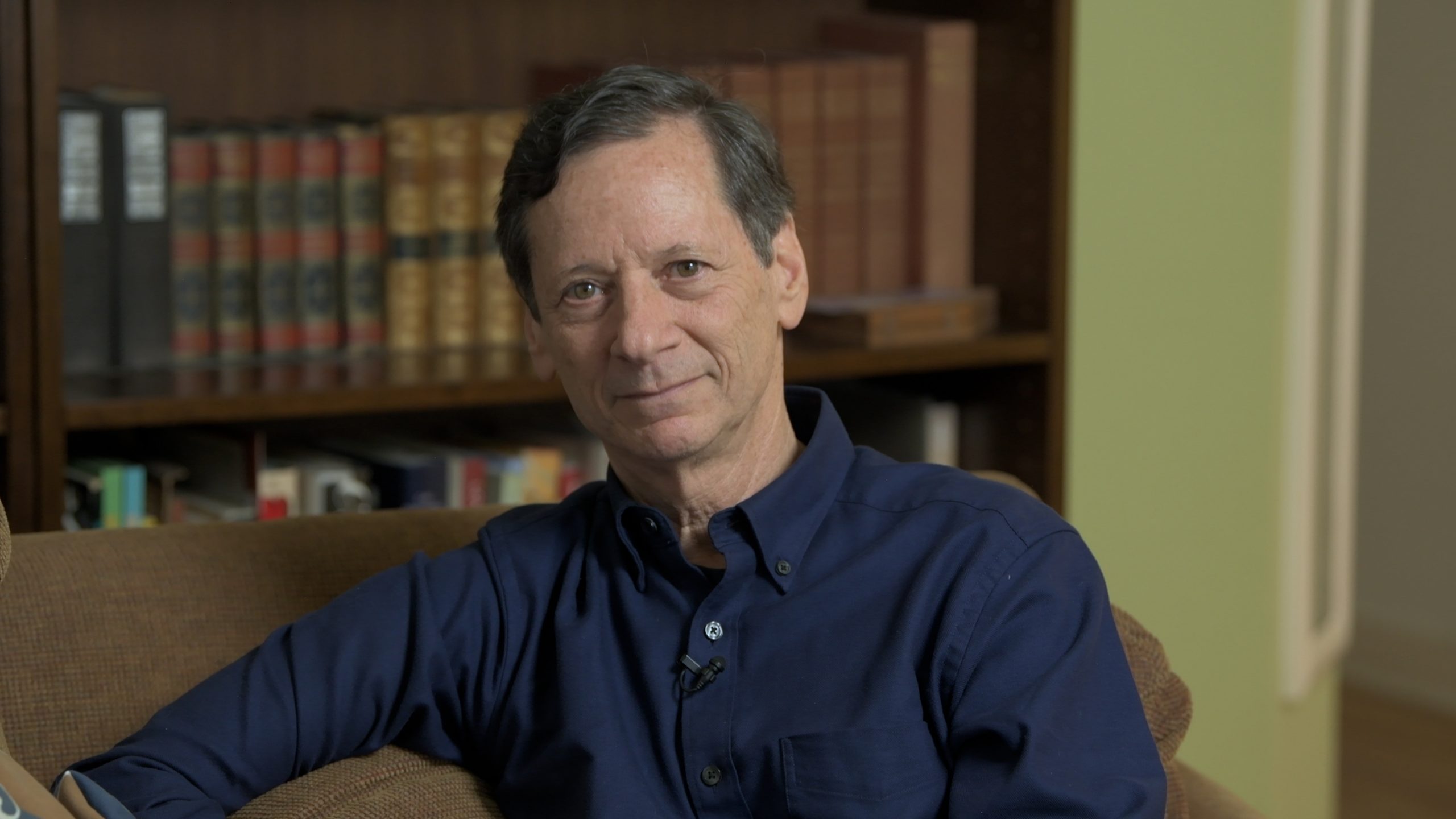
Read and listen to longtime HIV/AIDS physician Dr. George Kent as he discusses his 32 years of work at the Santa Clara County PACE Clinic and what he sees as the new challenges ahead for treating patients with HIV.
Dr. George Kent has been caring for people at the Santa Clara County’s AIDS clinic for over 32 years. He started in 1989 when he began splitting his time between working with HIV patients and being a primary care physician with his own clinic.
“I’m not making this up,” the longtime ally said. “I would deliver a baby in the morning, then go to my private practice, and then to the HIV clinic. After work, I would go to the house of someone who was dying of AIDS and help his caregiver and partner with hospice. The circle of life was amazing to me.”
He has seen the disease evolve from one that was untreatable and incurable to what is now a chronic condition.
As someone who has treated patients since the early days of the epidemic, he remembers how difficult it was. “People my age were dying in the prime of their lives. Many were gay and estranged from their families. There was social stigma. It was a terrible time.”
The Stanford and Case Western Reserve graduate came to the HIV field after a residency at the UCSF-affiliated program in Santa Rosa, followed by training at the CDC as a medical epidemiologist, then returning to San Jose and completing an HIV mini-residency with the AIDS Education and Training Center at UCSF.
Afterwards, he looked around San Jose to see who was caring for HIV patients. One day he went to the Santa Clara Valley Medical Center.
“The clinic was in this little corner in the outpatient department; there were a few exam rooms. A person I met there was Dr. Ira Greene, a dermatologist and wonderful guy. We hit it off. After he got to know me and checked me out a bit, I said, ‘Ira, do you need some help?’ He said, ‘sure, you can join us.’ That was in 1989, and I’ve been there ever since.”
Kent reflected on some of the difficulties in the early days. “We felt a little like a M.A.S.H Unit. At one point we were in a flimsy little trailer in a parking lot. It was hot in the summer and cold in the winter. It made us more cohesive because we really did feel like it was us against the world.”
The PACE Clinic, or Partners in AIDS Care and Education, assembled an interdisciplinary team from the beginning. “You had oncologists, you had infectious disease, you had primary care, and you had dermatology because a lot of these conditions manifested with skin problems.”
Working with HIV was the ultimate medical education for Kent. The virus was a multifaceted issue that impacted family relationships, societal attitudes, and the whole of the LGBTQ+ community when it first hit the United States. There were concerns over confidentiality and end-of-life planning that just did not exist when it came to other terminal illnesses.
“It certainly has made me a better doctor,” Kent said of caring for his patients.
In the PACE Clinic, the staff kept a whiteboard where they recorded the names of the people that died each month. “At the end of the month, we’d have a service. We would all get in a circle and say something about each person that died. We light a candle and have a memorial service, and then we’d have to erase the whiteboard and start over the next month.”
Witnessing the deaths of so many young people took a toll on Kent, and he needed time to cope with the stress and burnout. “I took two months off during the height of it,” he said.
Things started looking up for HIV patients in the early nineties, more than a decade after the first cases were discovered in the United States. With protease inhibitors and other medical therapies, the virus no longer claimed the lives of the majority of people in Kent’s care. “People just came back to life.”
Some of those individuals are still alive today. “I have these 25-year relationships with these patients who were basically at death’s door.”
Although Kent recognizes the magnitude of his work back in the early years of the AIDS crisis, he doesn’t want to glorify it. “We were all there on the front lines, and we felt like we were doing something important and meaningful.”
Today, HIV is no longer a death sentence. It is a chronic condition that can be managed with medications and even prevented with treatments like pre-exposure prophylaxis, or PrEP. Kent is hopeful some of his patients might see a cure for HIV in their lifetime.
He believes more primary care physicians need to be trained to work with HIV to expand access to treatment and help normalize the condition. By giving patients the option to see their regular doctor, the medical community can make living with HIV part of mainstream medical care.
“I see HIV as a primary care condition,” Kent said. “I don’t think you have to go to a specialty clinic just because you have HIV.”
Advances in HIV treatment have only been part of the battle; the other is getting people into care and keeping them in care.
Today, healthcare disparities among those affected by HIV complicate the “Getting to Zero” mission, which aims for zero new HIV infections, zero deaths, and zero stigma.
In particular, he highlighted the importance of reaching vulnerable and underserved communities like the homeless and people of color living in the South. Two barriers that keep Black HIV patients from getting the care they need are medical racism and mistrust of doctors.
“We definitely need more outreach into those communities with culturally-competent clinicians who can establish trust, because our biggest challenge right now is accessing these communities.”
In Santa Clara County, medical teams serve homeless encampments and bilingual Latinx community outreach workers manage care for Latino HIV patients. “The outreach workers will go to someone’s house. If we have a patient that missed their appointments, or didn’t refill their medication, they’ll go to their house. They’ll meet them where they work.”
Translators of every known language are available at the PACE Clinic, which offers additional services like counseling, psychiatry, nutrition guidance, and a treatment adherence program.
“We have world-class institutions here in Santa Clara County with the expertise that you don’t see hardly anywhere else in the world, much less, our country or our state.”
Kent grew up admiring his father’s impact on people as an obstetrician. Working at the PACE Clinic has helped him to fulfill the societal benefit of the medical career he always wanted.
Working in Family Medicine at Stanford Health Care and the PACE Clinic has proven beneficial to him and his patients.
“If one of my Stanford HIV patients loses their insurance, then I can see them at PACE Clinic. I love that because then I don’t have to lose them. So, I have one foot in both worlds—enabling that continuity of care that I think is really helpful. I feel very fortunate.”
Gail Reflects on Mac’s Club

Queer Silicon Valley is proud to present an interview with one of the most influential people in the bar scene — Gail Chandler-Croll
Interview conducted by Ken Yeager
Author’s note: The interview with Gail Chandler-Croll, the owner of Mac’s Club, took place inside the bar on Post St. in the late morning of July 30. I had been wanting to interview her for a year as part of Queer Silicon Valley’s history of the bar scene. Standing behind the bar was longtime bar manager and friend Jim Michl, and off to the side was John Croll, Gail’s husband.
As Gail tells the story of Mac’s, she remarks that she is a straight woman who had never owned a bar, much less a gay one. She was looking for cash flow and the owner was looking for cash, so they struck a deal. That was in 1977. Soon later, she would also own Renegades from 1980 to 2006.

Gail referred to Mac’s as a sanctuary. “Through the years, people would come in to be with their friends, enjoy themselves, and be part of the community. It was a privilege to be part of that,” she said.
Harassment from the police was constant. There were ongoing raids, intimidations, and arrests, all without legitimate reason. Once, there was an undercover agent who pretended to be a patron – who later turn people in. Whenever the police cleared the bar, it had an obvious effect on business.
Then there were the years of AIDS when so many people were dying. She estimates she lost 40 friends to the disease. It got to the point where she could no longer attend funerals.
The drag queens and drag shows were always a highlight. “The outfits were beautiful, the make-up, the wigs. I never looked that good,” she laughed. “When we had the drag shows, everybody came.”
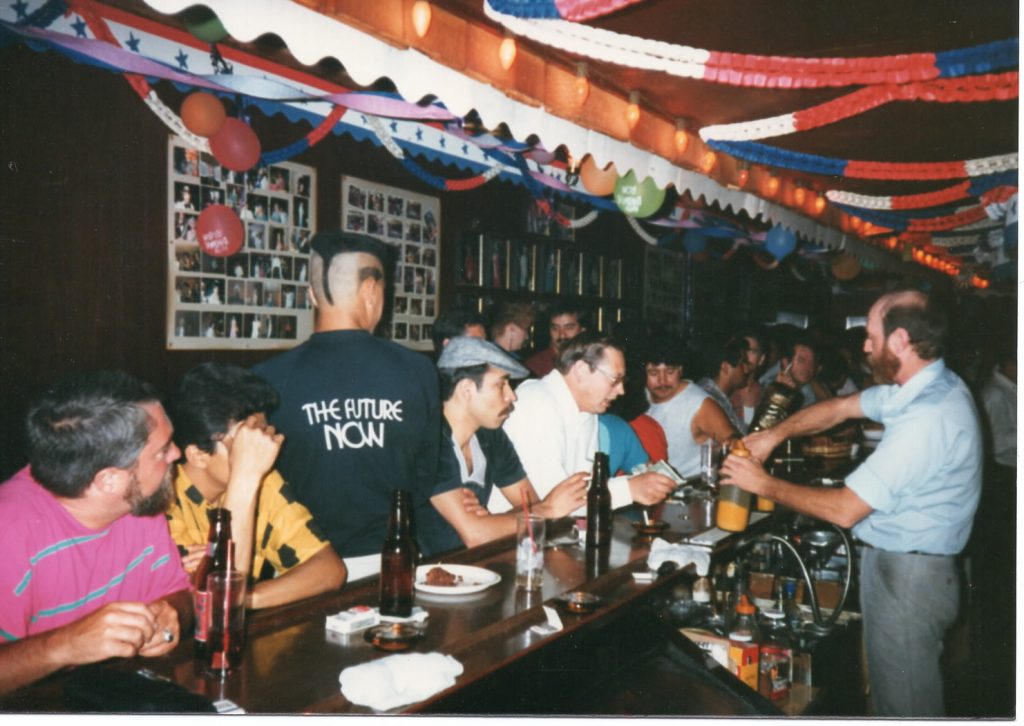
The interior of the original Mac’s Club location 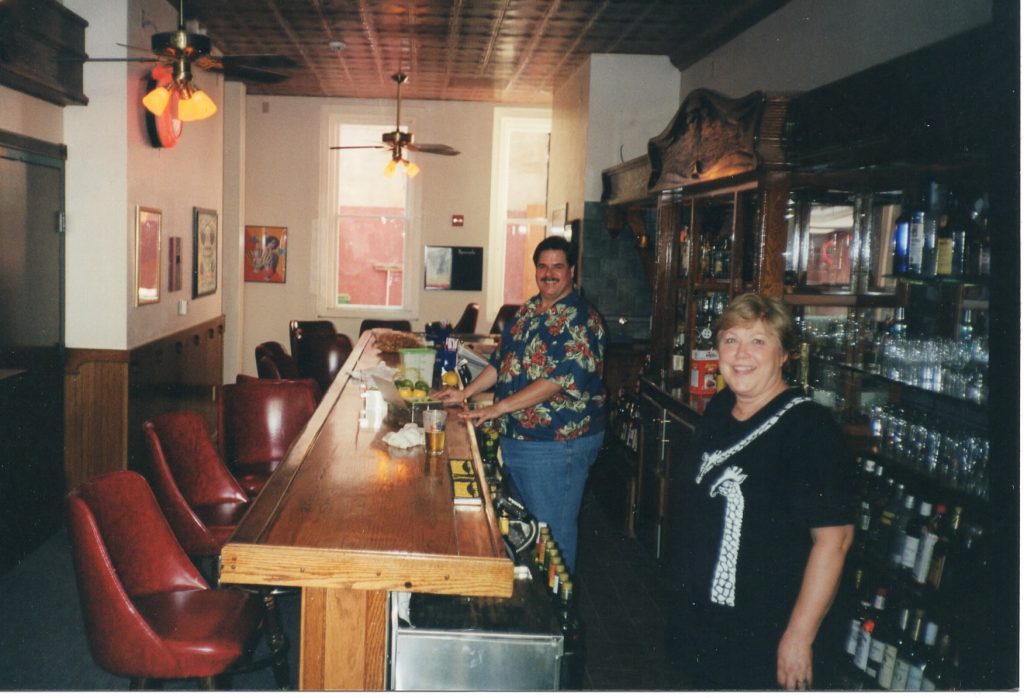
Gail presiding over Mac’s 
A Fourth of July celebration at Mac’s

The original location of Mac’s on 1st St. 
One of the many floats Mac’s had for San Jose Pride
The old Mac’s had to close in 1998 due to changes in building codes from the Loma Prieta earthquake. The adjoining business in the building, Sal and Luigi’s pizza, also had the close. The building was later retrofitted and housed Brix’s gay bar and now the Continental bar.
She found a place for sale on Post St. in a 107-year-old building that she thought was intimate and similar to the old Mac’s. After they had bought the building, John Croll had gone to an auction and had bought the entire bar furnishing for $500. He was the only bidder.
Gail thinks the new location on Post St. has served the community well. She brags that it was there before Splash and before it was known as the Qmunity District. But now the time has come for her to sell the bar and move onto other projects.
Be sure to listen to two other interviews about the old and new Mac’s. One is with longtime bartender Rafael Hussin; the other from longtime manager Jim Michl. Listening to all three interviews will give people a picture of the bar scene that no longer exists today but which played an important role in creating a community for LGBTQ people in Silicon Valley. Much of that world has been lost as the number of gay bars has dwindled to three. Hopefully it doesn’t dwindle to two.
Thank you, Gail, for the interview and for the memories you gave to so many friends and patrons.

Patrons at Mac’s 
Billy DeFrank at Mac’s 
Patrons and bartenders at Mac’s
Jim and Mac’s Club
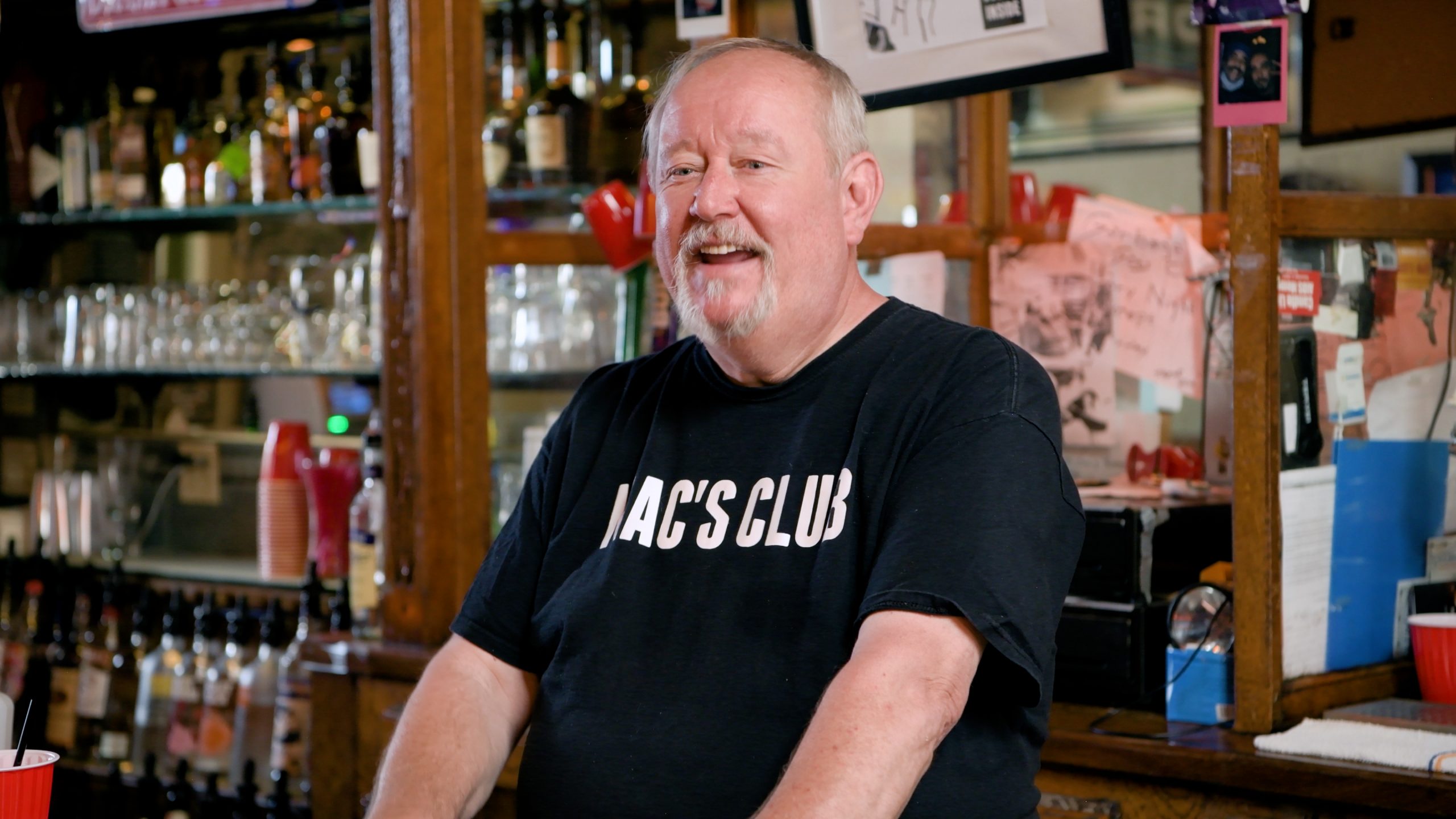
Jim Michl, both a patron and manager of Mac’s Club, discusses his time at the long-established gay bar and how it has impacted him and the community.
Marty Fenstersheib

You might have heard about Dr. Marty Fenstersheib, Santa Clara County’s testing and vaccine officer who came out of retirement in 2020 to help in the fight against COVID-19. However, you may not know he worked for the county since 1984 and was instrumental in the fight against HIV/AIDS.
Born in Pittsburg, Pennsylvania, Dr. Marty Fenstersheib received his B.S. at Tulane University, M.D. at Universidad Autonoma de Guadalajara, and M.P.H at U.C. Berkeley. He is Board Certified in Pediatrics and Preventive Medicine. He always craved big challenges. He left his first job in private practice because he found it too easy. He entered U.C. Berkeley’s Public Health program and, as a fluent Spanish speaker, was soon working in a Spanish-language clinic in San Francisco’s
Mission District.
In 1984, he joined Santa Clara County’s Public Health Department as director of the immunization program. This was in the early days of the epidemic. “I actually was the first person in the health department that gave results to people that they were HIV positive. The test came out in 1985 and nobody knew what to do, so no one wanted to give the results. So, I did,” Fenstersheib said. “It soon became known that if you got the test and I came in the room—it wasn’t good news. After
that, there was nothing else to tell them.”
Fenstersheib achieved national prominence when he pioneered a then-revolutionary AIDS treatment that meshed medical care with education to keep infected patients from spreading the virus. He helped open a County clinic to provide education, referrals, and support. The approach was profiled in the Journal of the American Medical Association.
The HIV Early Intervention Clinical Program he started in 1987 became the model for the State of California. More than two dozen similar clinics were subsequently established and funded across the state. When Congress significantly expanded
the federal funding for AIDS care in 1990 with the passage of the Ryan White CARE Act, Fenstersheib’s program became the national model for AIDS treatment clinics.
Throughout the epidemic, Fenstersheib continued to serve as a hands-on clinician, caring for HIV patients for more than 27 years, even after becoming the County’s Public Health Officer and later, after adding the role of the Public Health Department Director.
The epidemic had a profound impact on Fenstersheib personally. His partner was diagnosed as HIV positive in 1984 and died in 1992. In addition, Fenstersheib has sung with the San Francisco Gay Men’s Chorus since 1983, and he reflects on the loss of more than 300 members of the chorus who have died of AIDS since the epidemic began.
Fenstersheib retired from the county in Sept. 2013. In 2020, due to his knowledge of public health and infectious diseases, he was hired back to be the COVID-19 testing and vaccine officer at the county’s Emergency Operation Center.
Kathy Wolfe
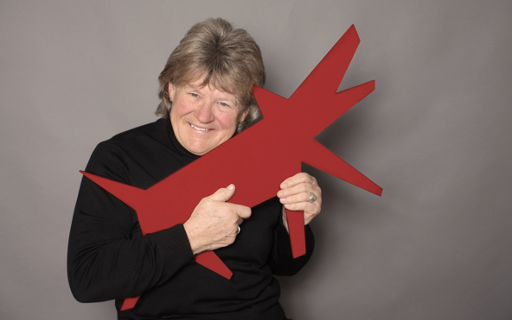
PIONEER OF LGBTQ+ VISIBILITY
Kathy Wolfe, Founder and CEO of Wolfe Video, remembers a time when movies about our LGBTQ lives were not readily available through multiple media outlets.
Today’s LGBTQ+ younger community may not know that Kathy played a vital role in kickstarting the visibility of our community in media today.
But before the World Wide Web, Netflix, smart phones, Ellen DeGeneres, The L Word, and all the programming we take for granted today, Kathy Wolfe had a vision and took action.
In 1979, Kathy Wolfe saw the powerful documentary Word is Out at the Frameline Film Festival. “I was completely inspired by seeing that film,” remembers Kathy. “I immediately grasped the importance of bringing our stories to the public.”

For the next several years, Kathy honed her skills in producing, directing and editing lesbian documentaries, including The Changer and the Changed, an early history of Olivia Records. But she soon realized the need for distribution channels so that these movies could be seen outside of film festivals.
The technology of the day was VHS, so in 1985 Kathy formed a new company, Wolfe Video. Initially, Wolfe sold tapes directly to lesbians, many of whom were closeted and had no other way to see these movies.
From the outset, however, Kathy’s ultimate goal was wider than mail order. She wanted to spur acceptance of our community by getting these titles seen by both gay and straight audiences.
She worked tirelessly to overcome the almost automatic perception by homophobic wholesalers that lesbian and gay movies equal pornography. She made bold moves, such as cold-calling Lily Tomlin and asking to produce and distribute a VHS of The Search for Signs of Intelligent Life in the Universe. This created a breakthrough into the giant mainstream video rental market.
Another bold move was acquiring the hit movie Big Eden, getting it rated PG (a first), and producing it as a double DVD (another first).
A continuing challenge has been keeping up with the very rapidly changing technology, but Kathy has adapted. Besides adding Blu-ray as a format for physical sales, in 2012 she launched WolfeOnDemand.com, the first digital LGBTQ platform. She also licenses Wolfe films to streaming outlets all over the world.
Ironically, large companies such as Netflix are now both customers and competitors of Wolfe’s for quality LGBTQ films. Kathy is philosophical about this. “These days our films can be streamed all over the world or purchased on DVD for guaranteed rewatching. I take pride in knowing we helped make a difference for our community. We now see ourselves – and are seen – in a much truer light.”
Both the LGBTQ and mainstream community recognize her impact and Kathy has received multiple awards over the years including: Cinequest’s “Maverick Spirit Award;” NCLR’s “Community Partner Award;” the San Francisco Board of Supervisors “Certificate of Honor,” and the National Organization of Women’s “Excellence in Media Award.”
Read more about Kathy’s story here.
Please visit WolfeVideo.com and WolfeOnDemand.com to see a huge selection of LGBTQ movies.

Whayne Herriford on the South Bay Times

Whayne was one of four founders of the South Bay Times (SBT) newspaper in 1988. SBT covered all the local LGBT news and covered the local events and social life. Unfortunately due to personal issues and the death of one of the founders, SBT was only published for two years, but was a wonderful community resource during that time.
Ted Sahl
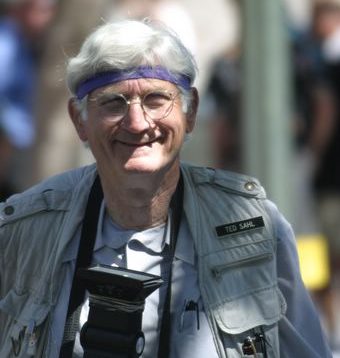
Ted Sahl began his 30-year career photographing the gay and lesbian community in the South Bay in 1978 “through a combination of curiosity and accident.”
After the San Jose City Council approved a proclamation for Gay Pride Week, the photographer stumbled upon a confrontation between members of the Moral Majority and gay activists, who later celebrated the historic moment in St. James Park.

Previously covering the anti-nuclear movement and farm labor strikes across California, the LGBT civil rights movement from the 1970s provided plenty for Ted to photograph, from political protests and fundraising campaigns, to pride celebrations and community events.
“These issues were close to my heart,” Ted later wrote in 2002, “but when I became acquainted with the gay community I recognized a deep richness of the human spirit that, in my view, demanded all the support it could muster.”
He captured moments of life, love and legislation within the LGBT community across three decades, with efforts to not “out” folks to family, friends or coworkers by always asking for permission. While he was self-described “hopelessly heterosexual,” Ted earned trust and respect with the community, often using only first names or drag names out of caution, especially with at a time when many worked in the high tech industry, who could lose security clearances for being LGBT.
A welder by trade, Ted attended fundraisers and demonstrations after work, or weekend picnics, coronations, parades and nights on the town for the gay press. He served as the staff photographer for a number of local LGBT newspapers, including the Lambda News (1978-1983), Our Paper (1984-1988), South Bay Times (1988-1990), and the Valley Views.
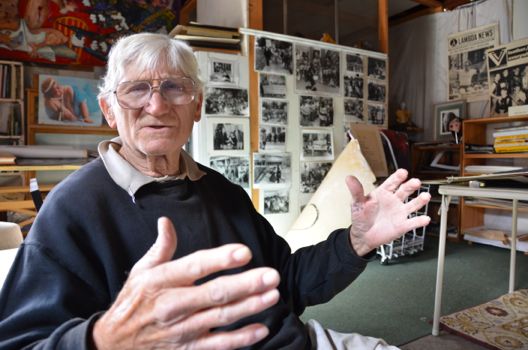
Born in May 1927, Ted grew up near Boston and dropped out of school at 16. He served in the U.S. Navy in 1947, stationed in Charleston, South Carolina, before arriving in the Bay Area. Ted described himself as “a self-taught artist dedicated to developing, and enriching the human spirit; If it be with a critical eye, So be it!”
His photos can be found throughout Queer Silicon Valley, as well as his book, “From Closet to Community: A Quest for Gay and Lesbian Liberation in San Jose & Santa Clara County,” pulling work from his personal collection, “The Ted Sahl Archives,” at San Jose State University.
Meet Silicon Valley’s First-Out Lesbian Mayor: Laura Parmer-Lohan

An historic first occurred in the City of San Carlos on December 14, 2020, when Councilwoman Laura Parmer-Lohan was sworn in as mayor. Although it was not reported anywhere, when she raised her hand to take the oath of office, she (surprisingly) became the first out lesbian mayor of any city in either San Mateo or Santa Clara counties.

As to the significance of her position, Laura said, “It is an honor and a privilege to serve as mayor for my community. I think it is important for people of diverse backgrounds and life experiences to have a seat at the dais. I am proud to have requested that the Pride Flag be raised in San Carlos during my first year in office. Many community members expressed their gratitude and one shared that he had not felt welcome in the thirty years that he had lived here until that day. This is the power of representation.”
As mentioned in the introduction of the Elected Officials section of Queer Silicon Valley, there are a stunningly low number of open LGBTQ+ officials in Silicon Valley. Although there have been a handful of gay men serving on city councils, the only other lesbian was Jamie McLeod, who served in the City of Santa Clara from 2005 to 2012. Unlike Laura, Jamie was never able to become mayor during her eight years on the council, because Santa Clara elects its mayor.
That approach is an outlier; most cities in the South Bay do not directly elect their mayors. Instead, the position rotates among individual councilmembers.
Silicon Valley’s gay mayors are in cities with a rotating system: Evan Low in Campbell (2010, 2014); Rich Waterman in Campbell (2014, 2019), Chris Clark in Mountain View (2014), and Daniel Yost in Woodside (2019).
No LGBTQ+ mayor in neither Santa Clara nor San Mateo counties has been directly elected by voters.
This even dates back to John Laird, who was as one of the country’s first openly gay officials when he was served on the Santa Cruz city council from 1981 to 1989. He earned his place in history when, in 1983, he became (along with mayors in Laguna Beach and Key West) the first gay mayors ever to serve—also due to a rotating mayor system.
Maybe 2021 will become the year of lesbian elected officials. Santa Cruz welcomed its first lesbian mayor in December 2020, when Donna Meyer was selected as mayor by the council. So whereas before there were no lesbian mayors across in the three counties, now there are two.
Laura already has her eyes set on her next trailblazing goal. In January 2021, she announced her campaign for a seat on the San Mateo County Board of Supervisors.
If successful, she would be the first lesbian in this role, joining three other elected gay county supervisors—Tom Nolan and Rich Gordon in San Mateo County, and Ken Yeager in Santa Clara—who have each served as chair or president of their respective boards.
Watch Ken Yeager interview the newly-elected Mayor Laura Parmer-Lohan of San Carlos, California, in December 2020.