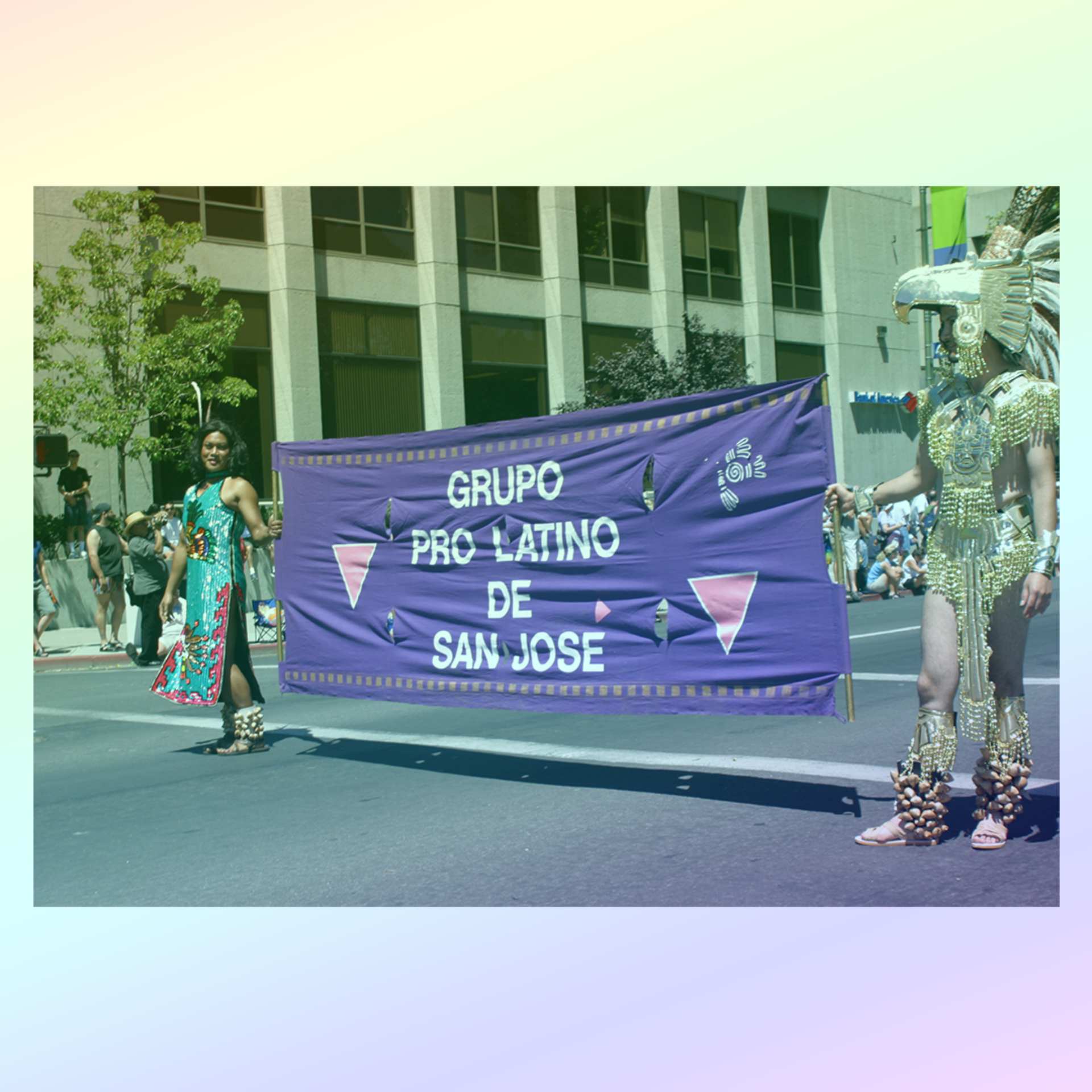
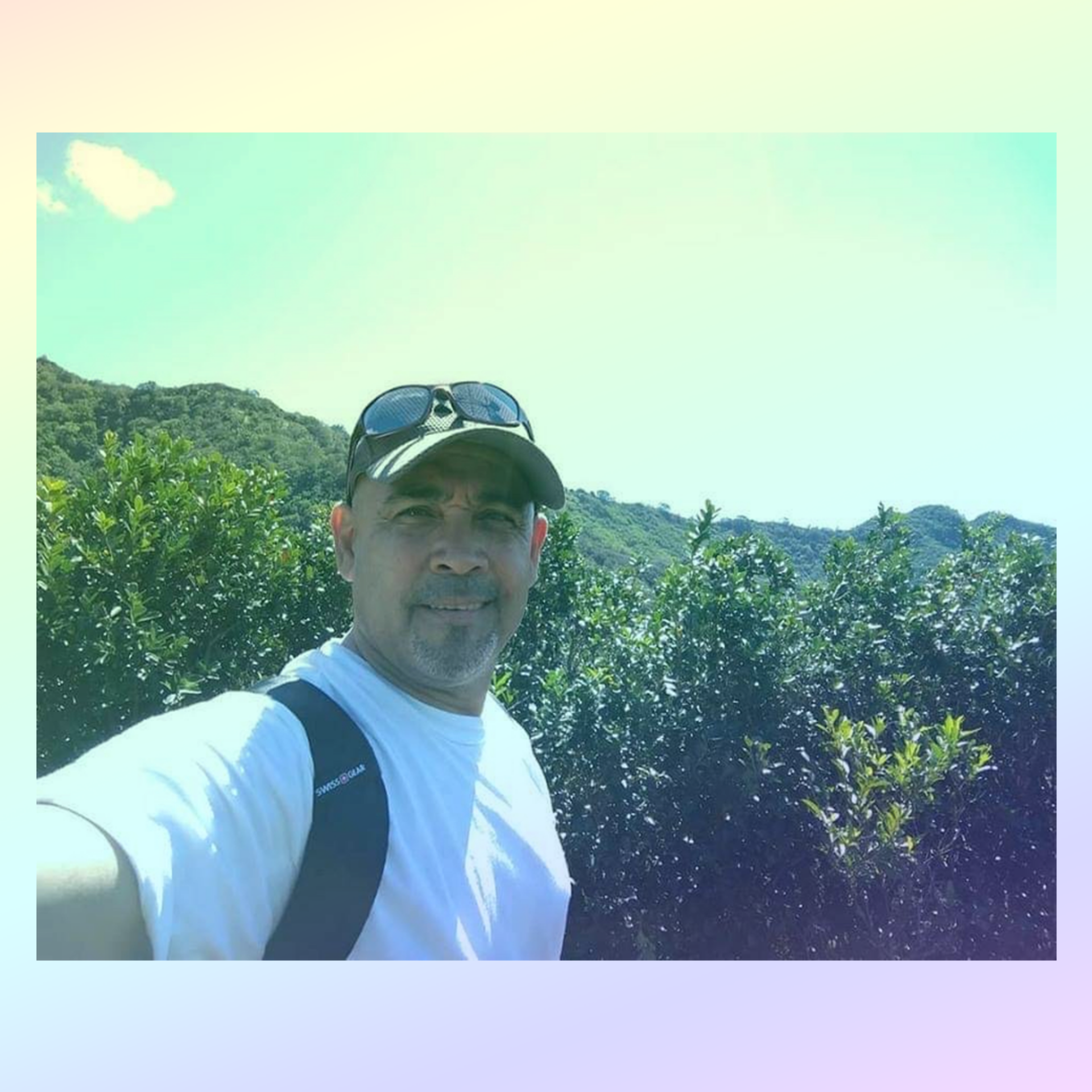
The first meeting of ProLatino was held in February 1992 at the Billy DeFrank Center. Thirteen people attended. The group formed out of the need for a safe environment for gay Latinos to meet and discuss their community, health, and HIV/AIDS. J Alejandro (Alex) Campos Vidrio was the first president of the group, and Omar Nunez was vice-president.
Alex organized meetings every other Tuesday, asking participants to bring a new person with them at each meeting. The group grew from 13 to 27, then 38, and kept going from there. Eventually, they couldn’t fit in the original meeting rooms. They moved to the main ballroom in the Billy DeFrank Center’s Stockton Avenue location.
J Alejandro (Alex) Campos Vidrio was a 21-year-old gay man living in San Jose when he discovered that there were no resources in his community to support people like him. So Alex took it upon himself to make a necessary change, which eventually led to the formation of the Latinx LGTBQ+ community group, ProLatino.
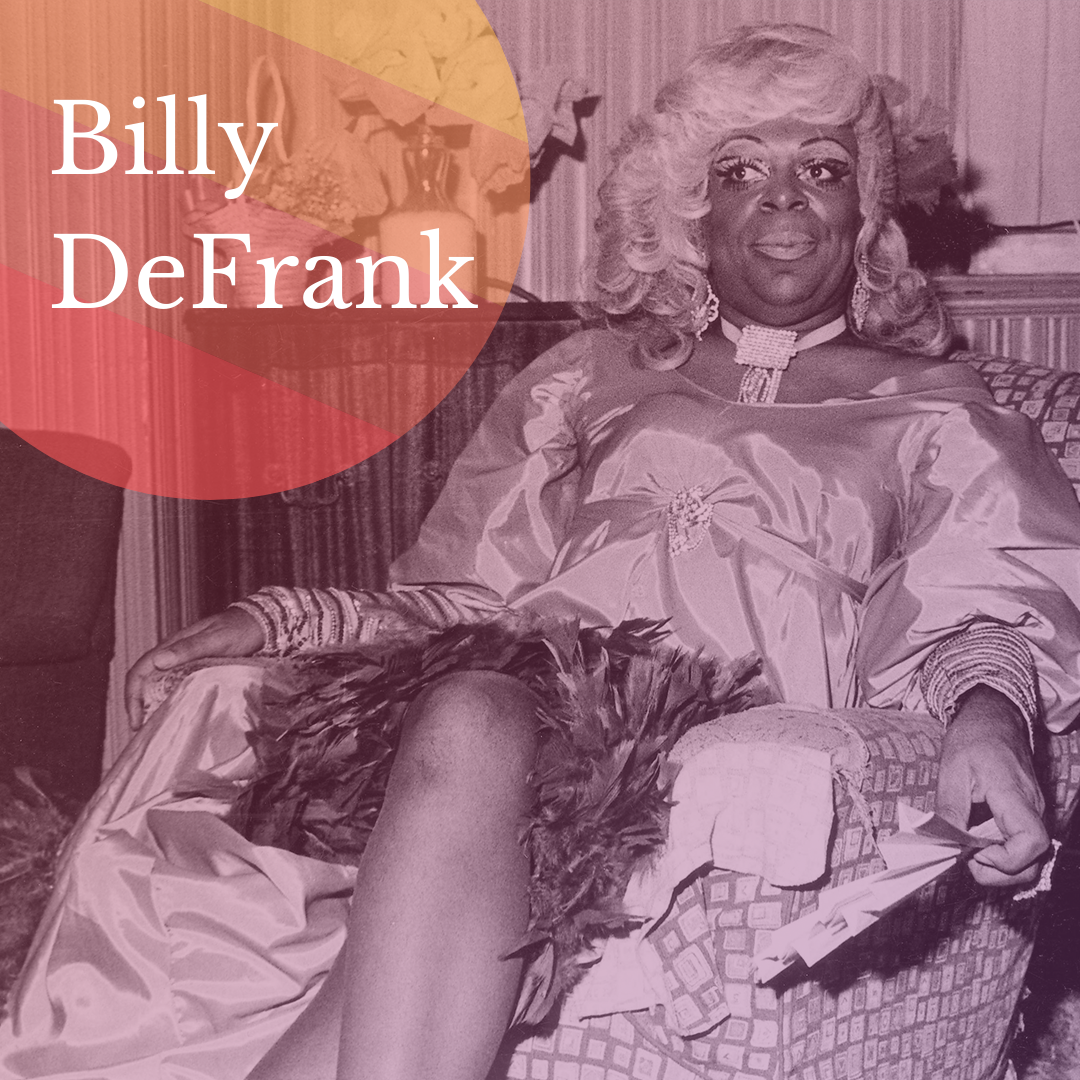
After a huge LGBTQ community meeting and brainstorming, the Billy DeFrank Center opened its doors on March 1, 1981, in a two-room storefront on 86 Keyes Street using the leftover funds from a failed campaign that left everyone depressed. Santa Clara County residents voted to repeal ordinances extending housing and employment protections to lesbians and gay men. Having a safe place, an LGBTQ Community Center, was a need at the time. And to embrace his generous and diverse spirit, the Center named itself after William Price, a popular, African American drag queen, Billy DeFrank. He loved everyone in the community and raised thousands of dollars for all the causes facing the community in the 1970s. He died in 1980, but his inclusive spirit lives on in the Center, even for our allies.
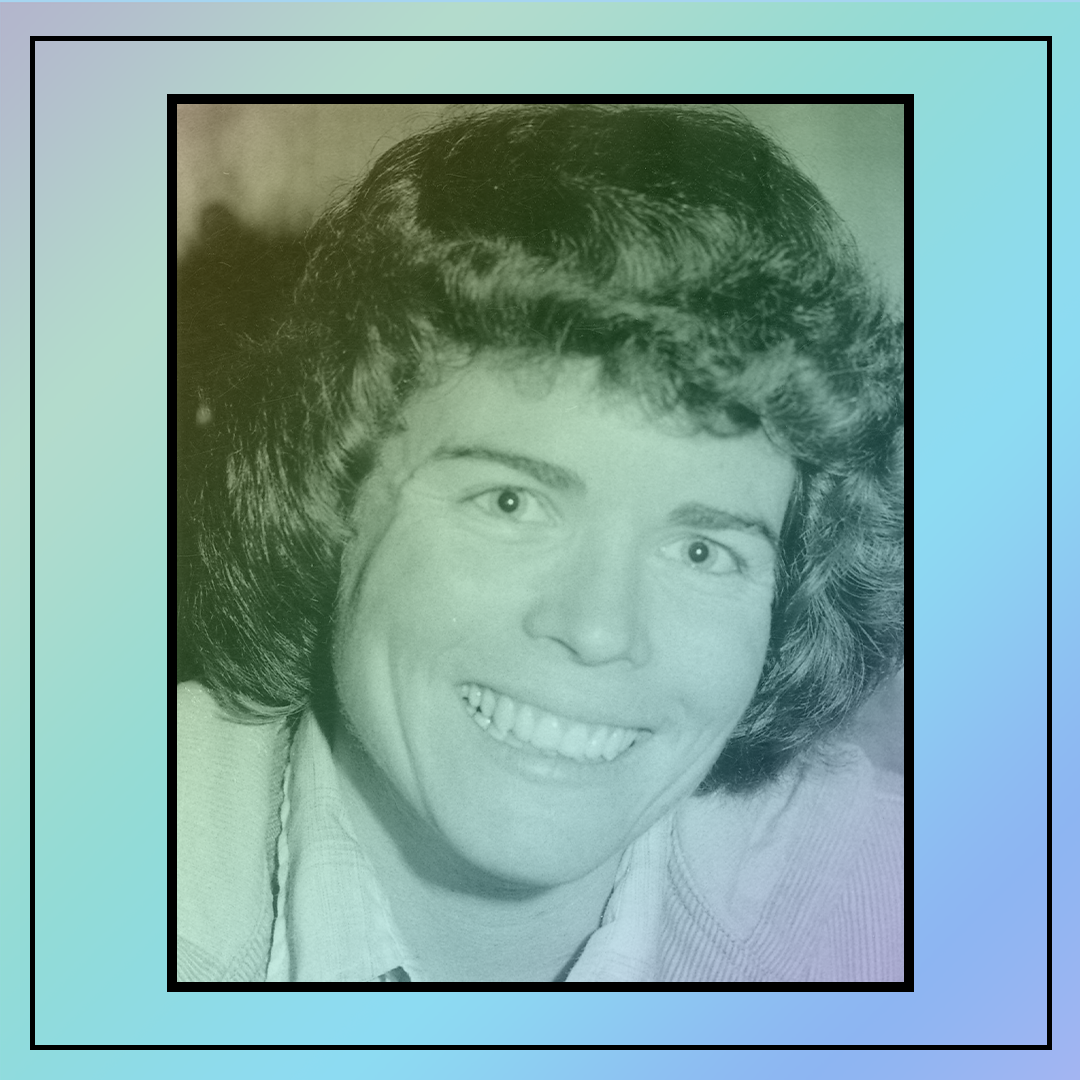
“We’re not just wild, we’re not just prancing around a gay pride parade; we’re also working and contributing to the general community.” – Liz Burkhouse.
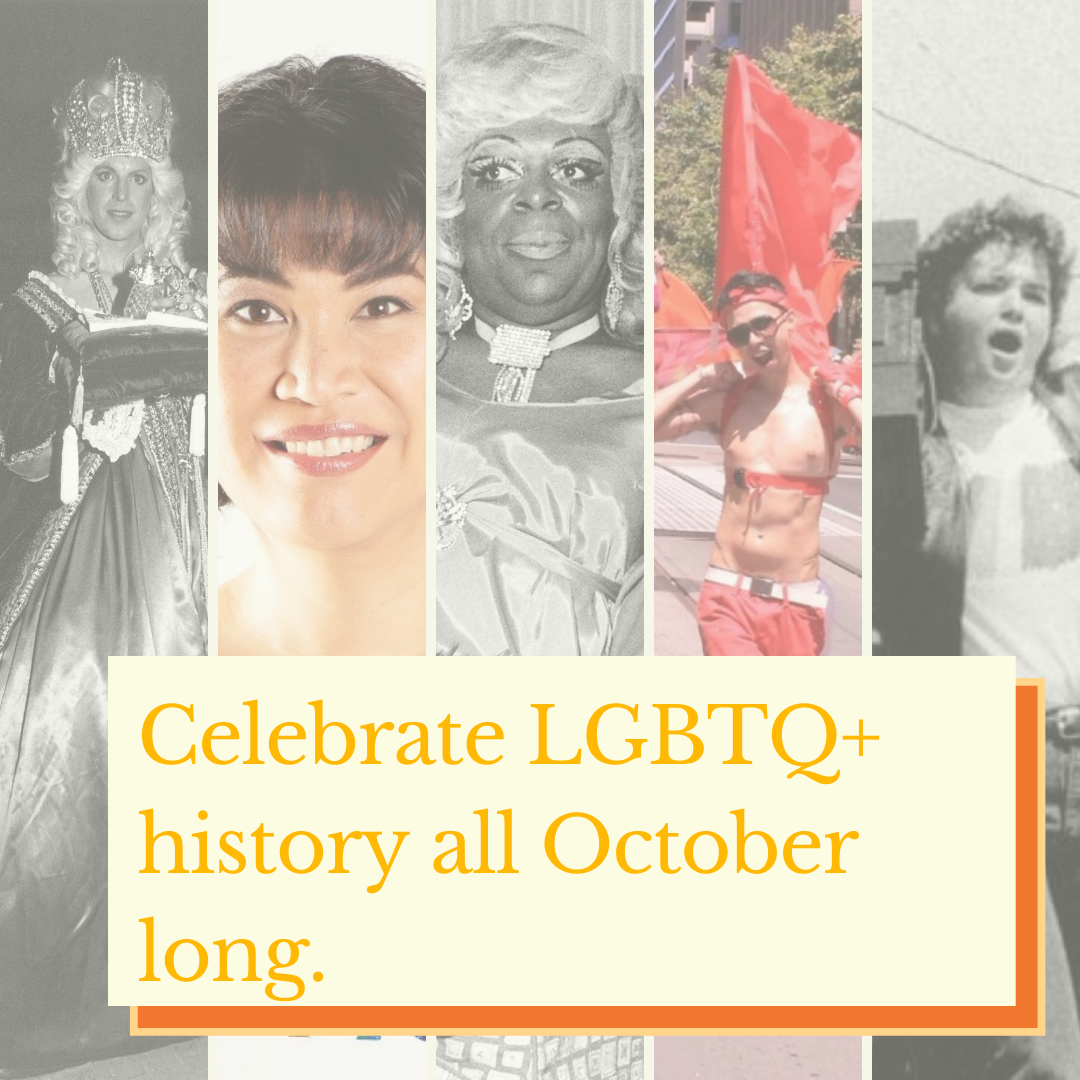
October is LGBT History Month! In order to celebrate, Queer Silicon Valley will be posting a story from our new exhibit on social media every day in October! Make sure you’re following us on Facebook and Instagram (@queersiliconvalley) so you can learn about local queer history every day!
We’d like to extend a special thanks to our sponsors for making this project possible. You can learn more about our sponsors here.
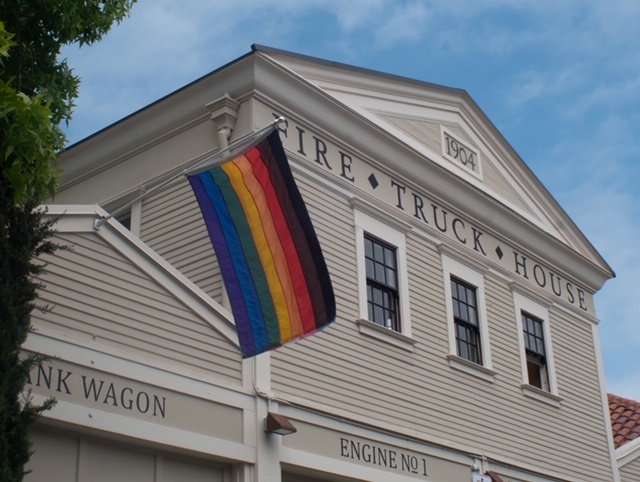
Stanford’s Old Fire Truck House became a hub for LGBTQ students and community members alike – one of the first campus organizations of its kind nationally.
Built in 1904, the aptly named structure transitioned in the 1970s from housing fire trucks to community meetings for those who were queer, questioning or allies to connect and politically organize. Despite a history of name changes – from the original Gay People’s Union to today’s QSpot – students have walked up the Firehouse’s steep outdoor steps to find a community of their own on the second floor.
Stanford has a piecemeal history with gay, lesbian, bisexual, transgender and queer people, dating back to the first documented relationship in 1911.
However, organization started coming to a head in the 1960s, when folks began creating forums and discussion groups dedicated to the exploration of sexual rights, including civil rights for homosexuals. By November 1970, a Stanford Gay Students Union was formed off-campus by students and community members.
This idea stuck. The Gay People’s Union officially began in December 1971 with a desk in the Old Union Clubhouse. Founded by Maud Hanson Nerman and Fred Oakford, the movement started with the intent to be accessible to the entire Palo Alto community.
Its members began efforts to provide personal outreach, mentorship, mental health counseling and support groups geared to gay students, especially through smaller groups like the Women’s Collective and the Gay and Lesbian Speakers Bureau.
This was risky business at a time when students and faculty feared facing retribution for being gay from Stanford, including expulsion or termination. Non-campus locations were originally considered for safety concerns.
The Gay People’s Union found a permanent home in the Old Firehouse in the fall of 1974, growing from a small office to claiming the entire second floor of the building along Santa Teresa Street.
Within its early years, GPU’s work catalyzed the formation of state-funded mental health programs for the Bay Area gay community, the first gay and lesbian awareness week held on campus, hiring of openly gay faculty and an unsuccessful campaign to exclude discriminatory employers from Stanford’s Career Planning and Placement Center.
Four members carried a GPU banner within the first National March on Washington for Gay and Lesbian Rights by October 1979.
Despite growing recognition of the LGBTQ community in the Bay Area and beyond, progress wasn’t entirely met with open arms. Notably, the campus’ “Gay Liberation” statues were repeatedly vandalized with hammers and spray paint.
As tensions heightened in the 1980s during the AIDS crisis, the Firehouse’s community worked to provide practical and emotional supporters for people with AIDS, increase visibility with Gay Family Days and simply educate others that queer people spanned the entire campus, including students living in dorms, teachers and entertainers.
Known as the Lesbian, Gay and Bisexual Community Center by 1989, students continued political activism throughout the 1990s, planning “Queer Be-Ins” at local coffee houses, establishing student orientation celebrations and hosting queer graduation events.
Despite the Old Firehouse’s consistent, decades-long presence, all of its opportunities and events were solely student-driven and supported by staff because it remained unrecognized as an official community center by Stanford.
Stanford eventually provided a full-time director for the LGBCC in 1999, after student requests and task force studies, which allowed for increased access to resources and targeted programming.
The organization was renamed the LGBT Community Resources Center in 2001 to increase transgender representation, and later morphed into the Queer Student Resource Center, or QSpot, by 2017.
If the South Bay was home to changing internal policies, San Francisco became the hub for disseminating those ideas beyond Silicon Valley. Larger conventions and gatherings emerged in the early 1990s, including the first Out and Equal workplace conference in October 1991. From there, collectives like the National Lesbian and Gay Task Force (NLGTF) emerged from this community in 1992.
The need to communicate en-mass grew as the inter-corporate networks grew.
That year, software marketer Tom Reilly and writer and editor Karen Wickre co-founded Digital Queers—a Castro-based activist group that worked to bring gay-oriented nonprofits up-to-speed online through modems, PowerMacs, AOL software discs and email tutorials.
Named as a funny, more modern evolution from High Tech Gays, they worked tech show floors such art the Macworld Expo in San Francisco, talking to friends, colleagues and strangers who would agree to donate equipment, time and money to organizations across the United States.
The idea easily struck a chord with developers, with Tom and Karen at one point collecting $75,000 in software, $75,000 in consulting services and $50,000 in cash, which was later presented at the Yerba Buena Center for the Arts.
As the technology grew, the need to stay up-to-date continued. Three years into business, DQ had 1,000 members and served 30 nonprofits, including the NLGTF and Parents and Friends of Lesbians and Gays (PFLAG), which boasted speakers bureau members like Bennet and Kim in the South Bay.
This fortunately happened at the same time personal computers became cheaper and more ubiquitous, so the gay and lesbian employee events grew more active. Recruiters for Microsoft and Apple had started posting jobs throughout the organization.
In the years after the first party in January 1993, word of mouth eventually led to these Digital Queers benefits became a socially hot ticket, bringing thousands of gay, lesbian and allies together in one social network.
“(Looking) at how many people were there could be very empowering,” Karen said, adding that people were often generous with trading email addresses and in-person introductions.
One of these connections was Tom talking to Apple CEO John Sculley about domestic partner benefits, which lagged seven years behind its nondiscrimination policy implementation, in part due to an incrementalist approach from its employees.
Tom told the Los Angeles Times he briefed the issue with the top Apple executive, who later breezily welcomed the idea at a meeting with Apple Lambda in 1993, eliciting tears and a standing ovation from staff.
The need for gay employee groups started to dwindle as newer organizations came on the scene with nondiscrimination policies and domestic partner benefits already in place. And as nonprofits became more digitally self-sufficient, Digital Queers and its email address book effectively dissolved into GLAAD by 1998.
South Bay Leather and Uniform Group (SLUG) had their founders meeting in September of 1988. Don Queen, David Carranza, John Esqueda and his partner Todd, Rafael Montejo and his partner Stan, and Jill and her partner, were the founders. SLUG was started as a social club for the leather community.
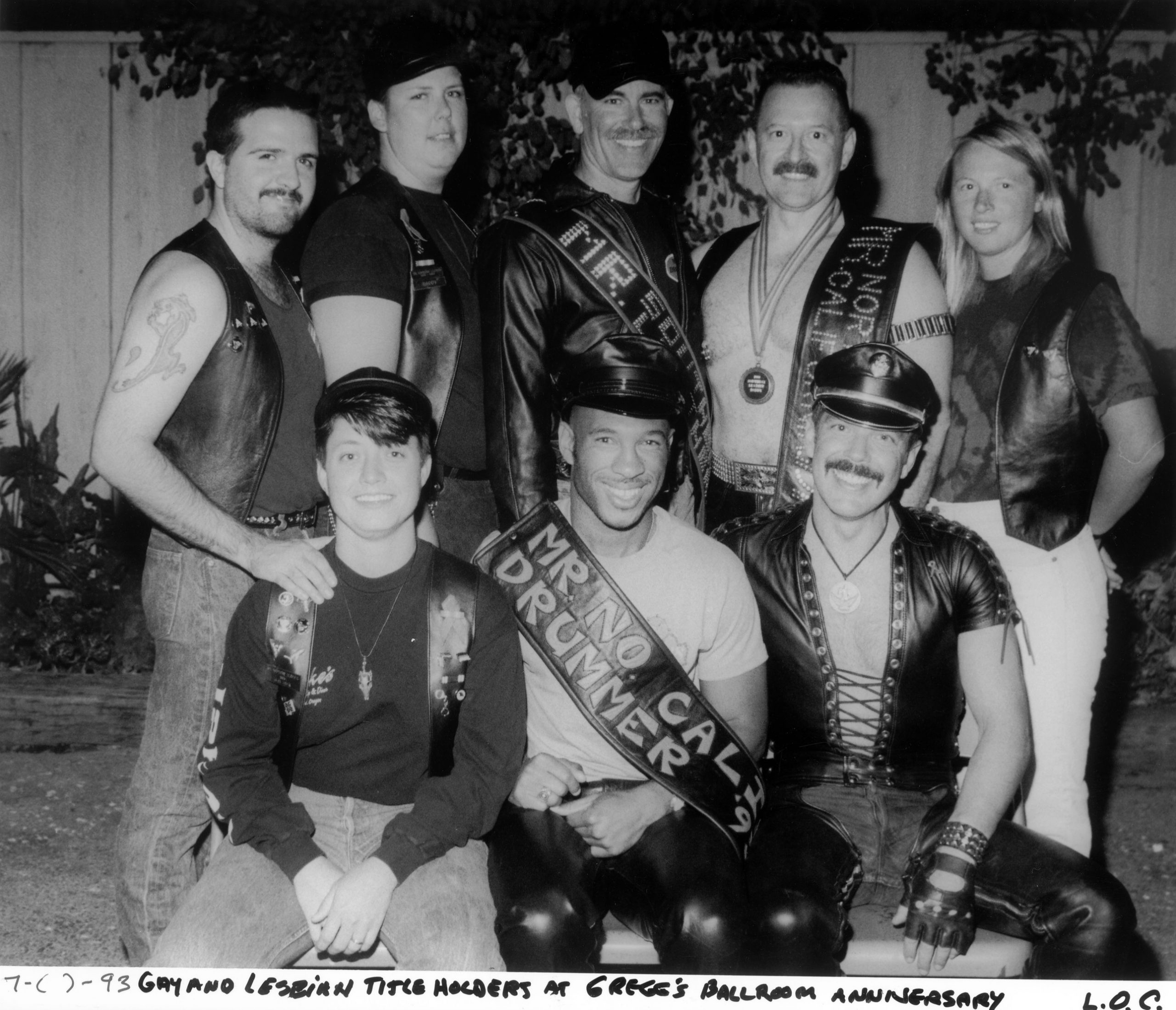
Graylin Thornton was new to the leather community in 1993. Graylin was about 26 years old when he, along with others, hosted the first Leather Pride Festival in San Jose. Shortly after this, Graylin became the first African American man to win the title of International Mr. Drummer in San Francisco.
The Drummer contest, now known as International Leather Sir/Boy, spanned a diverse range of fetish communities and included rubber, leather, and cowboys.
Since that early win, Thornton went on to receive the Leather Leadership Award from the National Gay and Lesbian Task Force, as well as a Pantheon Award from the Leather Journal.
“We don’t do these things for ourselves as leaders, we do them for the community itself,” he said. “And I think that the younger people who are coming up … need to understand that you don’t just go to a beer bust and do one event. You keep going because you’ll always be a part of that community.”
But due to the toll of HIV/AIDS on the leather community over the years, Thornton said, “many younger members aren’t able to look up to as many role models as previous generations have. When I was 25 and 30, I had people there steering me the whole way,” he said. “Unfortunately, they don’t really have that. So those of us who are 50, 55, have to mentor our younger people.”
Mentorship was a key component of Thornton’s entrance to the community, and it still plays an important role.
SLUG disbanded in the mid-1990s, but the group Santa Clara County Leather Association(SCCLA) took its place. SCCLA still hosts leather nights at Renegades.
Kim Harris is a computer scientist and gay rights activist based out of Sunnyvale, California.
Born in 1946, he studied physics at Louisiana State University, later earning his masters in computer science at Purdue. The Texas native moved to the Bay Area in 1974 to work on a super computer for NASA. He was not yet openly gay.
As Kim incrementally came out to friends and colleagues, he joined a gay men’s discussion group at Stanford where he met Bennet Marks, with whom he started a relationship in 1982 and married in September 2008. He also began attending High-Tech Gays meetings by 1983.
Kim joined Hewlett-Packard in 1984, where he joined unofficial gay employee groups like Friends of Dorothy and the Gay and Lesbian Employee Network (GLEN). From there, he helped get the ball rolling at HP to implement nondiscrimination policies and expand diversity training and AIDS-related health care coverage. He retired in 2001 at the age of 55.
During the 1990s, he joined groups like the Parents and Friends of Lesbians and Gays speakers bureau, Peninsula Business and Professional Association, Billy DeFrank LGBT Community Center Board of Directors and the HRC Business Council in 1998.
Bennet Marks & Kim Harris
Bennet Marks & Kim Harris
Bennet Marks & Kim Harris at Google
Bennet Marks & Kim Harris
Bennet Marks
He also was involved with support and advocacy groups like Silicon Valley Gay Men’s Chorus, Outlet and Outlook TV.
Bennet Marks is a software engineer and gay rights activist based in Sunnyvale, California.
Born in 1954 in Long Island, he studied at Brown University before starting a graduate math program at Stanford. He ultimately left before presenting his final thesis, earning a masters degree.
Bennet got a job at Ford Aerospace in 1981, where he obtained a security clearance, in part, due to not yet being openly gay to himself or others. Beginning to come out, he met Kim Harris at a Stanford gay men’s discussion group. The two have been in a relationship since November 1982, and married in September 2008, before California’s Prop 8 initially passed later that year.
Bennet later moved onto a job at Apple, where he started a gay employee group named Apple Lambda in 1986. That group sparked nondiscrimination policies and domestic partner benefits at Apple. Not long after he joined the BAYMEC board in 1986 and Outlet TV.
He transitioned to working at Google in 2004, where he created the Gayglers in 2006. Bennet retired in 2011, and continues to live with Kim in the South Bay.
The San José State University (SJSU) PRIDE Center was founded on September 22, 2008, initially as the LGBT Center, to cultivate an inclusive campus climate for LGBTQ+ students. The center supports student’s identity growth, leadership development, and cultivates a community to support the safety and well-being of all LGBTQ+ community members at SJSU. The PRIDE Center was initially located in Building BB on the South East side of campus across from the Campus Village residence halls. From there it had a brief stint in Hoover Hall, and a temporary location in a Modular Building B for a few years while the Student Union renovation project was being completed. The PRIDE Center is located in the Student Union and is led by the founding director Bonnie Sugiyama with the support from the Counseling and Psychological Services (CAPS) counselors Dr. Stephanie Preston (current); Tova Feldmanstern, LCSW; Dr. Angela Krumm; and many intern counselors and post-doctoral residents.
One of the larger efforts hosted by the center is the Peers in PRIDE or PIP mentoring program, developed by Dr. Angela Krumm, which connects incoming or continuing students with peer mentors who help them find a sense of community and belonging on campus and ease the transition to a large urban university. The program allows students an opportunity to connect with their peers and create new communities that they can rely upon.
Another initiative the center has successfully implemented is SJSU to Zero, through a grant from the county, which is an advocacy project mirroring the efforts of the county’s Getting to Zero campaign. SJSU to Zero focuses on reducing the rates of HIV transmission through promoting preventative actions like PrEP, and working to reduce the stigma surrounding HIV testing and diagnosis. The project (the first of its kind on SJSU’s campus) is spearheaded by Matthew Capprioni in partnership with Sugiyama. This advocacy-based effort works by providing spaces for students to discuss HIV openly, thus reducing stigma and removing barriers to testing and treatment.
Along with these two programs, the SJSU Pride Center also supports six student organizations which function on campus in different spaces, and help students feel a sense of community and visibility among their peers:
Estudiantes Latin@’s y el Provecto Arco Iris – A supportive, social and activist group open to all lesbian, gay, bisexual, transgender queer, questioning, intersex, and ally (LGBTQQIA) Latin@s in the San Jose area.
Out in Science, Technology, Engineering, and Mathematics – a chapter of the national OSTEM society dedicated to educating and fostering leadership for LGBTQQIA communities in the STE(A)M fields.
Queer and Asian (Q&A) – Q&A originated in fall 2009 and is designed to encourage students to raise positive awareness of queer and pan-Asian communities at the SJSU campus.
Queers Thoughtfully Interrupting Prejudice (QTIP) – QTIP provides a safe space for gay, lesbian, bisexual, transgender, and allies an opportunity to come together in a supportive environment and discuss issues and concerns.
Urban PRIDE – Urban PRIDE is dedicated to dealing with and catering to the social and daily issues of urban GLBTQ individuals in the San Jose area through events, functions, and making our voices heard.
Trans Talk – Trans Talk is a group for transgender/genderqueer identified people and their active allies.
The center is also home to the LGBTQ+ Faculty and Staff Association, who meet regularly to discuss issues facing LGBTQ+ members of the SJSU campus, as well as the larger San Jose community. LGBTQ+ FSA was formed in 1992 and is open to all SJSU faculty and staff interested in lesbian, gay, bisexual and transgender topics.
The center hosts regular events and meetups for LGBTQ+ students, and provides ample resources for services and education on their website. The annual Rainbow Graduation celebration is the pinnacle experience for students who have engaged with the community through the PRIDE Center. All participants are given rainbow tassels and former PIP mentors are given rainbow honor cords.
Students at the San Jose State University Pride Center
San Jose State University Pride Center partnering with Getting to Zero Campaign on campus
San Jose State University graduates who are also members of the Pride Center on campus
San Jose State University graduates who are also members of the Pride Center on campus
During the COVID-19 statewide shutdown, the center has made huge efforts to continue providing reliable support to students through hosting online meetups, and even hosting a virtual Rainbow Graduation ceremony in Spring of 2020.